

 inquiry Now

 English
 русский
 عربى
عربى
A pressure vessel is a closed container designed to hold gases or liquids at a pressure substantially different from the ambient environment. The core engineering challenge is simple: contain stored energy safely without failure. Understanding how pressure vessels work — from the physics of internal stress to the design standards that govern construction — is essential for anyone specifying, operating, or maintaining them.
The Fundamental Physics: How Pressure Creates Stress
When a fluid is pressurized inside a closed vessel, it pushes outward in every direction equally. This internal pressure generates mechanical stress in the vessel wall — primarily two types: hoop stress (circumferential) and longitudinal stress (axial).
For a thin-walled cylindrical vessel, these stresses are calculated using the following relationships:
- Hoop stress = (P × r) / t — where P is internal pressure, r is the inner radius, and t is the wall thickness. This is always twice the longitudinal stress, which is why cylindrical vessels most commonly fail along a longitudinal seam.
- Longitudinal stress = (P × r) / (2t) — acts along the length of the cylinder, most critical at the end caps.
A practical example: a cylindrical vessel with an inner radius of 500 mm, a wall thickness of 20 mm, operating at 10 bar (1 MPa) generates a hoop stress of 25 MPa. For carbon steel with a yield strength of 250 MPa, this leaves a safety margin of 10× — within typical design requirements. Exceeding the design pressure, even briefly, collapses that margin rapidly.
Key Components of a Pressure Vessel
Every pressure vessel — regardless of application — consists of a set of core structural components, each with a specific engineering function.
Shell
The shell is the primary pressure-containing body. Cylindrical shells are the most common because they distribute hoop stress uniformly. Spherical shells are structurally more efficient — for the same internal pressure and volume, a sphere requires roughly half the wall thickness of a cylinder — but are more expensive and complex to fabricate.
Head (End Cap)
Heads seal the ends of cylindrical vessels. The four main types each offer a different balance of cost, strength, and space efficiency:
- Hemispherical head: Strongest and most efficient; wall thickness can be half that of the cylinder shell. Used in high-pressure applications above 150 bar.
- Ellipsoidal head (2:1 semi-elliptical): The most common industrial choice. Provides good strength with moderate fabrication cost.
- Torispherical head (Klöpper or Korbbogen): Lower cost than ellipsoidal; widely used in lower-pressure applications below 15 bar.
- Flat head: Simplest to manufacture but requires significantly greater thickness. Typically limited to small-diameter, low-pressure applications.
Nozzles and Openings
Nozzles are penetrations through the shell wall for inlet/outlet piping, instrumentation, manholes, and safety devices. Every opening creates a stress concentration — the shell wall must be locally reinforced with added material (pad reinforcement or insert plates) to compensate. ASME Section VIII requires that the cross-sectional area of removed metal be replaced within a defined reinforcement zone around each nozzle.
Support Structures
How a vessel is supported affects the stress distribution in its shell. Horizontal vessels typically use saddle supports; vertical vessels use skirts, legs, or lugs. Support design must account for dead weight, wind loading, seismic forces, and thermal expansion.
Safety Relief Devices
A pressure relief valve (PRV) or rupture disc is mandatory on virtually every pressure vessel. The PRV opens at a set pressure — typically 10% above the Maximum Allowable Working Pressure (MAWP) — to vent excess pressure before structural failure occurs. Rupture discs are one-time-use burst elements that respond faster than PRVs and are used in applications where valve leakage is unacceptable.
Common Types of Pressure Vessels and Their Applications
Pressure vessels appear in nearly every industrial sector. The design requirements vary significantly by application.
| Vessel Type | Typical Pressure Range | Primary Industry | Key Design Feature |
|---|---|---|---|
| Boiler / Steam Drum | 10–200 bar | Power generation, HVAC | High-temp alloy steel, rigorous inspection intervals |
| Heat Exchanger | 2–150 bar | Petrochemical, refining | Tube bundle, shell-and-tube or plate design |
| Storage Vessel (LPG/LNG) | 5–25 bar | Oil and gas, utilities | Cryogenic insulation, double-wall construction |
| Autoclave | 1–10 bar | Pharmaceutical, composites | Steam sterilization, precise temperature control |
| Reactor Vessel | 50–300 bar | Chemical, nuclear | Corrosion-resistant lining, agitation internals |
| Air Receiver | 7–15 bar | Manufacturing, utilities | Moisture drain valve, PRV, corrosion-resistant interior |
Material Selection: Matching Metal to Conditions
Material selection is one of the most consequential engineering decisions in pressure vessel design. The wrong material choice leads to corrosion, embrittlement, or catastrophic failure. The selection must account for operating temperature, pressure, fluid chemistry, and cyclic loading.
Carbon Steel
The workhorse of pressure vessel construction. Carbon steel (e.g., ASTM A516 Grade 70) offers a tensile strength of 485–620 MPa, is readily weldable, and is cost-effective for service temperatures between −29°C and 343°C. It is susceptible to corrosion and is not suitable for highly acidic or chloride-rich environments without protective lining.
Stainless Steel
Grade 316L stainless is the standard for corrosive service — pharmaceutical, food processing, and marine environments. Its molybdenum content improves resistance to chloride pitting. The cost premium over carbon steel is typically 3–5×, which must be weighed against the cost of corrosion allowance, linings, and inspection in aggressive services.
Alloy Steels for High Temperature
Chrome-molybdenum steels (such as ASTM A387 Gr. 11 and Gr. 22) are used in high-temperature, high-pressure services like hydrocracker reactors operating above 400°C and 150 bar. These alloys resist creep — the gradual deformation of metal under sustained stress at elevated temperature — which becomes significant above 370°C in carbon steel.
Non-Metallic and Composite Materials
Fibre-reinforced polymer (FRP) vessels are used where corrosion resistance is critical and operating pressures are moderate (typically below 20 bar). They weigh 60–75% less than equivalent steel vessels. Carbon fibre composite overwrap pressure vessels (COPVs) are used in aerospace and high-pressure gas storage, achieving pressure ratings above 700 bar at a fraction of the weight of all-metal designs.
Design Standards and Global Certifications
No pressure vessel should be designed, fabricated, or operated without compliance to a recognized standard. These codes define minimum wall thickness, allowable stress values, weld joint efficiencies, inspection requirements, and documentation.
| Standard | Region | Scope | Key Requirement |
|---|---|---|---|
| ASME Section VIII Div. 1 & 2 | USA / Global | Unfired pressure vessels | MAWP, hydrostatic test at 1.3× design pressure |
| PED 2014/68/EU | European Union | Pressure equipment above 0.5 bar | CE marking, conformity assessment by Notified Body |
| EN 13445 | Europe | Unfired pressure vessels | Harmonized standard under PED; detailed fatigue analysis |
| GB 150 | China | Steel pressure vessels | Mandatory for domestic use; design registration required |
| AS 1210 | Australia / NZ | Pressure vessels | Registration of design and plant; periodic inspection |
ASME Section VIII Division 2 allows higher allowable stresses than Division 1 in exchange for more rigorous design-by-analysis and inspection requirements. For vessels operating above 350 bar, Division 3 (Alternative Rules for Construction of High Pressure Vessels) applies.
Common Failure Modes and How Engineering Prevents Them
Understanding how pressure vessels fail is central to designing ones that don't. The most common failure mechanisms are:
Corrosion
The leading cause of pressure vessel deterioration in service. ASME codes require designers to specify a corrosion allowance — additional wall thickness added beyond the minimum calculated requirement. For carbon steel in mild service, 1.5–3 mm is typical; for aggressive chemical service, 6 mm or more may be required. Vessels must be periodically ultrasonically tested to confirm remaining wall thickness.
Fatigue
Vessels subject to cyclic pressure loading — pressurized and depressurized repeatedly — accumulate fatigue damage even at stresses well below yield. A vessel designed for static pressure but cycled more than 1,000 times over its service life typically requires a formal fatigue analysis under ASME Division 2 rules. High-cycle applications such as hydraulic accumulators may be designed for millions of cycles.
Creep
At elevated temperatures, metals slowly deform under stress even below their yield point. Carbon steel begins to creep measurably above 370°C; austenitic stainless steels above approximately 550°C. High-temperature service requires alloy selection and design stress values drawn from creep-rupture data rather than room-temperature tensile properties.
Hydrogen Embrittlement
In hydrogen service (common in refinery hydroprocessing), atomic hydrogen diffuses into the steel lattice, reducing ductility and causing cracking. The Nelson Curves (published by API 941) define safe operating limits of temperature versus hydrogen partial pressure for different steel grades. Exceeding these limits leads to High-Temperature Hydrogen Attack (HTHA) — one of the most serious failure modes in refinery operations.
Inspection, Testing, and In-Service Monitoring
Pressure vessel integrity must be verified both at manufacture and throughout service life. A vessel that passes initial inspection can still degrade over time due to corrosion, fatigue, or process upsets.
- Hydrostatic pressure test: Conducted at manufacture and after major repairs. ASME requires testing at 1.3× the MAWP (Division 1) or 1.25× (Division 2) using water to minimize stored energy in the event of failure.
- Radiographic testing (RT): X-ray or gamma-ray imaging of weld joints to detect internal voids, porosity, and lack of fusion. ASME specifies weld joint categories (A, B, C, D) with different RT requirements depending on service severity.
- Ultrasonic testing (UT): Used both at fabrication (for weld inspection) and in-service (for thickness measurement). Phased array UT (PAUT) can inspect complex geometries and provide cross-sectional imaging of weld defects.
- Risk-Based Inspection (RBI): An API 580/581-compliant methodology that prioritizes inspection resources based on the probability and consequence of failure. RBI can justify extended inspection intervals — saving significant downtime cost — while maintaining or improving safety margins.
- Acoustic emission monitoring: Sensors attached to the vessel detect the stress wave signals generated by active crack growth or corrosion. This enables continuous in-service monitoring without taking the vessel offline.
Engineering Considerations Summary
Designing or specifying a pressure vessel requires balancing multiple engineering factors simultaneously. Use this summary as a reference checklist:
| Design Parameter | Key Consideration | Governing Standard / Method |
|---|---|---|
| Wall thickness | Hoop stress + corrosion allowance | ASME VIII, EN 13445 |
| Material grade | Temperature range, fluid chemistry, cyclic service | ASTM, API 941 (H₂ service) |
| Head type | Pressure level, space constraints, cost | Design-by-rule or analysis |
| Nozzle reinforcement | Area replacement method | ASME VIII UG-37 |
| Relief device sizing | Set pressure ≤ MAWP; capacity for worst-case scenario | API 520 / API 521 |
| Fatigue assessment | Cycle count, stress concentration factors | ASME VIII Div. 2 Annex 3-F |
| In-service inspection | Interval, method, minimum acceptable thickness | API 510, API 580/581 (RBI) |
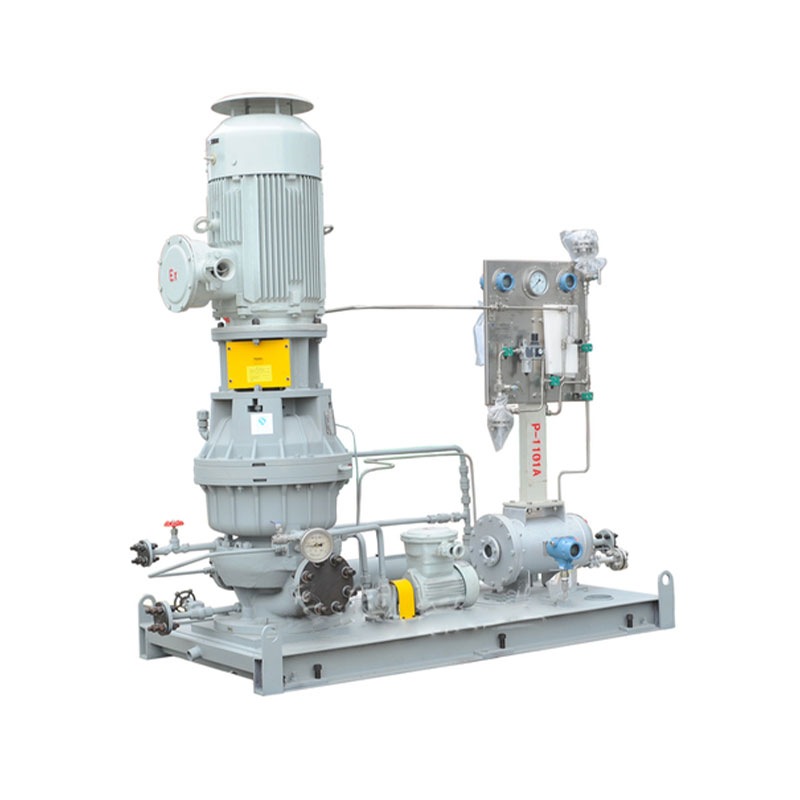
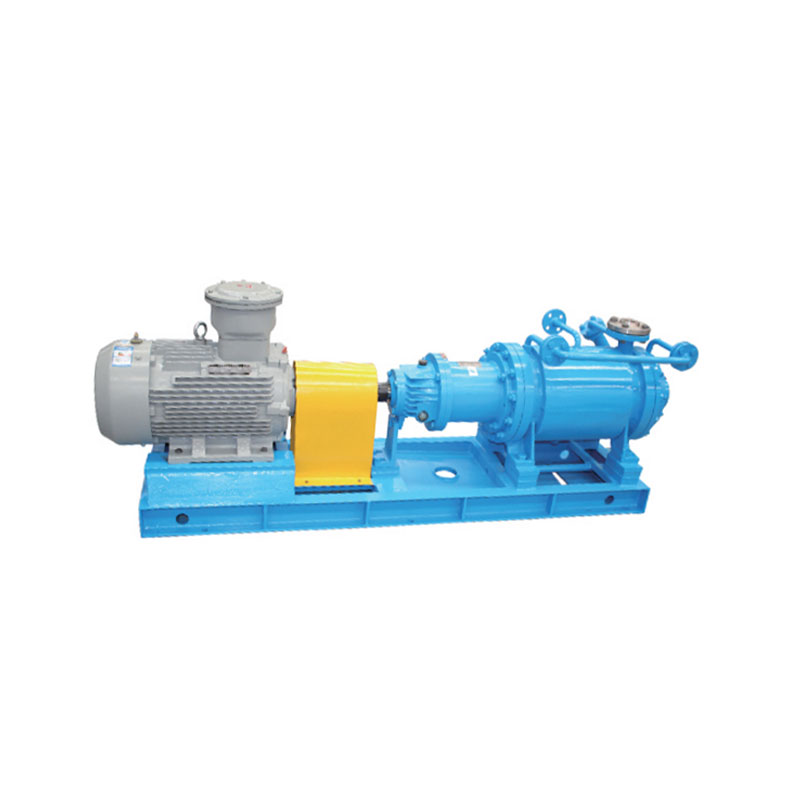
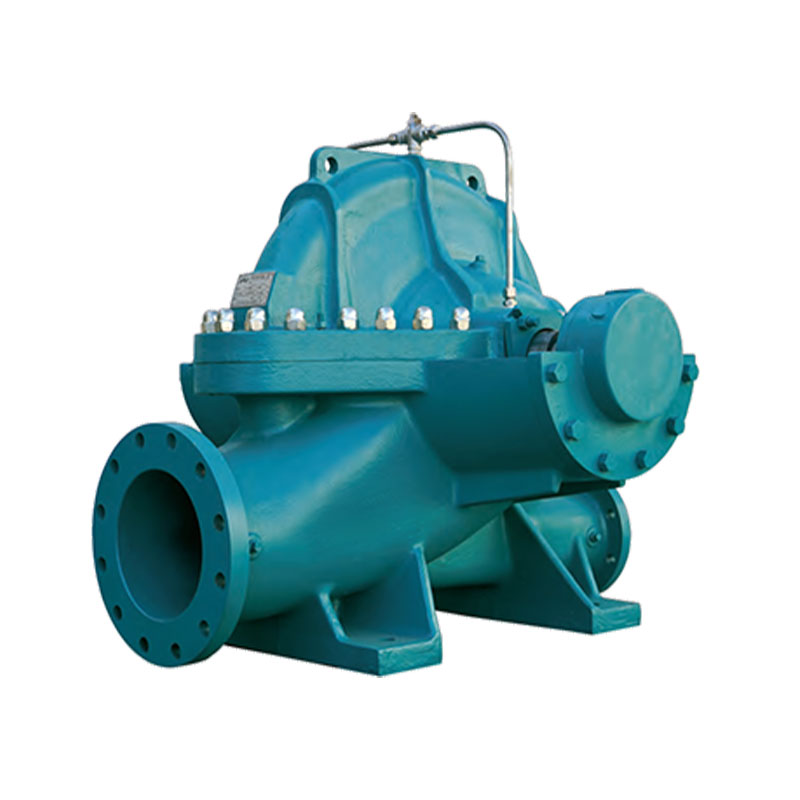
.jpg "Axially Split Horizontal Multistage Pump")


 ENG
ENG

 TOP
TOP