

 inquiry Now

 English
 русский
 عربى
عربى
The choice between a centrifugal pump and a positive displacement (PD) pump is one of the most consequential decisions in industrial process design — and one of the most frequently made incorrectly. The direct answer: centrifugal pumps are the right choice for high-flow, low-to-medium viscosity applications where flow rate can vary; positive displacement pumps are correct when you need precise flow control, handle high-viscosity fluids, or require consistent output regardless of system pressure. Getting this wrong doesn't just reduce efficiency — it accelerates wear, drives up energy costs, and can render a process uncontrollable. The decision framework is more systematic than most engineers initially assume.
How Each Pump Type Actually Works — and Why It Matters for Selection
Centrifugal Pumps: Energy Transfer Through Velocity
Centrifugal pumps transfer energy to fluid by accelerating it through a rotating impeller. The kinetic energy is then converted to pressure in the volute or diffuser. This mechanism produces a characteristic parabolic head-flow curve: as system resistance increases, flow drops; as resistance decreases, flow rises. The pump and system interact dynamically — you cannot set a fixed flow rate without external control (throttling, VFD, bypass). Centrifugal pumps are inherently self-regulating within limits, which is both their strength and their constraint.
Positive Displacement Pumps: Fixed Volume Per Revolution
PD pumps move fluid by trapping a fixed volume in a chamber and forcing it into the discharge line — regardless of pressure. Their head-flow curve is nearly vertical: flow is determined almost entirely by shaft speed, not by system pressure. This makes them accurate metering devices but also dangerous if a discharge valve is closed during operation — pressure will build until something fails. All PD pump installations require pressure relief protection. The trade-off for this pressure-independence is mechanical complexity, higher maintenance frequency, and pulsating flow in most configurations.
The Decision Framework: Six Questions That Determine the Right Choice
Question 1: What Is the Fluid Viscosity?
Viscosity is the single most important selection variable. Centrifugal pump performance degrades sharply with increasing viscosity because high-viscosity fluids cannot form the velocity profile the impeller relies on. The Hydraulic Institute viscosity correction method (HI 9.6.7) shows that a centrifugal pump handling fluid at 500 cSt will deliver only 60–70% of its rated flow and head compared to water performance — while consuming nearly the same power, collapsing efficiency to 30–40%.
The practical threshold: below 50 cSt, centrifugal pumps are almost always preferred; above 200 cSt, positive displacement pumps are almost always correct. Between 50 and 200 cSt, a detailed hydraulic analysis is required — and the answer often depends on flow rate, temperature sensitivity, and whether viscosity varies during operation.
Question 2: Is Precise Flow Control Required?
If the process requires a fixed, repeatable flow rate — chemical dosing, polymer injection, catalyst addition, fuel blending — a PD pump is the correct choice. Metering pumps (a subtype of PD pump) can achieve flow accuracy of ±0.5–1.0% over their full operating range, independent of discharge pressure. A centrifugal pump controlling flow via a throttle valve cannot approach this precision and will drift as system conditions change.
Conversely, if the process simply requires moving large volumes of fluid from point A to point B — cooling water circulation, fire suppression, irrigation, process water supply — precise flow control is unnecessary and the simplicity of a centrifugal pump is the right tool.
Question 3: What Are the Flow and Pressure Requirements?
Centrifugal pumps excel at high flow rates and moderate pressures. A single-stage centrifugal pump covers flows from a few liters per minute to over 100,000 m³/hour (large axial-flow units in power plants). Multistage centrifugal pumps can generate heads exceeding 2,000 meters in boiler feed applications. However, generating very high pressures at low flow rates is thermodynamically inefficient for centrifugal designs.
PD pumps handle the opposite corner of the envelope: low-to-medium flows at very high pressures. Triplex plunger pumps used in high-pressure water jetting or oil and gas injection service routinely operate at 300–1,000 bar — pressures no centrifugal pump can approach cost-effectively at equivalent flow rates.
Question 4: How Sensitive Is the Fluid to Shear?
Centrifugal pumps impose high shear forces on fluid passing through the impeller — the rotational velocity differential across the impeller eye and tip can exceed 20–30 m/s. This is irrelevant for water or hydrocarbons but destructive for shear-sensitive materials. Long-chain polymers, biological broths, emulsions, food products (mayonnaise, cream, fruit pulp), and pharmaceutical suspensions all require gentle, low-shear handling. Progressive cavity pumps, peristaltic pumps, and lobe pumps — all PD types — are the standard solution, preserving product integrity that a centrifugal pump would destroy within seconds.
Question 5: Does the Fluid Contain Solids or Abrasives?
Centrifugal slurry pumps — with hardened impellers, thick liners, and large clearances — are the dominant technology for high-volume solids transport: mining tailings, dredging, coal slurry pipelines. They can handle solids concentrations up to 60–70% by weight in rubber-lined configurations at flows no PD pump could sustain.
However, where solids concentrations are moderate but the slurry is highly viscous, or where gentle handling is required (fragile solids, food particles, biological sludge), progressive cavity or peristaltic PD pumps are preferred. The key distinction is whether abrasive throughput volume or gentle handling is the dominant requirement.
Question 6: What Are the Maintenance and Operational Constraints?
Centrifugal pumps are mechanically simpler: fewer moving parts, no internal valves, no timing gears. In most configurations a centrifugal pump has only two wear components — the mechanical seal and the bearing — both of which are accessible without major disassembly. Mean time between planned maintenance (MTBPM) for a centrifugal pump in clean service is typically 3–5 years.
PD pumps carry more components — valves, diaphragms, gears, rotors, timing systems — each with its own wear and failure mode. A reciprocating plunger pump may require valve inspection every 500–2,000 hours in demanding service. This is not a disqualifier, but it is a real operational cost that must be factored into total cost of ownership analysis, particularly in remote or understaffed facilities.
Head-to-Head Comparison: Centrifugal vs. Positive Displacement
| Selection Parameter | Centrifugal Pump | Positive Displacement Pump |
|---|---|---|
| Viscosity range | Best below 50 cSt; usable to ~200 cSt | Excellent across 1 cSt to 1,000,000 cSt |
| Flow accuracy | ±5–15% (pressure-dependent) | ±0.5–2% (speed-dependent only) |
| High-pressure capability | Moderate (up to ~300 bar multistage) | Excellent (up to 1,500+ bar plunger) |
| High-flow capability | Excellent (up to 100,000+ m³/hr) | Limited (typically below 500 m³/hr) |
| Shear sensitivity | High shear — unsuitable for sensitive fluids | Low shear (peristaltic, progressive cavity) |
| Efficiency at design point | 70–90% (at BEP, water) | 60–85% (type-dependent) |
| Efficiency at part load | Drops sharply off-BEP | Remains relatively flat |
| Pulsation | Smooth, continuous flow | Pulsating (reciprocating); smoother (rotary) |
| Dry-run tolerance | Poor (seal and bearing damage) | Limited (peristaltic tolerates briefly) |
| Maintenance complexity | Low (2 primary wear components) | Moderate to high (valves, diaphragms, rotors) |
| Overpressure risk | Self-limiting (flow drops, no over-pressure) | Relief valve mandatory — will overpressure |
| Capital cost (equivalent duty) | Lower | Higher |
Positive Displacement Subtypes: Choosing Within the Category
Selecting "positive displacement" is only the first step. The PD category spans dramatically different architectures, each suited to specific conditions:
- Gear pumps (internal/external): Ideal for clean, lubricating fluids at medium-to-high viscosity (oils, resins, bitumen). Simple, compact, cost-effective. Not suitable for abrasives or non-lubricating fluids.
- Progressive cavity (PC) pumps: Best for viscous, shear-sensitive, or solids-laden fluids (sewage sludge, food pastes, drilling mud). Gentle action, handles up to 40% solids. Stator wear in abrasive service requires planned replacement intervals.
- Diaphragm pumps (AODD/EODD): Preferred for corrosive or hazardous chemicals, sealless containment applications, and intermittent duty. Air-operated types are intrinsically safe. Flow accuracy is moderate (±3–5%).
- Peristaltic (hose/tube) pumps: The only true sealless, valveless PD type — fluid contacts only the hose interior, ideal for ultra-pure, sterile, or highly aggressive media. Flow reversal possible. Hose life is the primary consumable cost.
- Reciprocating plunger/piston pumps: The technology of choice for very high pressure at low flow — hydraulic fracturing, high-pressure water jetting, boiler feed at small scale, chemical injection. Pulsation dampeners are typically required.
- Lobe pumps: Non-contacting rotors handle fragile solids and hygienic products without damage. Standard in food, beverage, and pharmaceutical processing. CIP/SIP-compatible designs available.
Industry Application Map: Which Pump Type Dominates Where
| Industry | Dominant Pump Type | Specific Application | Key Reason for Choice |
|---|---|---|---|
| Oil & gas (upstream) | Centrifugal + plunger PD | Pipeline transfer (CF); injection (PD) | High flow vs. high pressure requirement |
| Chemical processing | Both (application-specific) | Bulk transfer (CF); dosing/metering (PD) | Flow precision requirements |
| Water & wastewater | Centrifugal (dominant) | Distribution, lift stations, filtration | High volume, low viscosity, low cost |
| Food & beverage | PD (lobe, peristaltic, PC) | Viscous products, fragile solids, hygienic CIP | Shear sensitivity, sanitary standards |
| Pharmaceutical | PD (peristaltic, diaphragm) | Sterile fluid transfer, precise dosing | Containment, accuracy, sterilizability |
| Mining | Centrifugal (slurry) | Tailings transport, dewatering | High solids volume, abrasion resistance |
| Power generation | Centrifugal (dominant) | Boiler feed, cooling water, condensate | Very high flow, continuous duty |
| Pulp & paper | Both | Stock transfer (CF); chemical dosing (PD) | Volume vs. precision split |
The Total Cost of Ownership Calculation: Capital Is Only the Starting Point
Centrifugal pumps typically cost 30–50% less in capital than equivalent-duty PD pumps. This leads many procurement teams to default to centrifugal selection on initial cost grounds — often incorrectly. A proper selection decision requires a 10-year total cost of ownership (TCO) model that accounts for energy, maintenance, and process performance costs:
- Energy: A centrifugal pump running at 60% of BEP due to chronic oversizing may operate at 45–50% efficiency versus the 75–80% achievable at design point. Over 10 years at continuous operation, this efficiency gap can represent $50,000–$200,000 in excess electricity costs per pump, depending on size and energy tariff.
- Process losses: In dosing or blending applications, a centrifugal pump's flow variability introduces product quality variance. The cost of off-spec product, rework, or regulatory non-compliance often dwarfs pump capital cost within the first 2–3 years of operation.
- Maintenance: PD pumps carry higher maintenance frequency but more predictable failure modes. A well-maintained progressive cavity pump on a planned stator replacement schedule has lower total unplanned downtime cost than a centrifugal pump in a viscous application experiencing chronic off-BEP wear.
Common Mistakes Engineers Make in Pump Selection
- Defaulting to centrifugal for all liquid applications. Centrifugal pumps represent roughly 70–75% of all industrial pump installations — but this market dominance reflects their suitability for water and thin-fluid applications, not universal superiority. Applying them to viscous or precision-dosing duties is a routine specification error.
- Ignoring viscosity correction at selection stage. Pump datasheets are rated on water (1 cSt). A pump specified for 200 cSt fluid without applying HI viscosity correction factors will be dramatically undersized from day one.
- Installing a PD pump without a relief valve. Every positive displacement pump installation requires a properly sized pressure relief device on the discharge side. Omitting this is a safety violation and a guarantee of eventual catastrophic failure.
- Selecting pump type before defining the full operating envelope. Minimum, normal, and maximum flow — at minimum, normal, and maximum system pressure — must be defined before any pump selection. A centrifugal pump selected at maximum flow that spends 80% of its life at minimum flow is a maintenance problem waiting to develop.
- Underestimating pulsation consequences in PD installations. Reciprocating PD pumps generate pressure pulsations that can cause pipe fatigue, instrument malfunction, and process upsets if not properly dampened. Pulsation analysis (API 674) is mandatory for high-pressure reciprocating pump systems.
The centrifugal vs. positive displacement decision is not a matter of preference — it is an engineering calculation driven by fluid viscosity, required flow accuracy, pressure range, shear sensitivity, and total cost of ownership. Centrifugal pumps win on simplicity, high flow capability, and capital cost for thin, high-volume fluids. Positive displacement pumps win on precision, high-pressure performance, viscosity tolerance, and gentle fluid handling. The most expensive outcome is applying the wrong technology: a centrifugal pump in a viscous metering application, or a PD pump where a simple centrifugal unit would move ten times the volume at a fraction of the cost. Define the fluid, define the operating envelope, apply viscosity corrections, and run a 10-year TCO analysis — the right answer will be unambiguous in almost every case.
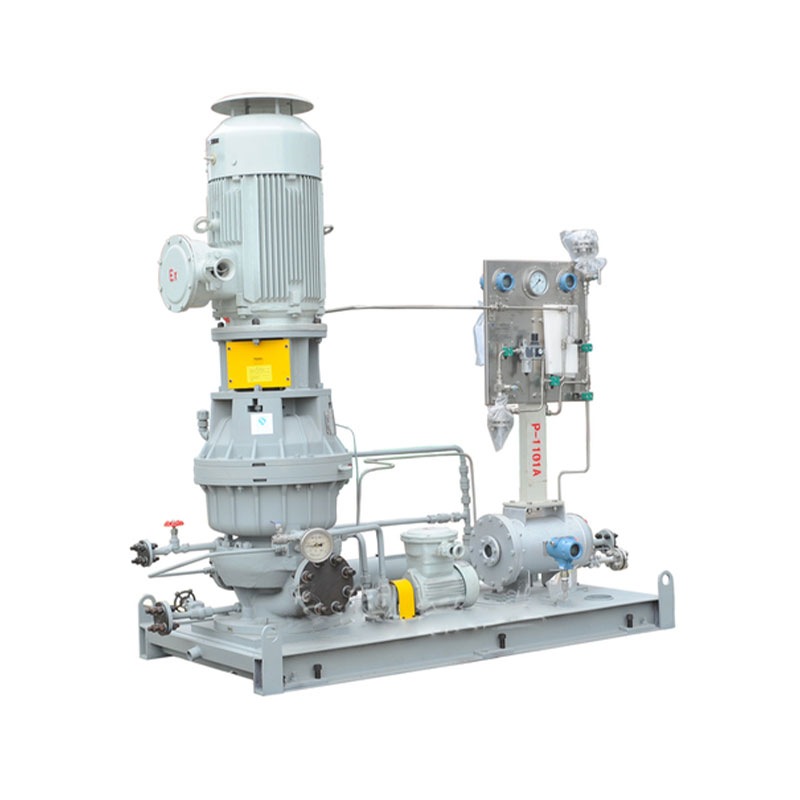
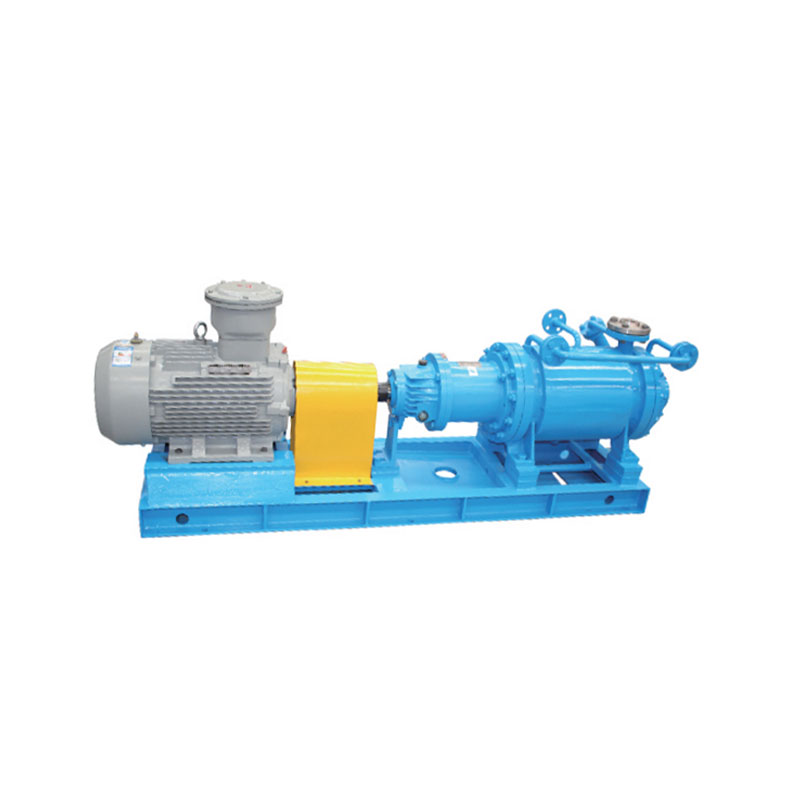
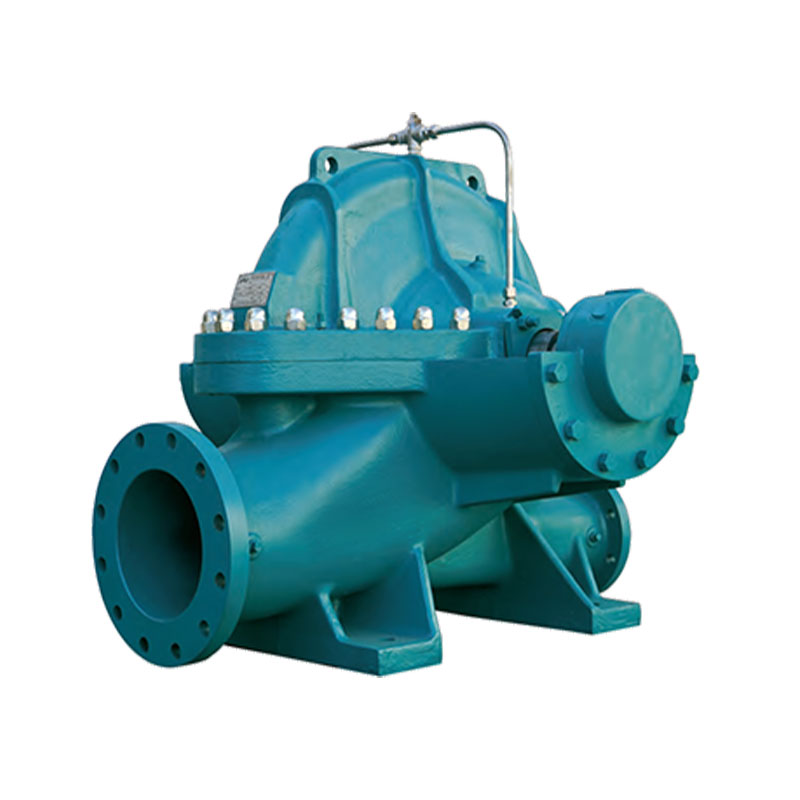
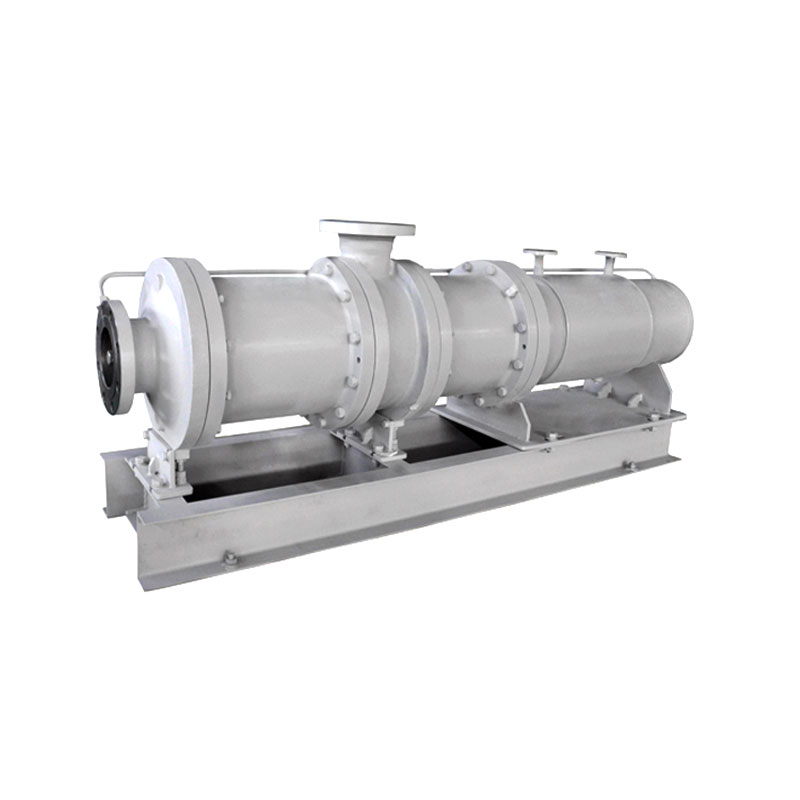
.jpg "Axially Split Horizontal Multistage Pump")


 ENG
ENG

 TOP
TOP