

 inquiry Now

 English
 русский
 عربى
عربى
Selecting the correct industrial pump is crucial for ensuring the efficiency and reliability of your system. Incorrect selection can lead to low efficiency, high energy consumption, frequent breakdowns, and costly maintenance. This process must be systematically evaluated based on four core dimensions: fluid characteristics, system requirements, technical performance, and economic viability.
Thoroughly Evaluate Fluid Characteristics
The physical and chemical properties of the fluid (medium) are the primary factor determining the pump type and construction materials.
1. Viscosity
Viscosity is the fluid’s resistance to flow and is one of the most critical factors in pump selection:
- Low-Viscosity Fluids (e.g., water, light oil, chemical solvents): Best suited for Centrifugal Pumps. Centrifugal pumps operate efficiently at high flow rates.
- High-Viscosity Fluids (e.g., asphalt, heavy oil, resins, syrup): Positive Displacement Pumps (PD) must be used. Centrifugal pumps suffer a sharp drop in efficiency due to significant friction loss when handling high-viscosity fluids.
2. Corrosiveness and Abrasiveness
- Corrosive Fluids (Strong acids, bases): Require pumps constructed from special materials, such as stainless steel alloys (316L, Hastelloy) or non-metallic materials (PVDF, PP, PTFE lining). Sealless pumps (like magnetic drive pumps) are often preferred to prevent leakage.
- Abrasive Fluids (Slurries containing sand, mineral ores): Requires selecting pumps with wear-resistant structures, such as Slurry Pumps or Peristaltic Pumps with flexible liners. The design must also ensure controlled fluid velocity to prevent excessive wear.
3. Shear Sensitivity and Gas Content
- Shear-Sensitive Fluids (Emulsions, polymers, some foodstuffs): Some fluids can have their structure damaged by the shear forces of a pump impeller. In these cases, low-shear Positive Displacement Pumps (e.g., Screw Pumps or Progressive Cavity Pumps) should be used.
- Gas-Containing Fluids (Volatile media): Centrifugal pumps can experience “gas lock” if the gas content exceeds a certain level. Pumps with self-priming capability or special liquid-gas separation features may be required.
Precisely Determine System Requirements
Understanding the work the pump must perform and the external environmental parameters is fundamental for sizing and specifying the pump.
1. Flow Rate
This is the volume of fluid the pump must transfer per unit of time, typically measured in $\text{m}^3/\text{h}$ or $\text{gpm}$.
2. Total Head and Pressure
Total head is the sum of all resistance the pump must overcome, including:
- Static Head: The vertical height difference between the suction and discharge points.
- Friction Head: Energy loss due to friction in pipes, valves, and fittings.
- Pressure Head: The required pressure at the discharge end.
High-head/low-flow applications tend toward Multistage Centrifugal Pumps or Positive Displacement Pumps; while low-head/high-flow applications lean toward Single-Stage Centrifugal Pumps.
3. Operational Mode
- Continuous, High-Volume Transfer: Centrifugal pumps are the preferred choice due to their simple construction and high reliability.
- Intermittent, Precise Metering: Positive Displacement Pumps (especially metering pumps) offer highly controllable flow and are better suited for these applications.
Technical Selection and Critical Parameters
After determining the basic pump type, a detailed technical review must be conducted, with a focus on Net Positive Suction Head (NPSH).
Cavitation Risk Management
Cavitation occurs when local low-pressure areas within the pump cause the liquid to vaporize into bubbles, which then violently collapse in high-pressure areas, damaging the impeller and casing.
- Required NPSH ($NPSH_R$): The minimum suction pressure the pump needs to operate properly, provided by the manufacturer.
- Available NPSH ($NPSH_A$): The absolute pressure actually available at the pump suction port in the system.
$$\text{Safety Principle:} \quad NPSH_A \ge NPSH_R + \text{Safety Margin}
If $NPSH_A$ is insufficient, the suction pressure must be increased by raising the liquid level, lowering the pump elevation, or using a booster pump.
Economic and Operational Considerations
The purchase price is only the beginning; the Total Cost of Ownership (TCO) is the ultimate measure of a pump’s economic viability.
- Key TCO Components:
$$TCO = \text{Initial Purchase Cost} + \text{Installation & Commissioning} + \sum (\text{Maintenance Costs} + \text{Downtime Costs}) + \sum (\text{Energy Consumption Costs}) - Energy Efficiency: Operating costs form the largest part of TCO. Select a pump with the highest efficiency at its Best Efficiency Point (BEP). Utilizing Variable Frequency Drives (VFDs) can significantly reduce energy consumption by adjusting pump speed to match actual demand.
Key Industrial Pump Type Comparison Table
To simplify the decision-making process, the table below compares the main characteristics of the two primary pump categories:
| Feature Comparison | Centrifugal Pumps | Positive Displacement Pumps (PD) |
|---|---|---|
| Operating Principle | Converts kinetic energy to pressure energy (Impeller acceleration) | Captures and forcibly discharges a fixed volume of fluid |
| Viscosity Suitability | Low viscosity (water, thin solutions) | High viscosity (oils, slurries, polymers) |
| Flow Characteristics | Flow changes with system pressure | Flow is constant, independent of system pressure |
| Self-Priming Ability | No (requires priming) | Strong (most are inherently self-priming) |
| Flow Range | High flow, smooth operation | Low/Medium flow, precise metering |
| Discharge Restriction | Can operate with the discharge valve closed (only generates heat) | Must not operate with the discharge valve closed (can lead to pressure runaway and damage) |
| Main Applications | Water supply, circulation, chemical transfer, fire fighting | Metering, high-pressure injection, high-viscosity transfer |
By systematically reviewing the information across these four dimensions and utilizing the comparison table, you will be able to accurately identify the most economical and reliable industrial pump type for your specific application.
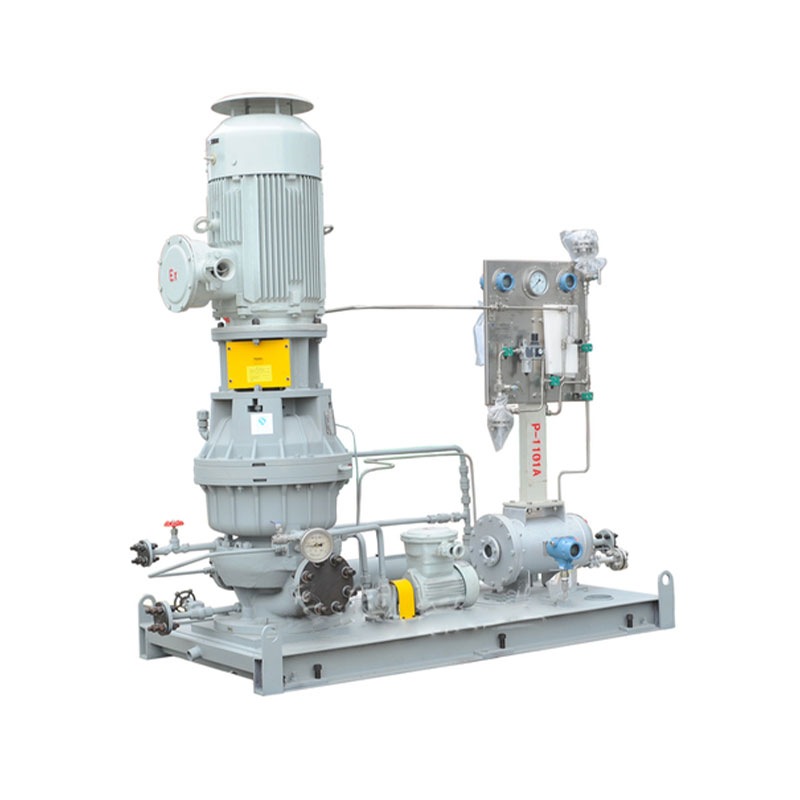
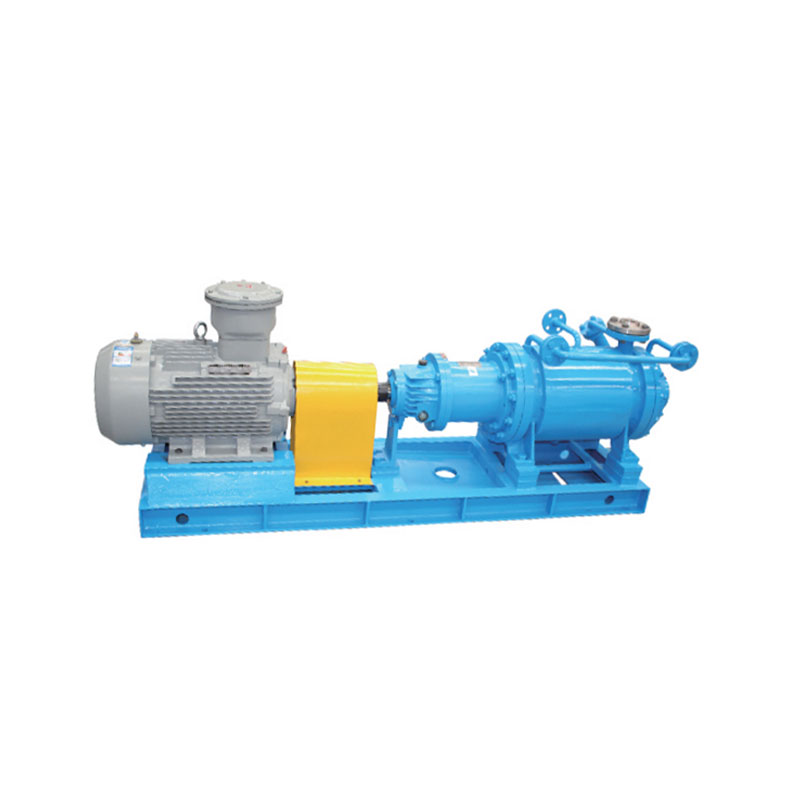
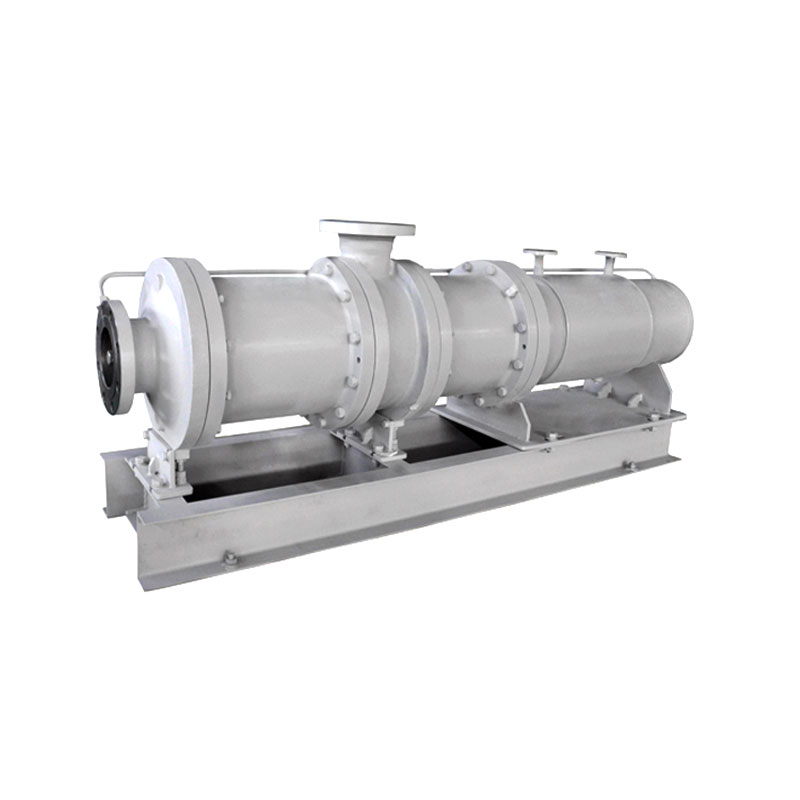
.jpg "Axially Split Horizontal Multistage Pump")


 ENG
ENG

 TOP
TOP