

 inquiry Now

 English
 русский
 عربى
عربى
Selecting an industrial pump is rarely a simple task, but when the fluid in question has high viscosity, the challenge multiplies. Viscous fluids—such as heavy oils, molasses, adhesives, paints, syrups, slurries, and polymer melts—do not behave like water. They resist flow, require more energy to move, and can easily damage or bypass standard centrifugal pumps. Choosing the wrong pump leads to low efficiency, excessive wear, cavitation, or complete system failure.
Understanding Viscosity and Why It Matters for Pump Selection
Viscosity is a measure of a fluid’s resistance to deformation or flow. High-viscosity fluids are thick and sticky, like honey or tar, while low-viscosity fluids flow easily, like water or gasoline. In industrial pumping, viscosity directly affects friction losses, required power, pump speed, and internal clearances.
The Difference Between Newtonian and Non-Newtonian Fluids
Before selecting a pump, you must understand whether your fluid is Newtonian or non-Newtonian.
-
Newtonian fluids maintain a constant viscosity regardless of shear rate. Examples include mineral oils, glycerin, and most simple hydrocarbons. Their behavior is predictable, and pump sizing can rely on standard viscosity tables.
-
Non-Newtonian fluids change viscosity under shear stress. Pseudoplastic fluids (e.g., ketchup, paint, many polymer solutions) thin out when stirred or pumped—a property called shear thinning. Dilatant fluids (e.g., certain slurries, wet sand) thicken under shear. Thixotropic fluids require time to reduce viscosity under constant shear. These behaviors complicate pump selection because viscosity at rest may be orders of magnitude higher than viscosity during pumping.
How Viscosity Affects Pump Performance
As viscosity increases, several negative effects appear in most pump types:
- Increased friction losses in suction and discharge lines
- Reduced pump efficiency, especially in centrifugal pumps
- Lower net positive suction head available (NPSHa)
- Higher power consumption
- Reduced flow rate for a given pump speed
- Increased internal slip (recirculation) in positive displacement pumps
Ignoring these effects leads to undersized motors, cavitation, overheating, or inability to start the pump.
Key Fluid Properties to Evaluate Before Pump Selection
Beyond viscosity, other fluid characteristics determine pump material, seal type, and pump technology. A complete fluid analysis is essential.
Viscosity Range and Temperature Sensitivity
Viscosity is temperature-dependent. Most high-viscosity fluids become less viscous when heated. For example, heavy fuel oil at 20°C may have a viscosity of 10,000 cP (centipoise), but at 80°C it may drop to 200 cP. Therefore, you must specify viscosity at both pumping temperature and ambient start-up temperature.
Common viscosity ranges for industrial pumps:
| Viscosity Range (cP) | Example Fluids | Suitable Pump Technologies |
|---|---|---|
| 1 – 100 | Water, light oils, solvents | Centrifugal, gear, vane |
| 100 – 10,000 | Heavy oils, syrups, paints | Progressive cavity, lobe, peristaltic |
| 10,000 – 100,000 | Adhesives, greases, pastes | Progressive cavity, eccentric screw, piston |
| >100,000 | Putties, doughs, polymer melts | Extruder-type, piston, diaphragm |
Fluid Abrasiveness, Corrosiveness, and Solids Content
High-viscosity fluids often contain abrasive particles (e.g., ceramic slurries, mining tailings) or corrosive chemicals (acids, caustics). Abrasive fluids require hardened rotors and stators or replaceable liners. Corrosive fluids demand pump bodies made of stainless steel, Hastelloy, or plastic-lined materials. Fluids with solids require pumps with large internal passages, such as progressive cavity or peristaltic pumps, to avoid clogging.
Shear Sensitivity
Some high-viscosity fluids—especially emulsions, biological fluids, and certain polymers—are shear-sensitive. Excessive shear from high-speed pumps or tight clearances can break molecular chains, cause separation, or degrade product quality. For shear-sensitive fluids, choose low-speed pumps like peristaltic, progressive cavity, or diaphragm pumps.
Centrifugal Pumps vs. Positive Displacement Pumps for High Viscosity
The most fundamental decision in pump selection is whether to use a centrifugal pump or a positive displacement (PD) pump. For high-viscosity applications, positive displacement pumps are almost always preferred, but there are exceptions.
Why Centrifugal Pumps Struggle with High Viscosity
Centrifugal pumps impart velocity to fluid using an impeller, then convert that velocity to pressure in the volute or diffuser. This mechanism works efficiently for low-viscosity fluids (water-like, below ~200 cP). As viscosity rises, two problems appear:
- Friction losses inside the pump increase dramatically. The impeller must overcome viscous drag, reducing head and flow.
- NPSH required rises significantly. Higher viscosity increases pressure drop in the suction line, leading to cavitation.
In practice, centrifugal pumps become inefficient above 300–500 cP. Above 1,000 cP, they often fail to operate at all. Therefore, for high-viscosity fluids, centrifugal pumps are rarely the right choice unless viscosity is reduced by heating.
Why Positive Displacement Pumps Excel
Positive displacement pumps trap a fixed volume of fluid and mechanically force it into the discharge line. Their flow rate is nearly independent of pressure and viscosity. As viscosity increases, volumetric efficiency actually improves because internal slip (leakage through clearances) decreases.
Common PD pump types for high-viscosity fluids include:
- Gear pumps (external or internal): Best for clean, non-abrasive fluids up to ~100,000 cP. Simple, low-cost, but shear-sensitive.
- Lobe pumps: Handle larger solids and offer gentle pumping. Good for food products and sludges.
- Progressive cavity pumps: Excellent for abrasive, shear-sensitive, or solids-laden fluids up to 1,000,000 cP. Provide steady, pulsation-free flow.
- Peristaltic (hose) pumps: Ideal for very abrasive or sterile fluids. No seals, low shear, but limited to moderate pressures and temperatures.
- Piston/plunger pumps: High pressure capability, suitable for extremely viscous or thick pastes, but require strong suction conditions.
Step-by-Step Guide to Selecting an Industrial Pump for High-Viscosity Fluids
Follow this systematic approach to avoid costly mistakes.
Step 1: Characterize the Fluid Completely
Obtain or measure:
- Viscosity at pumping temperature and at start-up temperature (in cP or cSt)
- Specific gravity
- Maximum solids size and concentration
- Abrasiveness (e.g., silica content)
- Chemical compatibility with common pump materials
- Shear sensitivity
- Vapor pressure (to calculate NPSH)
Step 2: Define Operating Conditions
- Required flow rate (GPM or m³/h)
- Total discharge pressure or head (including friction losses, elevation, and system backpressure)
- Suction conditions (flooded suction or lift? Available NPSH?)
- Operating temperature range
- Continuous or intermittent duty
- Hygiene requirements (food, pharmaceutical)
Step 3: Calculate NPSH Available for High Viscosity
Standard NPSH calculations assume water-like viscosity. For high-viscosity fluids, friction losses in the suction line are much larger. Use the Darcy-Weisbach equation with viscosity-corrected friction factors. As a rule of thumb, keep suction lines short, large in diameter, and avoid strainers, elbows, or valves on the suction side. Many viscous fluids require flooded suction (gravity feed from an elevated tank) or a feed pump.
Step 4: Select Pump Technology Based on Viscosity Range and Fluid Type
Use the following decision guide:
| If your fluid is… | And your viscosity is… | Recommended pump type |
|---|---|---|
| Clean, non-abrasive, Newtonian | <10,000 cP | External gear pump |
| Clean, shear-sensitive | <100,000 cP | Progressive cavity or lobe pump |
| Abrasive, contains solids | Any | Progressive cavity (hard stator) or peristaltic pump |
| Corrosive | Any | Magnetic drive gear pump or diaphragm pump with corrosion-resistant materials |
| Very thick paste (>200,000 cP) | Up to 1,000,000 cP | Progressive cavity, piston pump, or twin-screw pump |
| Requires pulsation-free flow | Any | Progressive cavity or triple-screw pump |
Step 5: Determine Pump Speed and Drive Type
High-viscosity fluids require low pump speeds. Running a gear pump at 1,750 RPM with 50,000 cP fluid will cause cavitation, overheating, and rapid wear. Typical speeds for viscous fluids range from 10 to 500 RPM. Use a gearbox, variable frequency drive (VFD), or low-speed motor. VFDs allow speed adjustment to match flow demand while preventing excessive shear.
Step 6: Specify Materials, Seals, and Internal Clearances
- Materials: Cast iron for oils, 316 stainless steel for corrosive or food-grade fluids, hardened tool steel for abrasive fluids.
- Seals: Mechanical seals with proper flushing plans for high-viscosity fluids; packed glands for very thick pastes; magnetic drives for zero leakage.
- Clearances: Larger internal clearances may be needed for high-viscosity or solids-laden fluids to reduce shear and wear. Some manufacturers offer “high-viscosity” rotor/stator sets.
Common Mistakes to Avoid When Pumping High-Viscosity Fluids
Even experienced engineers make errors in viscous fluid pumping. Avoid these pitfalls.
Mistake 1: Using Water-Based Performance Curves
Never size a pump using water-based curves for a viscous fluid. A centrifugal pump that delivers 100 GPM of water may deliver only 30 GPM of 5,000 cP fluid. Always use viscosity-corrected performance data or manufacturer-supplied curves for the actual fluid.
Mistake 2: Ignoring Start-Up Conditions
A fluid that flows reasonably at 80°C may be solid at 20°C. If the pump must start in cold conditions, it may experience locked rotor or seal damage. Provide heat tracing, steam jackets, or dilute the fluid before start-up. Alternatively, choose a pump with extremely high starting torque capability, such as a progressive cavity pump with a properly sized motor.
Mistake 3: Underestimating Suction Line Losses
A 10-foot suction line with 2-inch diameter might have negligible loss for water but 15 psi loss for 10,000 cP oil. This loss reduces NPSHa, causing cavitation. Keep suction lines as short, wide, and straight as possible. Use a flooded suction arrangement whenever feasible.
Mistake 4: Selecting Standard Clearances for Viscous Fluids
Tight internal clearances in gear pumps or progressive cavity pumps create high shear and frictional heating. For high-viscosity fluids, specify “wide clearance” or “high-viscosity” internals. The slight reduction in volumetric efficiency is acceptable compared to the risk of pump seizure.
Practical Examples of High-Viscosity Pump Selection
Example 1: Pumping Hot Melt Adhesive (50,000 cP at 180°C)
Hot melt adhesives are highly viscous, temperature-sensitive, and abrasive. Solution: a jacketed progressive cavity pump with hardened steel rotor and a variable frequency drive. The jacket maintains temperature; the slow speed (200 RPM) reduces shear; hard materials resist abrasion. Suction is flooded from an agitated tank.
Example 2: Pumping Heavy Fuel Oil (HFO) from Storage to Burner (15,000 cP at 10°C, 200 cP at 80°C)
Solution: A three-screw pump with heat tracing on the suction line. The pump is started only after the oil is heated to reduce viscosity below 1,000 cP. A VFD controls flow to match burner demand. Mechanical seals with quench are used to prevent coke formation.
Example 3: Pumping Chocolate Mass in Food Production (30,000 cP, shear-sensitive)
Solution: A lobe pump with stainless steel rotors and wide clearances. The pump runs at 150 RPM to avoid breaking sugar crystals or fat separation. FDA-compliant elastomers are used for seals. CIP (clean-in-place) capability is included.
Pump Type Suitability for High-Viscosity Fluids
| Pump Type | Max Practical Viscosity (cP) | Solids Handling | Shear Sensitivity | Pressure Capability | Relative Cost |
|---|---|---|---|---|---|
| Centrifugal (standard) | 500 | Poor | High | Low | Low |
| External gear | 100,000 | Poor (clean only) | High | Medium | Low-medium |
| Internal gear | 200,000 | Poor | High | Medium | Medium |
| Lobe | 100,000 | Fair (soft solids) | Low | Low-medium | Medium |
| Progressive cavity | 1,000,000 | Excellent | Low | Medium-high | Medium-high |
| Peristaltic (hose) | 50,000 | Excellent | Very low | Low | Medium |
| Twin-screw | 500,000 | Good | Medium | Medium-high | High |
| Piston/plunger | 1,000,000+ | Poor (paste only) | Medium | Very high | High |
Selecting the right industrial pump for high-viscosity fluids requires a thorough understanding of fluid rheology, pump mechanics, and system hydraulics. Positive displacement pumps—especially progressive cavity, gear, and lobe pumps—are generally superior to centrifugal designs for viscous applications. Key success factors include accurate viscosity measurement at operating and start-up conditions, proper suction line design, low pump speeds, and correct material selection. Avoiding common mistakes such as ignoring start-up viscosity or using water-based curves will save significant maintenance costs and downtime. When in doubt, consult with pump manufacturers that specialize in high-viscosity applications and provide viscosity-corrected performance data.
Frequently Asked Questions (FAQ)
Q1: What is the maximum viscosity that a standard centrifugal pump can handle?
Most centrifugal pumps become inefficient above 300–500 cP. Some specially designed centrifugal pumps (with open impellers and oversized passages) can handle up to 1,500–2,000 cP, but efficiency is poor. For anything above 2,000 cP, a positive displacement pump is strongly recommended.
Q2: Can I use a gear pump for abrasive high-viscosity fluids?
It is not advisable. External gear pumps have tight clearances between gear teeth and the casing. Abrasive particles will erode these surfaces rapidly, causing loss of performance and eventual failure. For abrasive fluids, use a progressive cavity pump with a hard rubber stator or a peristaltic pump.
Q3: How does temperature affect pump selection for high-viscosity fluids?
Temperature dramatically changes viscosity. Many high-viscosity fluids are heated before pumping to reduce viscosity. The pump must be selected based on the lowest expected viscosity (highest temperature) for sizing, but the motor must handle the highest viscosity (cold start) for starting torque. Heating jackets, heat tracing, or steam-heated pump heads are often required.
Q4: What is internal slip, and why does it matter for viscous fluids?
Internal slip is the recirculation of fluid from the discharge side back to the suction side through internal clearances. In positive displacement pumps, slip decreases as viscosity increases because the thick fluid flows more slowly through gaps. Therefore, volumetric efficiency actually improves with higher viscosity—the opposite of centrifugal pumps.
Q5: How do I calculate NPSH available for a high-viscosity fluid?
Standard NPSHa calculations must be adjusted for friction losses using the actual viscosity. Use the Darcy-Weisbach equation with Moody friction factors determined from the Reynolds number (which will be very low for viscous fluids). Alternatively, use online calculators designed for high-viscosity fluids. As a rule, keep suction lines very short, wide, and free of restrictions, and prefer flooded suction (gravity feed) over suction lift.
Q6: Are there pumps that can handle viscosities over 1,000,000 cP?
Yes. Progressive cavity pumps, twin-screw pumps, and heavy-duty piston pumps can handle viscosity up to several million centipoise. However, flow rates are typically low (less than 10 GPM), and speeds are extremely slow (10–50 RPM). Such applications include putty, dough, asphalt, and certain polymer melts.
Q7: What type of seal is best for high-viscosity fluids?
Packed gland seals (compression packing) are often preferred for very thick pastes because they tolerate misalignment and debris. Mechanical seals require a clean, lubricating fluid film; high-viscosity fluids can cause seal faces to separate or overheat. Magnetic drive pumps (sealless) are excellent for hazardous or toxic viscous fluids but require low speeds to avoid eddy current heating.
Q8: Can I use a variable frequency drive (VFD) on a pump for high-viscosity fluids?
Yes, and it is highly recommended. VFDs allow slow start-up to minimize torque shock and enable speed adjustment to match process requirements without overshearing the fluid. However, ensure the motor is inverter-duty rated and oversized for the cold-start viscosity.
Q9: How do I handle non-Newtonian fluids like shear-thinning paint or ketchup?
Shear-thinning fluids are easier to pump once they are moving because viscosity drops. However, start-up can be difficult because static viscosity is high. Use a positive displacement pump with low-speed start and ensure adequate NPSH. Avoid centrifugal pumps because they rely on high shear to reduce viscosity, which can degrade shear-sensitive products.
Q10: Where can I find viscosity-corrected performance curves for pumps?
Reputable manufacturers such as Viking Pump, Moyno, Netzsch, Seepex, and Watson-Marlow provide viscosity correction factors or curves in their technical manuals. Hydraulic Institute standards also publish correction methods for centrifugal and positive displacement pumps. Always request data at your specific viscosity and pump speed.
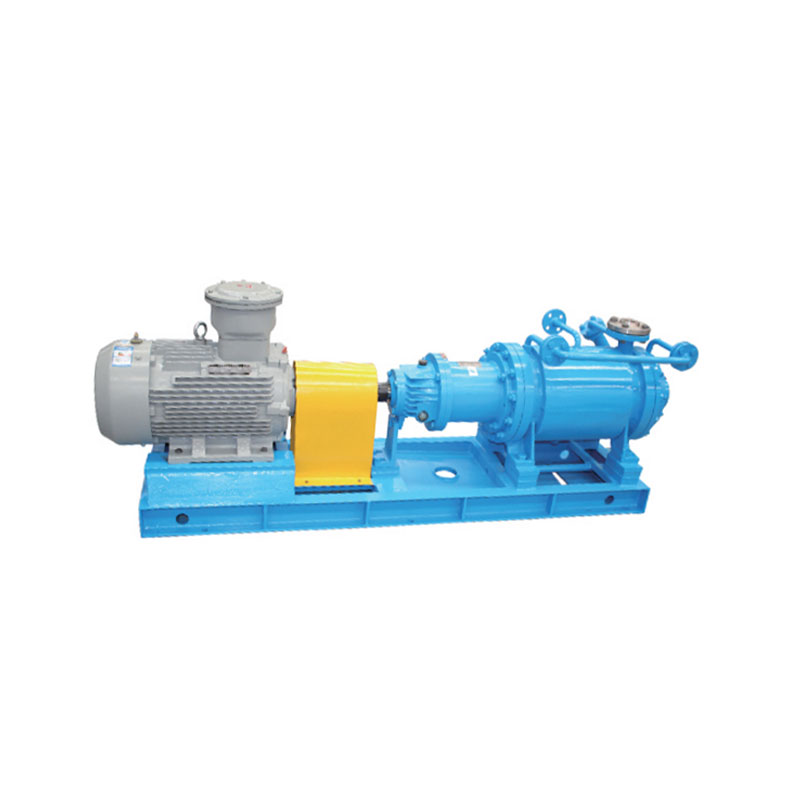
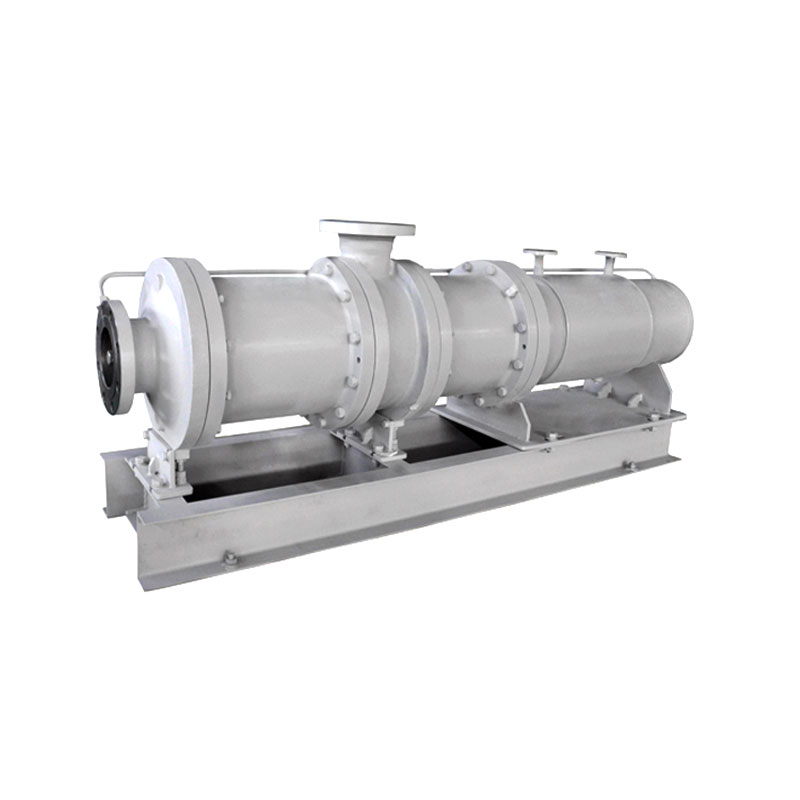
.jpg "Axially Split Horizontal Multistage Pump")


 ENG
ENG

 TOP
TOP