

 inquiry Now

 English
 русский
 عربى
عربى
To size an industrial vortex pump for maximum efficiency, you need to accurately determine four core parameters: required flow rate (GPM or m³/h), total dynamic head (TDH), fluid properties (density, viscosity, solids content), and duty cycle — then select a pump whose best efficiency point (BEP) aligns as closely as possible with your actual operating conditions. Oversizing is the most common and costly mistake in vortex pump selection, leading to energy waste, increased wear, and premature failure. This guide walks through each sizing step with the calculations and benchmarks you need.
Step 1: Determine Your Required Flow Rate
Flow rate is the volume of fluid the pump must move per unit of time, expressed in gallons per minute (GPM) in the U.S. or cubic meters per hour (m³/h) in metric systems. This is the starting point for all other sizing calculations.
How to calculate required flow rate:
Identify the process demand — how much fluid must move from point A to point B within a defined time window. For example, if a wastewater holding tank of 50,000 gallons must be emptied within 4 hours, the minimum required flow rate is:
50,000 ÷ 4 hours ÷ 60 minutes = 208 GPM minimum
Always add a 10–20% safety margin to account for pipe aging, minor blockages, and process variability. In this example, target a pump rated for 230–250 GPM at operating head.
- Do not add excessive safety margins — sizing a pump at 150–200% of actual need is a leading cause of operating far from BEP
- For variable demand processes, identify the normal operating flow and the peak flow separately — these may require different pump configurations
- For continuous-duty applications, size to the average flow, not the peak
Step 2: Calculate Total Dynamic Head (TDH)
Total Dynamic Head is the total equivalent height the pump must push fluid against, accounting for elevation change, pipe friction losses, and pressure requirements. TDH is the single most commonly miscalculated parameter in pump sizing, and errors here lead directly to undersized or oversized pumps.
TDH is calculated as:
TDH = Static Head + Friction Head + Pressure Head + Velocity Head
Static Head:
The vertical elevation difference between the fluid source and the discharge point. If pumping from a sump 8 feet below grade to a discharge point 22 feet above grade, static head = 30 feet.
Friction Head:
Pressure losses due to fluid friction in pipes, fittings, valves, and bends. Use the Hazen-Williams equation or friction loss tables for your pipe material and diameter. As a practical benchmark, friction losses in a well-designed system should not exceed 30–40% of total static head. If they do, pipe diameter may be undersized.
Worked TDH Example:
| Head Component | Value (feet) |
|---|---|
| Static Head (elevation) | 30 |
| Pipe Friction Losses | 12 |
| Fitting & Valve Losses | 5 |
| Discharge Pressure Head | 4 |
| Total Dynamic Head | 51 feet |
Step 3: Account for Fluid Properties
Vortex pumps are specifically chosen for difficult fluids — but fluid properties still directly affect pump sizing. Ignoring them leads to undersized motors, excessive wear, or cavitation.
Specific Gravity (SG):
Pump curves are based on water (SG = 1.0). If your fluid is denser — such as a slurry with SG of 1.3 — the required motor power increases proportionally. Power required = (Water-based power) × SG. A pump requiring 10 HP for water will need 13 HP for a fluid with SG of 1.3. Always upsize the motor accordingly.
Viscosity:
For fluids above 200 centipoise (cP), standard pump curves become unreliable. The Hydraulic Institute (HI) viscosity correction factors must be applied to derate both flow rate and head. A fluid at 500 cP may reduce effective pump head by 15–25% compared to water performance — a pump that achieves 60 feet of head on water may only deliver 45–50 feet on a viscous slurry.
Solids Content and Size:
Vortex pumps are rated for specific maximum solids sizes — typically expressed as a percentage of the inlet diameter. Verify that your largest expected solid does not exceed 75–80% of the pump's stated solids-passing diameter. Oversized solids that pass through intermittently can cause sudden head spikes and accelerated casing wear.
Step 4: Plot the System Curve and Match the Pump Curve
The most technically rigorous step in vortex pump sizing is overlaying your system curve onto the manufacturer's pump performance curve. The point where these two curves intersect is your operating point — and its proximity to the pump's BEP determines efficiency.
How to construct a system curve:
- Plot TDH at zero flow (this equals static head only — friction head is zero at no flow)
- Calculate TDH at 50%, 100%, and 125% of your target flow rate — friction losses increase with the square of velocity, so the curve rises steeply
- Connect the points to form the system resistance curve
- Overlay this on candidate pump H-Q curves — the intersection is your operating point
BEP targeting guidelines:
- Ideal range: operate between 80–110% of BEP flow — this is the preferred operating window for vortex pumps
- Operating below 70% of BEP causes recirculation, vibration, and bearing overload
- Operating above 120% of BEP risks cavitation and motor overload
- For vortex pumps specifically, the BEP efficiency (30–50%) is lower than centrifugal — accept this and optimize within the vortex pump's own curve rather than comparing to centrifugal benchmarks
Step 5: Select the Correct Motor Size
Motor sizing for a vortex pump requires calculating hydraulic power, then correcting for pump efficiency and fluid properties. Use the following formula:
Required HP = (Flow Rate GPM × TDH feet × SG) ÷ (3,960 × Pump Efficiency)
Example: 250 GPM, 51 feet TDH, SG = 1.1, pump efficiency = 40%:
(250 × 51 × 1.1) ÷ (3,960 × 0.40) = 14,025 ÷ 1,584 = 8.85 HP → select a 10 HP motor
Always select the next standard motor size up. In the U.S., standard motor sizes are 7.5, 10, 15, 20, 25, 30 HP. Never undersize the motor — operating a motor above its nameplate rating continuously causes overheating, insulation failure, and early burnout. A motor running at 90–95% of nameplate load is considered ideal for efficiency and longevity.
Step 6: Verify NPSH Margin to Prevent Cavitation
Net Positive Suction Head (NPSH) is critical for preventing cavitation — the formation and collapse of vapor bubbles that erode the impeller and casing. Even though vortex pumps are more cavitation-tolerant than centrifugal pumps due to their recessed impeller design, NPSH must still be verified.
The NPSH rule:
NPSHa (available) must exceed NPSHr (required) by at least 3–5 feet as a safety margin. NPSHr is provided by the pump manufacturer on the performance curve. NPSHa is calculated from your installation:
NPSHa = Atmospheric Pressure Head + Surface Pressure Head − Suction Lift − Friction Loss in Suction Line − Vapor Pressure Head
- Keep suction pipe velocity below 5–6 ft/s to minimize friction losses on the suction side
- Minimize suction lift — every additional foot of lift reduces NPSHa by 1 foot
- Hot fluids have higher vapor pressure, which reduces NPSHa — account for fluid temperature in the calculation
- If NPSHa is marginal, consider a flooded suction installation (pump below fluid level) rather than a lift configuration
Common Sizing Mistakes and How to Avoid Them
| Mistake | Consequence | How to Avoid |
|---|---|---|
| Oversizing flow rate by 50%+ | Operating far left of BEP, recirculation, bearing failure | Use 10–20% safety margin only |
| Ignoring fluid SG in motor sizing | Motor overload, overheating, burnout | Always multiply HP by SG factor |
| Underestimating friction head | Pump delivers insufficient flow at operating conditions | Calculate losses for all fittings, not just straight pipe |
| Skipping NPSH verification | Cavitation, impeller erosion, noise and vibration | Confirm NPSHa exceeds NPSHr by 3–5 ft minimum |
| Selecting pump at max curve, not BEP | Chronic inefficiency, 20–40% excess energy use | Target 80–110% of BEP flow as operating point |
Using Variable Frequency Drives to Optimize Efficiency Further
Even a correctly sized vortex pump operates at varying efficiency levels if the process demand fluctuates. A Variable Frequency Drive (VFD) allows the motor speed — and therefore the pump's operating point — to track demand continuously, keeping the pump near BEP across a range of conditions.
According to the U.S. Department of Energy, adding a VFD to a pump system operating at variable load can reduce energy consumption by 30–50% compared to a fixed-speed pump throttled by a control valve. For vortex pumps already operating at 30–50% hydraulic efficiency, VFD control is one of the most impactful efficiency upgrades available.
- Size the VFD to match motor nameplate HP — do not undersize the drive
- Ensure the VFD is rated for the duty cycle (continuous vs. intermittent)
- Do not run a vortex pump below 40–50% of rated speed — minimum flow protection and cooling requirements still apply
Vortex Pump Sizing Checklist
- Flow rate defined — process demand calculated with 10–20% margin only
- TDH calculated — static head, friction losses, and pressure head all included
- Fluid properties documented — SG, viscosity, solids size, and concentration confirmed
- Operating point plotted — falls within 80–110% of BEP on manufacturer curve
- Motor HP verified — corrected for SG and pump efficiency, next standard size selected
- NPSH margin confirmed — NPSHa exceeds NPSHr by minimum 3–5 feet
- VFD considered — evaluated for variable-demand applications
Sizing an industrial vortex pump for maximum efficiency comes down to precision at every step: accurate flow demand, thorough TDH calculation, fluid-corrected motor sizing, and operating point placement within 80–110% of BEP. The most damaging error is oversizing — a pump running far left of its BEP wastes energy, accelerates wear, and fails earlier than a correctly sized unit. When in doubt, consult the manufacturer's application engineering team with your system curve data rather than selecting based on nameplate ratings alone.
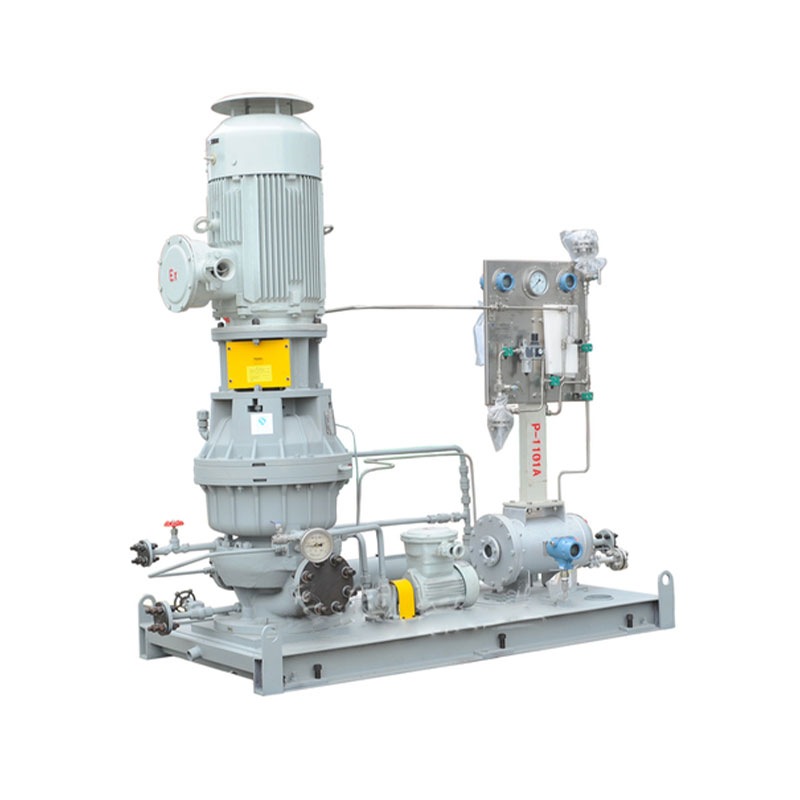
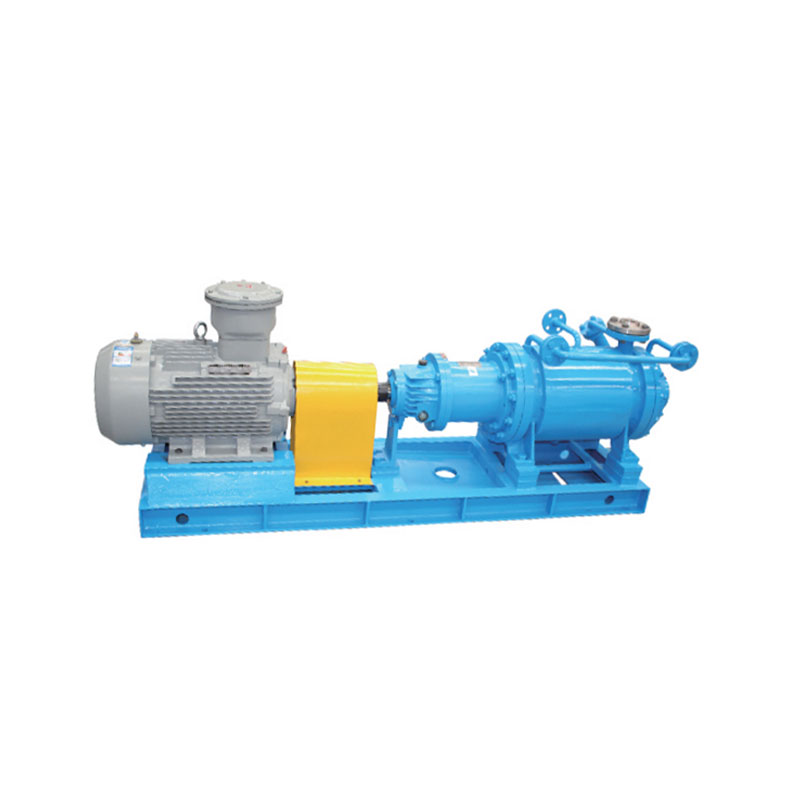
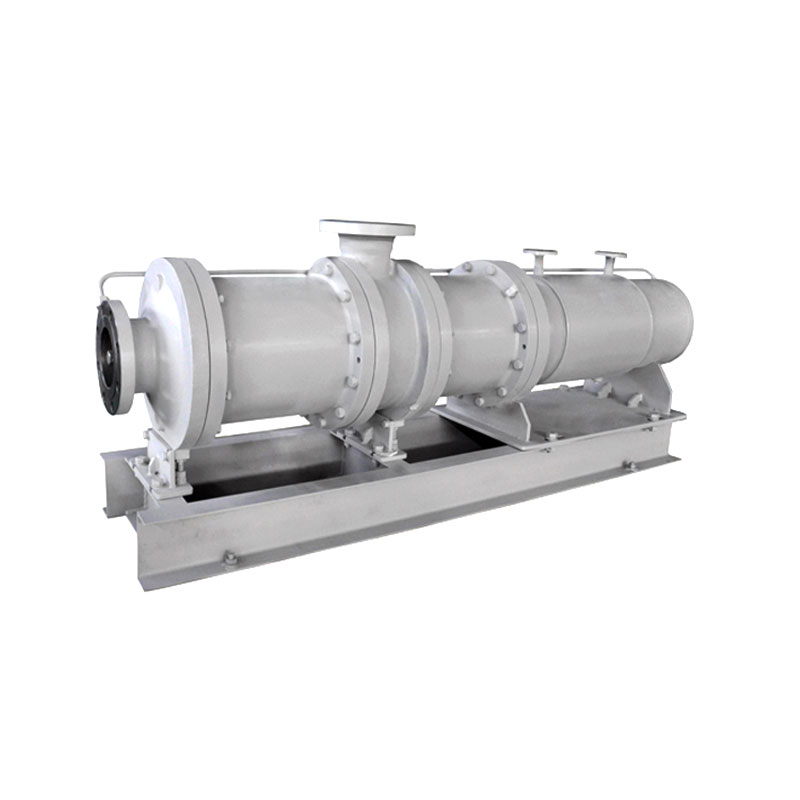
.jpg "Axially Split Horizontal Multistage Pump")


 ENG
ENG

 TOP
TOP