

 inquiry Now

 English
 русский
 عربى
عربى
A practical, engineering-first guide to selecting a pump that survives continuous heavy-duty service, covering chemical pumps, vacuum pumps, vertical turbine pumps, boiler feed pumps and more.
Short answer: To choose industrial pumps for heavy-duty use, match five things to your process before looking at brand or price: the fluid being handled (clean water, slurry, chemical, or gas), the required flow rate and total head, the operating temperature and pressure, the wetted material compatibility, and the duty cycle (continuous versus intermittent). A pump that is correctly sized for these five factors, built with heavy-wall castings, and backed by a supplier who stocks spare parts locally will outlast a cheaper pump by years, even if the purchase price is higher.
Below, we break this down by pump type, industry, and buying source, so you can go from a vague requirement to a specific model number with confidence.
Why Heavy-Duty Applications Push Pumps to Their Limits
A pump rated for light residential or commercial use fails quickly in a heavy-duty plant environment because the operating conditions are fundamentally different. Heavy-duty service typically means the pump runs for extended periods, sometimes twenty-four hours a day, seven days a week, and it often handles fluids that are abrasive, corrosive, hot, or under significant pressure. In a paper mill, for example, a pump may need to move pulp slurry loaded with fiber and grit for months without a shutdown. In a chemical plant, the same pump body might need to resist sulfuric acid or caustic soda without pitting or cracking.
Three failure modes account for the majority of premature pump breakdowns in heavy-duty settings: cavitation from incorrect suction conditions, seal failure from chemical attack or dry running, and bearing wear from misalignment or contamination. Understanding these failure modes before you buy is what separates a pump that lasts three years from one that lasts fifteen.
Heavy-duty is also a question of tolerances, not just materials. A light commercial pump might be built with standard casting tolerances and a single mechanical seal designed for occasional operation with clean water. A heavy-duty equivalent, by contrast, is typically built with thicker wall castings to resist erosion over years of continuous flow, tighter shaft tolerances to reduce vibration at high run hours, upgraded bearing frames rated for continuous load, and seal configurations chosen specifically for the fluid in question rather than a generic default. These upgrades add cost, which is exactly why sizing and specification discipline matters: paying for heavy-duty construction on a pump that only runs occasionally wastes budget, while under-specifying a pump that runs continuously guarantees an early failure and a more expensive replacement cycle down the line.
It also helps to think about heavy-duty pump selection as a system decision rather than a single-component decision. The pump itself is only one part of a chain that includes suction piping design, discharge piping design, the driver, whether that is an electric motor, diesel engine, or pneumatic drive, and the control strategy, whether the pump runs at fixed speed or is controlled by a variable frequency drive. A correctly selected pump installed with undersized suction piping will still cavitate, and a well-built boiler feed pump paired with a control system that allows it to run against a closed valve will still overheat and fail. Selecting the pump is the first step, not the only step, in building a heavy-duty system that performs reliably for its full expected service life.
These numbers are directional estimates drawn from common field maintenance experience across chemical, water treatment, and pulp and paper facilities, and they illustrate a simple point: selection discipline up front prevents the majority of unplanned downtime later.
Core Selection Criteria for Heavy-Duty Industrial Pumps
Before comparing pump types or brands, walk through the checklist below. Every heavy-duty procurement decision, whether it is a chemical dosing pump for a water treatment plant or a vertical turbine pump for a cooling tower, starts with the same set of questions.
| Selection Factor | What to Check | Why It Matters for Heavy-Duty Use |
| Fluid Type | Viscosity, corrosiveness, abrasive content, temperature | Determines wetted material, seal type, and impeller design |
| Flow Rate | Gallons or liters per minute required at peak demand | Undersizing causes overheating, oversizing wastes energy and causes cavitation |
| Total Dynamic Head | Elevation change plus friction loss plus pressure requirement | Wrong head rating leads to insufficient pressure or motor overload |
| Duty Cycle | Continuous, intermittent, or standby operation | Continuous duty demands heavier bearings and better cooling |
| Operating Temperature | Minimum and maximum process temperature | Affects seal material, thermal expansion tolerances, and lubrication |
| Pressure Rating | Maximum system pressure including surges | Casing and flange rating must exceed peak system pressure with margin |
| Material Compatibility | Chemical resistance chart for wetted parts | Incompatible metals corrode within weeks in aggressive chemical service |
| Orientation and Footprint | Horizontal versus vertical pump, available floor space | Vertical pumps save floor space and simplify priming in deep sumps |
| Power Source | Electric motor, diesel engine, or pneumatic drive | Pneumatic grease pumps and air-driven units suit hazardous or wash-down areas |
| Certifications | ISO, API 610, ANSI, or NSF ratings as required | Confirms the pump meets industry-specific safety and performance codes |
Once you have answers to each row above, you can narrow the pump type. Below is a step-by-step method that engineers commonly use to move from a blank requirement to a shortlist of models.
- Write down the fluid name, temperature, and solids content in one line.
- Calculate required flow rate at maximum demand, not average demand.
- Calculate total dynamic head including static lift, friction loss, and any downstream pressure requirement.
- Plot the flow and head point on a pump curve to identify the efficient operating range, avoiding the far left or far right of the curve.
- Select wetted materials based on a corrosion resistance chart for the specific chemical or slurry involved.
- Decide on horizontal or vertical configuration based on available space and suction conditions.
- Confirm certifications required by your industry or insurer.
- Request a written performance guarantee and spare parts list from the supplier before ordering.
Reading a Pump Curve Before You Buy
Every centrifugal pump, whether it is an industrial water pump, a vertical centrifugal pump, or a boiler feed pump, is sold with a performance curve, and learning to read that curve is one of the most valuable skills a buyer can bring to a heavy-duty purchase. The curve plots flow rate along the horizontal axis against total head along the vertical axis, and it shows how much head the pump can generate at any given flow. A well-selected pump operates near the middle of this curve, in the zone the manufacturer identifies as the best efficiency point, rather than at the far left or far right edges.
Operating too far to the left of the curve, meaning very low flow relative to the pump's capability, causes internal recirculation, heat buildup, and premature seal and bearing wear even though the pump appears to be running fine on the surface. Operating too far to the right, meaning flow demand exceeds what the pump curve comfortably supports, increases the risk of cavitation and can overload the motor. Heavy-duty buyers should ask any supplier for the specific curve for the exact model under consideration, plot their required operating point on it, and confirm that point sits within roughly seventy to one hundred and ten percent of the best efficiency flow rather than accepting a pump that is simply rated to reach the desired head and flow at its outer limits.
For applications with variable demand, such as an industrial water pump serving a cooling system with seasonal load swings, it is also worth discussing variable frequency drive control with your supplier. Running a pump at reduced speed during low-demand periods, rather than throttling a discharge valve on a fixed-speed pump, both saves energy and reduces mechanical stress, which extends service life in exactly the kind of continuous heavy-duty application this guide is focused on.
Matching Pump Type to the Job: A Breakdown by Application
Heavy-duty facilities rarely use a single pump type. A chemical plant might run a chemical pump for acid transfer, a chemical dosing pump for pH control, and an industrial vacuum pump for filtration, all in the same building. Below is a practical breakdown of the pump categories most commonly specified for heavy-duty industrial service, along with what each one is actually built to do.
Chemical Pump
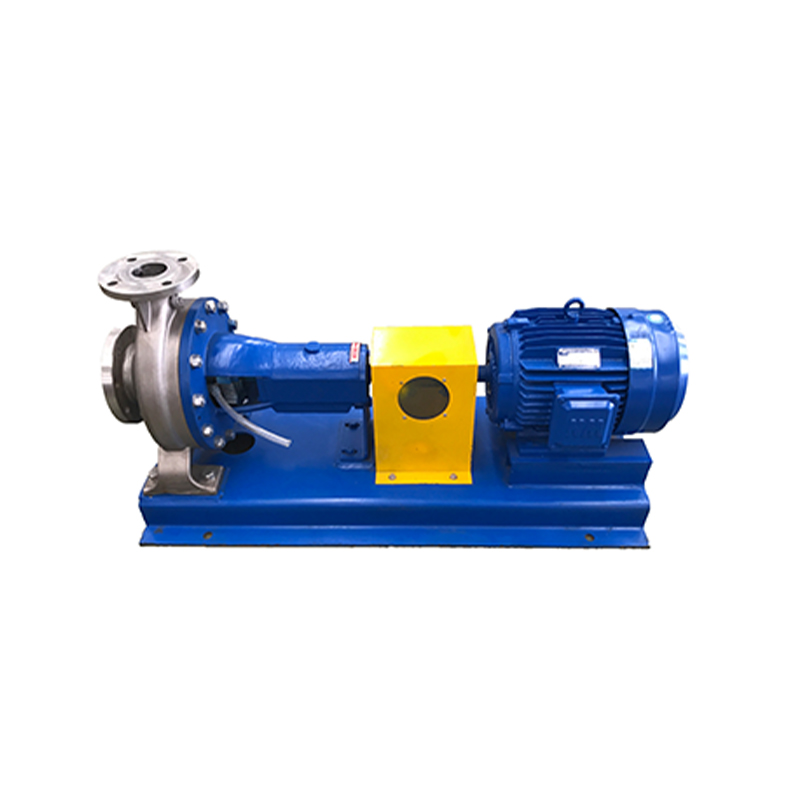
A chemical pump is built specifically to move corrosive or hazardous liquids such as acids, alkalis, solvents, and sodium hypochlorite without the pump body degrading. The defining feature is the wetted material, typically a fluoropolymer lining, high-nickel alloy, or engineered plastic such as PVDF or PP, chosen to resist attack from the specific chemical involved. Mechanical seals on a chemical pump are usually double seals with a barrier fluid to prevent leakage of hazardous liquid into the atmosphere. Heavy-duty chemical pumps are rated for continuous operation and are commonly found in water treatment plants, pulp bleaching lines, and specialty chemical manufacturing.
Chemical Transfer Pump
A chemical transfer pump is used to move bulk chemicals between storage tanks, tanker trucks, and process vessels, rather than dosing small precise amounts. These pumps prioritize flow rate and reliability over metering accuracy. Centrifugal and self-priming designs are common choices for chemical transfer pump duty because they can handle high volumes efficiently and tolerate occasional dry suction lines without damage, provided the impeller and seal materials are matched to the chemical being transferred.
Chemical Dosing Pump
A chemical dosing pump, also called a metering pump, injects small and highly precise quantities of chemical into a process stream, such as chlorine into a water line or a corrosion inhibitor into a boiler feed system. Accuracy, not raw flow, is the priority here. Diaphragm and plunger designs dominate this category because they deliver repeatable, adjustable dosing rates even at very low flow, which is critical for compliance with water treatment regulations and for protecting downstream equipment from over-dosing.
Industrial Water Pump
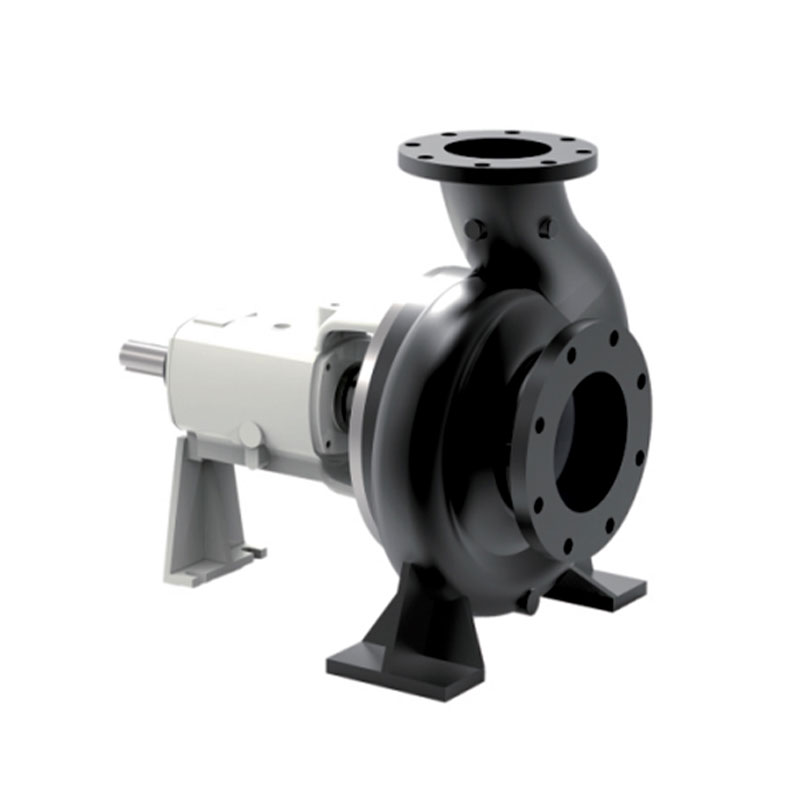
An industrial water pump covers a broad category used for cooling water circulation, process water supply, irrigation, firefighting systems, and general plant utility water. Heavy-duty industrial water pumps are typically centrifugal, built with cast iron, bronze, or stainless steel construction depending on water quality, and sized for large continuous volumes at moderate pressure. When choosing an industrial water pump for heavy-duty use, pay close attention to suction conditions, since cavitation from poor suction design is the most common cause of premature impeller wear in this category.
Industrial Vacuum Pump
An industrial vacuum pump removes air or gas from a sealed system to create a partial vacuum, and is used in applications ranging from vacuum filtration and degassing to material handling and packaging. Liquid ring, rotary vane, and dry screw designs are the most common heavy-duty configurations. Liquid ring vacuum pumps are especially popular in pulp and paper and chemical processing because they can handle moist, particulate-laden gas streams without damage, which is a common condition in those environments.
HVAC Vacuum Pump
An hvac vacuum pump is a specialized subtype used to evacuate air and moisture from refrigeration and air conditioning lines before charging a system with refrigerant. While smaller than process vacuum pumps, heavy-duty hvac vacuum pump models used in commercial and industrial building systems need to pull deep vacuum levels quickly and repeatedly, and they need robust oil management to prevent contamination from moisture pulled out of large commercial line sets. For large industrial HVAC installations, a two-stage rotary vane hvac vacuum pump with a higher cubic feet per minute rating reduces evacuation time significantly compared to lighter-duty single-stage units.
Gear Oil Pump
A gear oil pump uses meshing gears to move viscous fluids such as lubricating oil, hydraulic fluid, and gear oil itself at a controlled, steady flow. Because the gears create the pumping action through close-tolerance meshing rather than centrifugal force, a gear oil pump is well suited to high-viscosity fluids that would be difficult for a standard centrifugal pump to move efficiently. Heavy-duty gear oil pumps are used in machine tool lubrication systems, gearbox oil circulation, and fuel transfer, and they are valued for their ability to self-prime and maintain consistent flow even as viscosity changes with temperature.
Pneumatic Grease Pump
A pneumatic grease pump is an air-operated pump used to move heavy grease through centralized lubrication systems in factories, mining equipment, and large mobile machinery. Because it runs on compressed air rather than electricity, a pneumatic grease pump is a practical choice in areas where electrical equipment is restricted for safety reasons, such as near flammable dust or vapor. Heavy-duty pneumatic grease pumps are commonly built with a follower plate design to draw grease from a drum without air pockets, ensuring consistent lubrication delivery to bearings and gear sets that would otherwise fail from inadequate lubrication.
Vertical Pump
A vertical pump is any pump configuration where the shaft is mounted vertically rather than horizontally, which allows the pump to be installed directly over a sump, well, or tank. This orientation saves floor space and, in many designs, allows the impeller to sit below the liquid level, improving priming reliability. Heavy-duty vertical pump models are widely used in sump drainage, wastewater lift stations, and any application where the liquid source is below grade or in a confined pit.
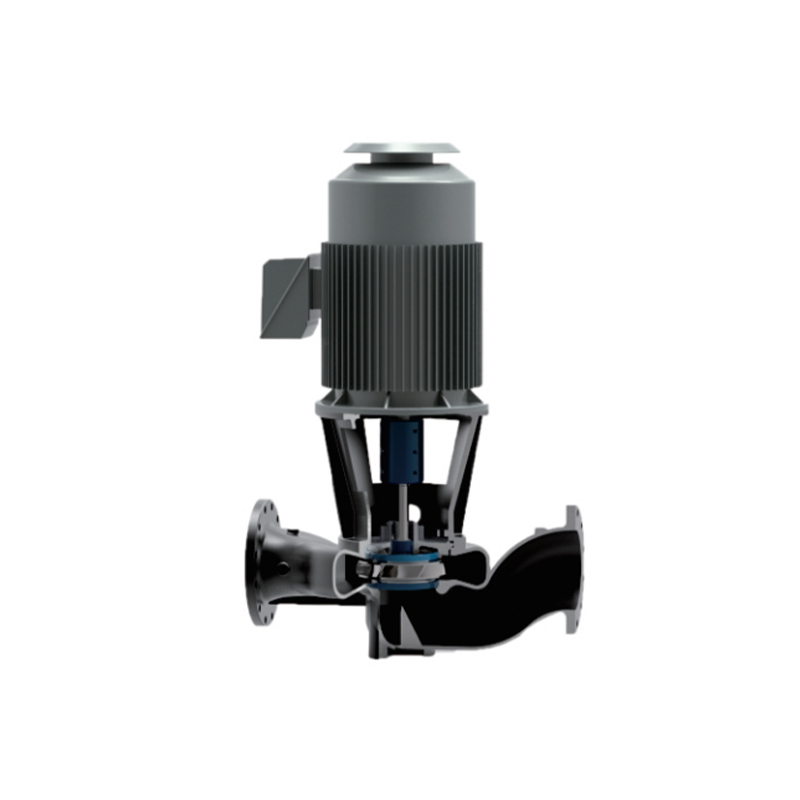
Vertical Centrifugal Pump
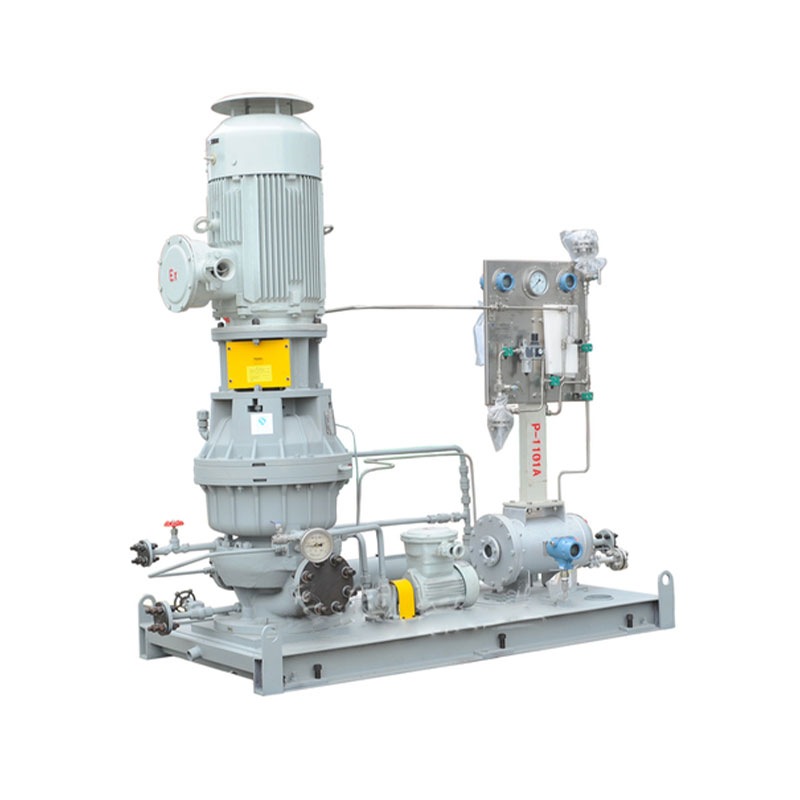
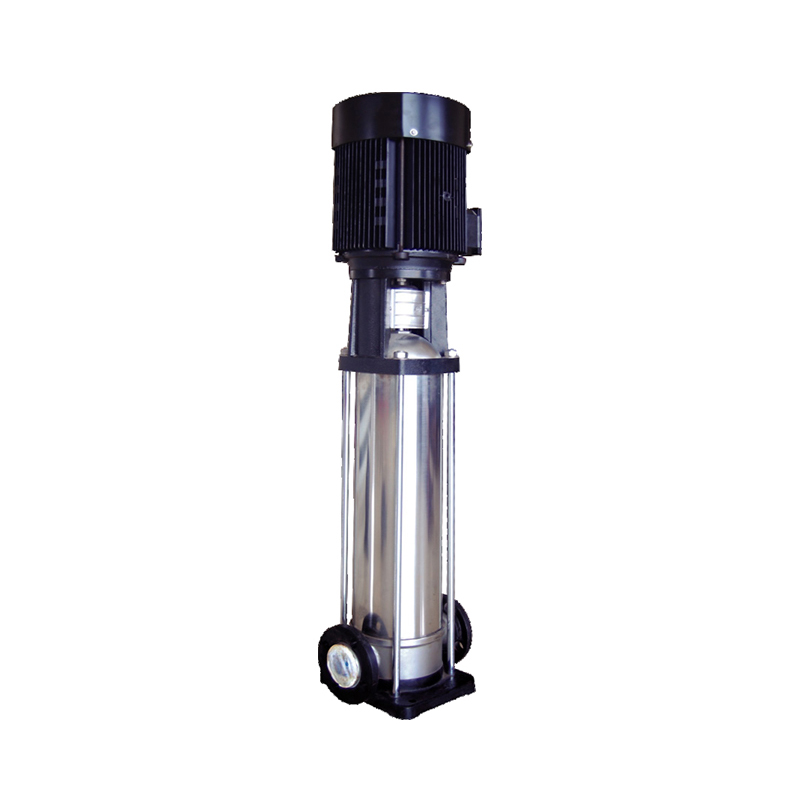
A vertical centrifugal pump combines the space-saving vertical shaft orientation with centrifugal impeller technology, making it a common choice for condensate return, tank circulation, and process transfer where floor space is limited. Because the motor is typically mounted above the pump casing, a vertical centrifugal pump keeps the electrical components away from potential leaks or flooding at floor level, which is a meaningful safety advantage in heavy-duty plants that handle liquids at ground level.
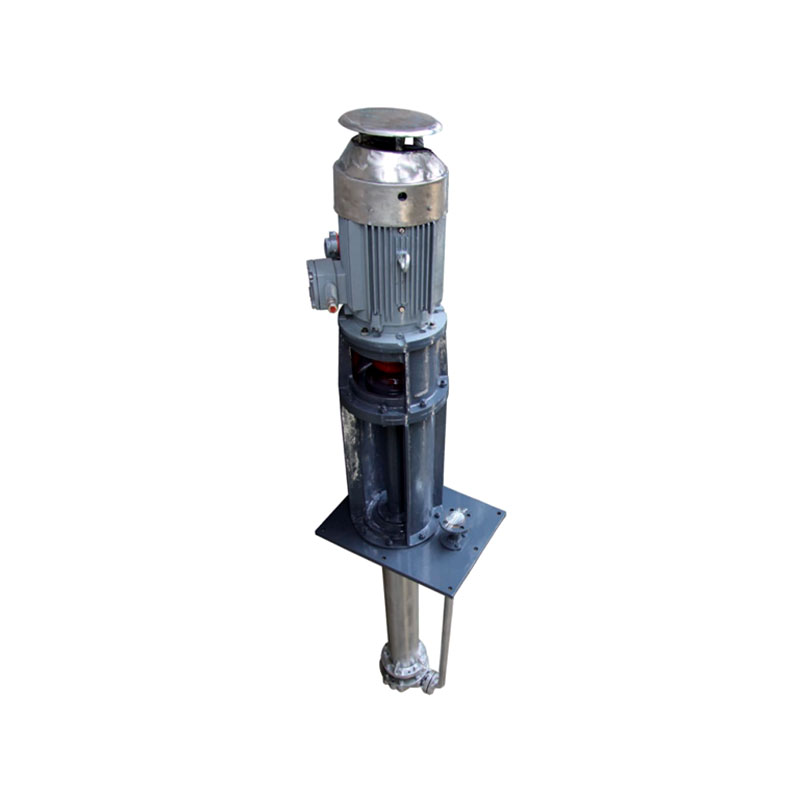
Vertical Turbine Pump
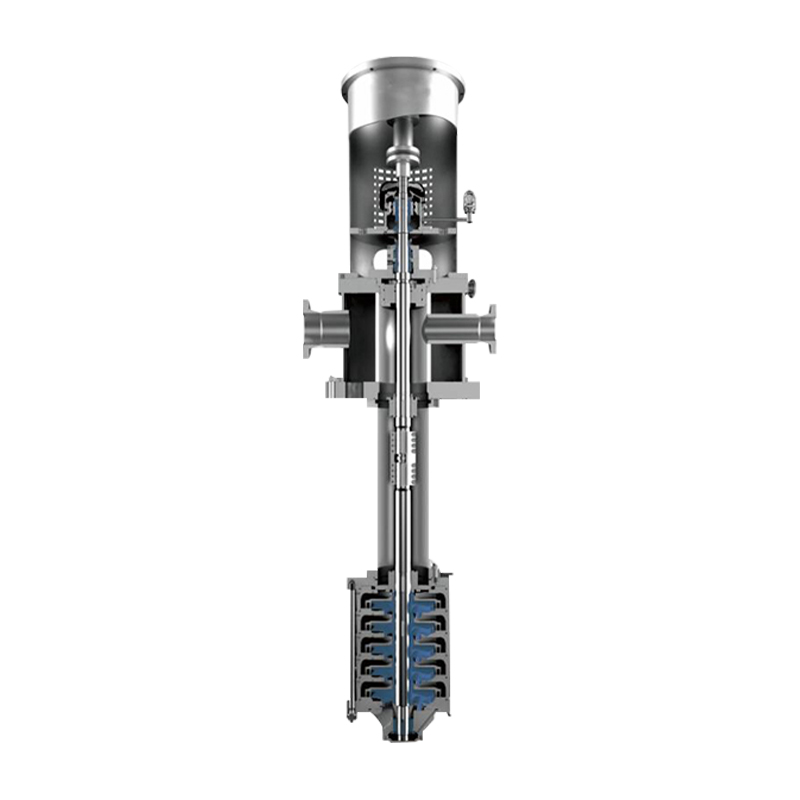
A vertical turbine pump uses one or more stacked impeller stages, called bowls, submerged in a well, sump, or tank, to lift water or process fluid from a deep source to the surface. This design is the standard choice for municipal and industrial water supply wells, fire protection systems, and large cooling tower makeup water systems because it can generate high head over long vertical distances efficiently. A heavy-duty vertical turbine pump is engineered with multiple stages to match the exact depth and pressure requirement of the well or sump, and column lengths can be customized to reach water levels far below grade.
Boiler Feed Pump
A boiler feed pump supplies water to a boiler at the pressure needed to overcome the boiler's internal steam pressure, making it one of the most demanding pump applications in any industrial plant. Because boiler feed water is typically hot, sometimes above 200 degrees Fahrenheit, and the discharge pressure must exceed boiler operating pressure by a safety margin, a heavy-duty boiler feed pump is built with multistage centrifugal design, hardened wear rings, and high-temperature mechanical seals. Reliability here is not optional, since a boiler feed pump failure can force an entire steam-dependent process, from a paper mill dryer section to a power generation turbine, offline within minutes.
Choosing the Right Pump for Your Industry
The correct pump type also depends heavily on which industry and process you are supporting. Below is a quick-reference table matching common heavy-duty industries to the pump types most frequently specified.
| Industry | Common Pump Types Used | Key Consideration |
| Pulp and Paper Mills | Vertical turbine pump, chemical pump, industrial vacuum pump, boiler feed pump | Abrasion resistance for pulp stock and consistent uptime for continuous production lines |
| Chemical Processing | Chemical pump, chemical transfer pump, chemical dosing pump | Exact material compatibility with the specific acid, base, or solvent handled |
| Power Generation | Boiler feed pump, vertical centrifugal pump, industrial water pump | High temperature and high pressure tolerance with redundant standby units |
| Municipal and Industrial Water Supply | Vertical turbine pump, industrial water pump | Efficiency at continuous run times and long-term corrosion resistance |
| Commercial and Industrial HVAC | Hvac vacuum pump, industrial water pump | Fast evacuation cycles and reliable moisture removal from large line sets |
| Manufacturing and Heavy Machinery | Gear oil pump, pneumatic grease pump | Consistent lubrication delivery under high vibration and dust exposure |
| Mining and Bulk Material Handling | Vertical pump, industrial vacuum pump, pneumatic grease pump | Abrasion resistance and tolerance for intermittent, harsh field conditions |
Where to Buy Industrial Pumps for a Paper Mill
Paper mills present one of the toughest combinations of demands in industrial pump selection: abrasive pulp stock, corrosive bleaching chemicals, high-temperature boiler feed water, and continuous twenty-four hour operation, often all within the same facility. When sourcing pumps for a paper mill, the buying decision should prioritize suppliers who can document abrasion-resistant materials for stock and white water service, corrosion-resistant alloys for bleach plant chemical pumps, and high-temperature multistage designs for boiler feed applications. Because unplanned downtime on a paper machine can cost tens of thousands of dollars per hour in lost production, mills typically favor manufacturers who keep spare parts in inventory and can supply replacement rotating assemblies quickly rather than manufacturing them to order after a failure.
A typical paper mill pump inventory illustrates how many different heavy-duty pump types coexist within one facility. Stock preparation areas rely on abrasion-resistant vertical pump and horizontal centrifugal units to move pulp slurry at high consistency without excessive wear. The bleach plant depends on chemical pump and chemical dosing pump units built from high-nickel alloys or fluoropolymer linings to withstand chlorine dioxide, hydrogen peroxide, and caustic soda. The power and recovery boiler area depends on boiler feed pump units rated for continuous high-temperature, high-pressure service, often with an installed standby unit for redundancy. Meanwhile, the dryer section vacuum systems rely on industrial vacuum pump units, frequently liquid ring designs, to remove moisture-laden air efficiently. Buyers evaluating where to buy industrial pumps for a paper mill should therefore look for a single manufacturer, or a small group of manufacturers, capable of supplying this full range of duty types with consistent documentation and support.
Materials and Construction That Survive Heavy-Duty Service
Material selection is where most heavy-duty pump failures actually originate, even though flow and head calculations get more attention during specification. The table below summarizes common wetted materials and where they perform best.
| Material | Best Suited For | Limitations |
| Cast Iron | General industrial water, mild service, cost-sensitive applications | Poor resistance to acids and abrasive slurries |
| Ductile Iron | Higher pressure water and moderate abrasion service | Still limited chemical resistance compared to stainless steel |
| Stainless Steel 316 | Mild to moderate chemical service, food and water applications | Can suffer chloride stress cracking in high chloride environments |
| Duplex Stainless Steel | High chloride environments, seawater, some chemical service | Higher cost than standard stainless grades |
| Hastelloy and High Nickel Alloys | Strong acids and highly corrosive chemical transfer pump duty | Significantly higher material cost |
| PVDF and Fluoropolymer Lined | Aggressive chemical dosing pump and chemical pump applications | Lower mechanical strength than metal, temperature limits apply |
| Hardened Alloy or Rubber Lined | Abrasive slurry such as pulp stock in vertical pump sump service | Rubber linings have temperature and chemical exposure limits |
Seal selection deserves equal attention. Mechanical seals should be specified against the same chemical compatibility chart used for the pump housing, and heavy-duty continuous-run applications generally justify the added cost of double mechanical seals with a barrier fluid over simpler single seals, since seal replacement labor and downtime cost far more than the incremental parts cost.
Where to Find Industrial Pumps and How to Judge a Top-Rated Supplier
Once you know the pump type, materials, and performance point you need, the next question is where to find industrial pumps that will actually be built to that specification rather than a generic catalog approximation. Heavy-duty buyers typically source pumps through three channels: regional industrial distributors, direct manufacturer relationships, and engineered system integrators who assemble a full skid including pump, motor, and controls.
For most heavy-duty procurement, going directly to a manufacturer offers the strongest combination of price, customization, and long-term parts availability, provided the manufacturer has a proven track record in your specific application. When evaluating how to choose top-rated industrial pumps for heavy-duty use from any supplier, apply the following checklist.
- Does the manufacturer provide a documented performance curve and material certificate for the exact model, not a generic family datasheet
- Can the supplier reference existing installations in a similar application, such as pulp and paper, chemical processing, or power generation
- Are common wear parts such as impellers, seals, and bearings kept in stock for fast replacement
- Does the supplier offer engineering support to verify sizing before the order is placed, rather than after a failure
- What warranty terms apply to castings, seals, and bearings specifically, since these are the components most likely to wear first
- Can the manufacturer support custom column lengths, bowl stages, or wetted materials for non-standard site conditions
Beloni Jiangsu Pump Manufacturing Co Ltd
Beloni Jiangsu Pump Manufacturing Co Ltd is an industrial pump manufacturer based in Jiangsu, China, producing heavy-duty pump lines that cover many of the categories discussed in this guide, including chemical pumps, chemical transfer pumps, vertical turbine pumps, vertical centrifugal pumps, boiler feed pumps, and industrial vacuum pumps. The company builds pumps around engineered wetted materials matched to specific chemical and abrasive service conditions, which is the central requirement for heavy-duty reliability discussed throughout this guide. For buyers researching where to buy industrial pumps for a paper mill, a chemical plant, or a power generation facility, Beloni offers a useful starting point for requesting a documented performance curve, material certification, and application-specific sizing support before committing to an order.
As with any heavy-duty pump purchase, it is good practice to request references from similar installations and confirm spare parts availability directly with the manufacturer as part of your evaluation process.
Comparing Purchase Channels
| Channel | Advantage | Watch Out For |
| Direct Manufacturer | Custom engineering, better pricing on volume orders, direct technical support | Lead time on fully custom configurations |
| Regional Distributor | Faster local delivery, easier for smaller one-off orders | Limited ability to customize materials or configuration |
| System Integrator | Complete skid with motor, controls, and instrumentation included | Higher total package price, less flexibility to swap pump brands later |
Installation, Maintenance, and Total Cost of Ownership
The purchase price of a heavy-duty industrial pump is usually a small fraction of its total lifetime cost once energy consumption, maintenance labor, and downtime are factored in. A pump that costs twenty percent more up front but runs at a better efficiency point on its curve, and uses correctly matched wetted materials, will typically cost less over a five to ten year service life than the cheaper alternative.
Installation Best Practices
- Confirm proper alignment between pump and motor shafts before startup
- Verify suction piping is sized to avoid cavitation at peak flow
- Install isolation valves and pressure gauges for easier future maintenance
- Support piping independently so pipe weight does not stress the pump casing
- Record baseline vibration and temperature readings at commissioning for future comparison
Ongoing Maintenance Priorities
- Monitor seal leakage and bearing temperature on a regular inspection schedule
- Track vibration trends to catch bearing wear before a failure occurs
- Keep a stock of common wear parts on site for continuous duty pumps
- Re-grease or re-lubricate bearings on the schedule specified by the manufacturer
- Review pump performance annually against the original curve to catch gradual efficiency loss
For continuous duty equipment such as a boiler feed pump or a vertical turbine pump supplying municipal water, many facilities also maintain a standby unit that can be brought online within minutes, since the cost of even a short unplanned outage in these applications often exceeds the cost of the standby pump itself many times over.
Frequently Asked Questions
How do I choose industrial pumps for heavy duty use if I do not have an engineering background
Start by writing down the fluid type, required flow rate, and how far and how high the fluid needs to travel. Bring this information to a pump manufacturer or distributor and ask for a sizing recommendation with a documented performance curve. Reputable heavy-duty pump suppliers expect to support sizing conversations and will ask clarifying questions about temperature, pressure, and duty cycle before recommending a model.
What is the difference between a chemical pump and a chemical dosing pump
A chemical pump generally refers to pumps built for handling corrosive fluids in bulk, prioritizing flow and material resistance, while a chemical dosing pump is designed specifically for precise, low-volume, adjustable injection of a chemical into a process stream. If you need to move a large volume of acid between tanks, you likely need a chemical pump or chemical transfer pump. If you need to inject a controlled dose of chlorine or a corrosion inhibitor, you need a chemical dosing pump.
Why do vertical turbine pumps cost more than standard centrifugal pumps
A vertical turbine pump uses multiple stacked impeller stages and a long column assembly designed to reach deep into a well or sump, which requires more precision manufacturing and materials than a standard single-stage centrifugal pump. The higher cost reflects the ability to generate significant head over long vertical distances, which a standard horizontal pump cannot do efficiently.
Can a pneumatic grease pump be used in a hazardous area
Yes, this is one of the main reasons facilities choose a pneumatic grease pump over an electric alternative. Because it runs on compressed air rather than electricity, a properly rated pneumatic grease pump avoids the ignition risk associated with electrical equipment in areas with flammable dust or vapor, making it a common choice in mining and heavy processing environments.
How often should a boiler feed pump be inspected
Most heavy-duty boiler feed pumps are inspected on a combination of continuous monitoring, such as vibration and temperature sensors, plus a scheduled physical inspection every three to six months, with a full teardown inspection typically performed on an annual basis or according to the manufacturer's recommended interval. Because boiler feed pumps operate at high temperature and pressure continuously, deferred maintenance here carries higher risk than in most other pump categories.
Where can I find industrial pumps for a specialized application like pulp and paper
Look for manufacturers with documented experience in abrasive slurry handling and high-temperature boiler feed applications, since these two requirements define most pulp and paper pump specifications. Ask potential suppliers, including manufacturers such as Beloni Jiangsu Pump Manufacturing Co Ltd, for references from existing paper mill installations and for material certificates confirming abrasion-resistant construction before placing an order.
Where to find industrial pumps when I need a fast turnaround on a failed unit
When speed matters more than customization, prioritize suppliers who publish stocked model lists and confirmed lead times rather than manufacturers who build every order from scratch. Regional distributors are often faster for a like-for-like replacement of a standard industrial water pump or gear oil pump, while a direct manufacturer relationship pays off more for planned upgrades or non-standard configurations where you have time to plan ahead. Many facilities keep a critical spares list of the pump models most likely to fail, such as boiler feed pumps and chemical pumps in continuous service, precisely so a fast turnaround supplier is already identified before an emergency happens.
Is a more expensive heavy-duty pump always the better choice
Not necessarily. A heavy-duty rated pump is the right choice when the application involves continuous operation, abrasive or corrosive fluids, or high temperature and pressure, but paying for heavy-duty construction on a pump that runs only occasionally with clean water is usually not the best use of budget. The goal is matching the pump's build quality to the actual demands of the application, which is why working through the selection criteria earlier in this guide before comparing prices leads to a better long-term outcome than choosing based on price or duty rating alone.
Common Warning Signs a Heavy-Duty Pump Is About to Fail
Even a correctly selected pump will eventually show early warning signs before a major failure, and catching these signs early is far less expensive than an emergency replacement in the middle of a production run. Plant maintenance teams responsible for a chemical pump, a vertical turbine pump, or a boiler feed pump should treat the following symptoms as immediate action items rather than issues to monitor over time.
| Warning Sign | Likely Cause | Recommended Action |
| Rising vibration levels | Bearing wear, shaft misalignment, or impeller imbalance | Schedule a vibration analysis and inspect alignment at the next planned stop |
| Increasing seal leakage | Seal face wear or chemical attack on seal material | Replace the mechanical seal and confirm chemical compatibility of the seal faces |
| Falling discharge pressure | Impeller wear, cavitation, or a clogged suction strainer | Inspect suction piping and check impeller clearance against original specification |
| Rising motor amperage | Bearing drag, misalignment, or the pump operating off its efficient curve range | Verify actual operating point against the original pump curve |
| Unusual noise during operation | Cavitation, bearing damage, or loose internal components | Shut down for inspection rather than continuing to run, since cavitation damage accelerates quickly |
For continuous duty applications such as an industrial water pump feeding a cooling tower loop or a vertical centrifugal pump on condensate return, a condition monitoring program that tracks vibration, temperature, and amperage trends over time will typically flag a developing problem weeks before an unplanned outage occurs, giving the maintenance team time to schedule a repair during a planned stop instead of reacting to an emergency.
Final Takeaway
Choosing industrial pumps for heavy-duty use comes down to disciplined matching between your process conditions and the pump's engineering: the right flow and head calculation, the right wetted materials for your specific fluid, and a duty rating that matches how many hours per day the pump will actually run. Whether you need a chemical pump for acid transfer, a vertical turbine pump for a deep water well, a boiler feed pump for continuous steam production, or an industrial vacuum pump for filtration, the same selection discipline applies. Work through the criteria in this guide, request documented performance data from your supplier, and prioritize manufacturers who can support your specific industry, whether that means sourcing chemical pumps for a treatment plant or finding where to buy industrial pumps for a paper mill, with real application experience and available spare parts.
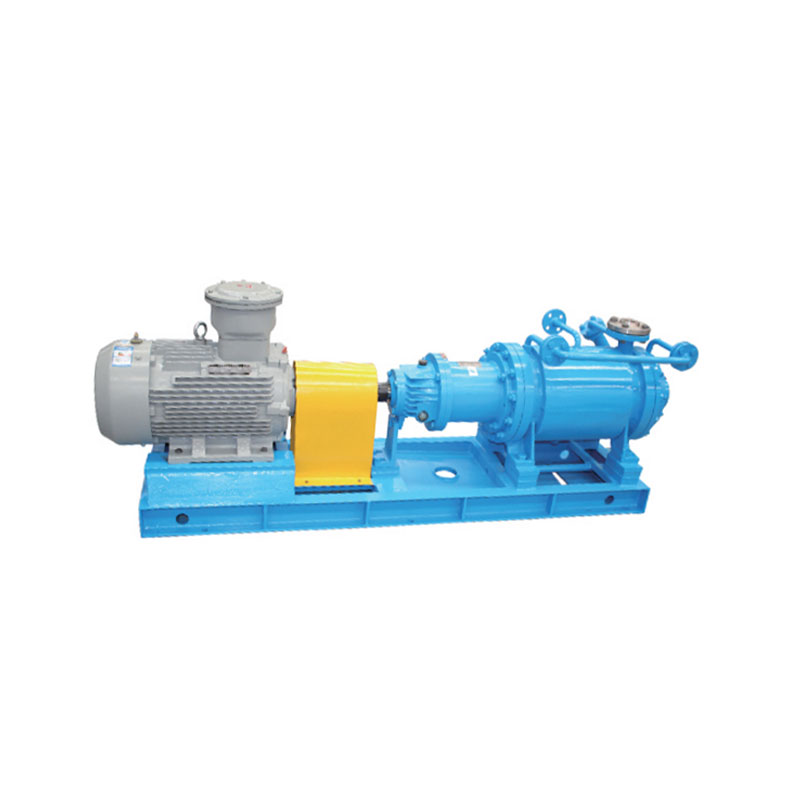
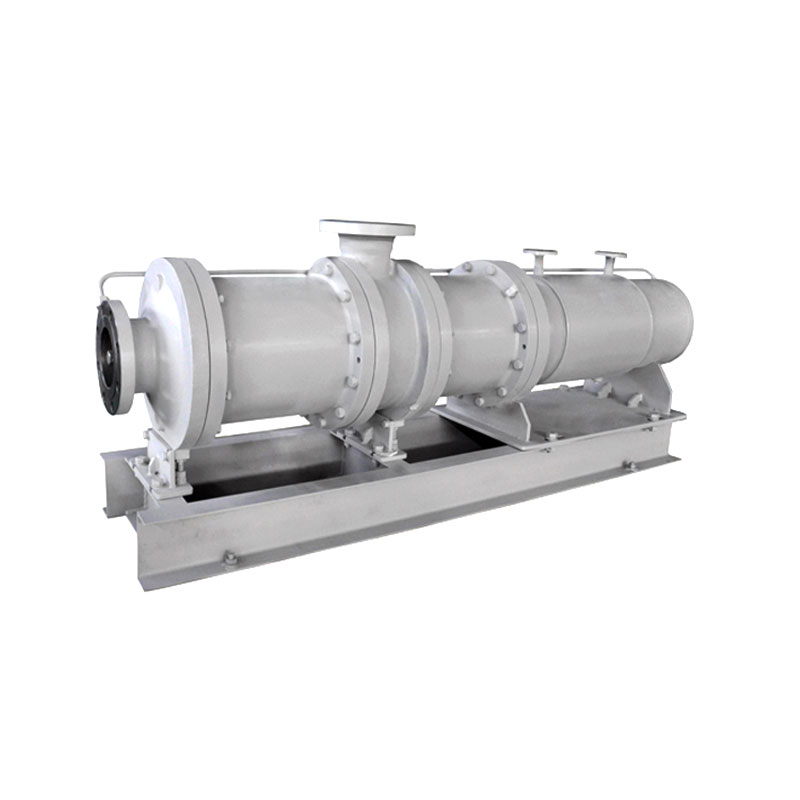
.jpg "Axially Split Horizontal Multistage Pump")


 ENG
ENG

 TOP
TOP