

 inquiry Now

 English
 русский
 عربى
عربى
An old industrial wastewater pit rarely offers comfortable margins during a retrofit. The concrete sump may be sized for a pump installed decades ago, the access hatch may be only 600 mm wide, and the electrical panel may still be arranged for single-phase power or for an older starter. Meanwhile, the actual flow and solids load in the wastewater have often increased since the original design.
The best compact wastewater pumps for retrofitting old facilities are not simply the smallest units on the market. They must fit the existing pit, work with the existing discharge piping, and operate within the available electrical capacity. The practical order of work is: measure the pit, confirm the power supply, select the pump type, then size the flow and head against the real demand.
Why Retrofits Differ from New Pump Station Design
In a new pump station, the design team can size the pit around the pump. In a retrofit, the pump must fit the existing pit. Four constraints play a decisive role:
- Pit dimensions, depth, and cover opening
- Existing guide rails, discharge risers, or pump base geometry
- Discharge line elevation, diameter, and connection type
- Available voltage, phase, and breaker capacity
These constraints often determine the pump type before the flow and head values come into the picture. A pump with a perfect performance curve is not a good retrofit choice if it cannot pass through the hatch or sit on the base left by the old unit.
Key Parameters to Capture Before Pump Selection
Before opening any pump catalog, spend thirty minutes collecting the following field data:
- Peak flow: use the water level rise rate in the pit, or time how long the existing pump runs, to estimate the peak inflow.
- Total head: measure the static height from the lowest running water level to the discharge point, add friction losses for pipe, fittings, and valves, then add a margin of 2 to 5 meters.
- Solids and fiber load: record the cause of past blockages, such as fiber length or particle size, to judge the impeller passage size required.
- Liquid temperature and pH: hot or highly acidic liquids change the wetted material selection and may require lined components.
- Power supply: note the voltage, phase, rated current, and whether the area is classified for hazardous gases.
These data define the pump size, motor rating, and materials. For example, wastewater with a pH below 2 will quickly corrode ordinary cast-iron impellers, so the wetted parts should be lined with fluorine plastic or another acid-resistant material.
Compact Wastewater Pump Types That Fit Existing Facilities
For most old industrial facilities, the final choice comes down to three compact pump types: submersible sewage pumps, vertical submersible pumps, and ground-level self-priming centrifugal pumps.
| Pump type | Installation | Space use | Solids handling | Retrofit advantage |
|---|---|---|---|---|
| QW non-clogging submersible sewage pump | Submerged in the pit | Smallest occupied floor space; pump sits inside the pit | Moderate to high solids and fibers | Can be lowered through a top hatch and lifted out by guide rails |
| FY/HY vertical submersible pump | Impeller submerged, motor above deck | Vertical footprint only | Low to moderate solids; not for long fibers | Fits narrow deep pits; motor stays accessible |
| Ground-level self-priming centrifugal pump | Beside the pit | Needs floor space at grade | Light solids; screening advised | Service without entering the pit |
Submersible sewage pumps are the most direct retrofit solution because they work inside the pit and do not need a separate dry well or a base frame at floor level. For ordinary wastewater with fibers, grit, and fine solids, the QW type non-clogging submersible sewage pump is a compact candidate. The pump body drops into the existing sump, and the discharge connection can use a portable coupling or a fixed riser, depending on the condition of the existing piping.
 Wholesale QW Type Non-Clogging Submersible Sewage Pump Suppliers, Factory - BeloBeloni (Jiangsu) Pump Manufacturing Co., Ltd is China wholesale QW Type Non-Clogging Submersible Sewage Pump suppliers and factory,The QW...View Product →
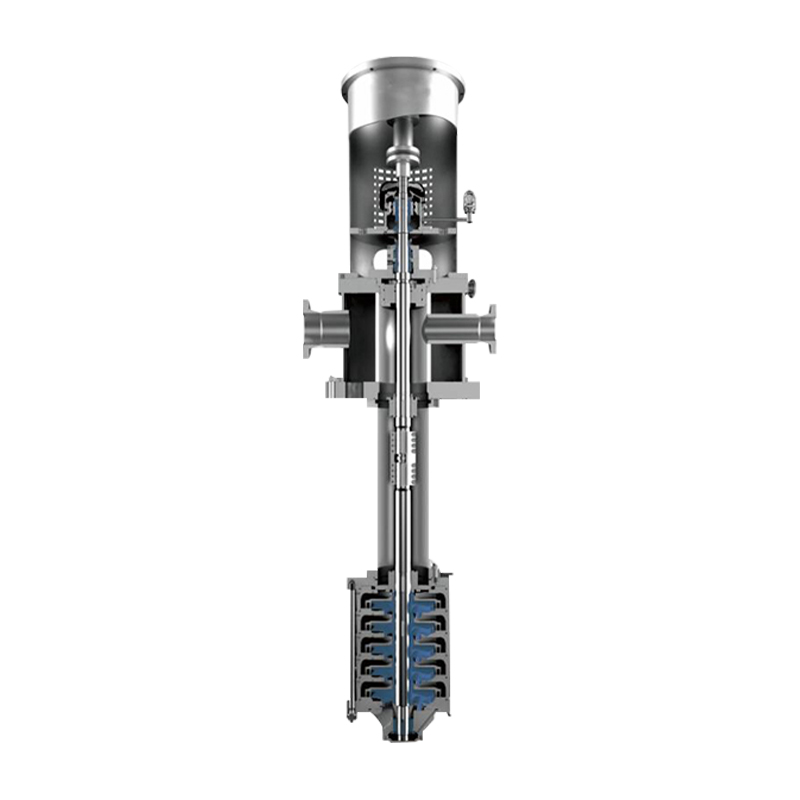
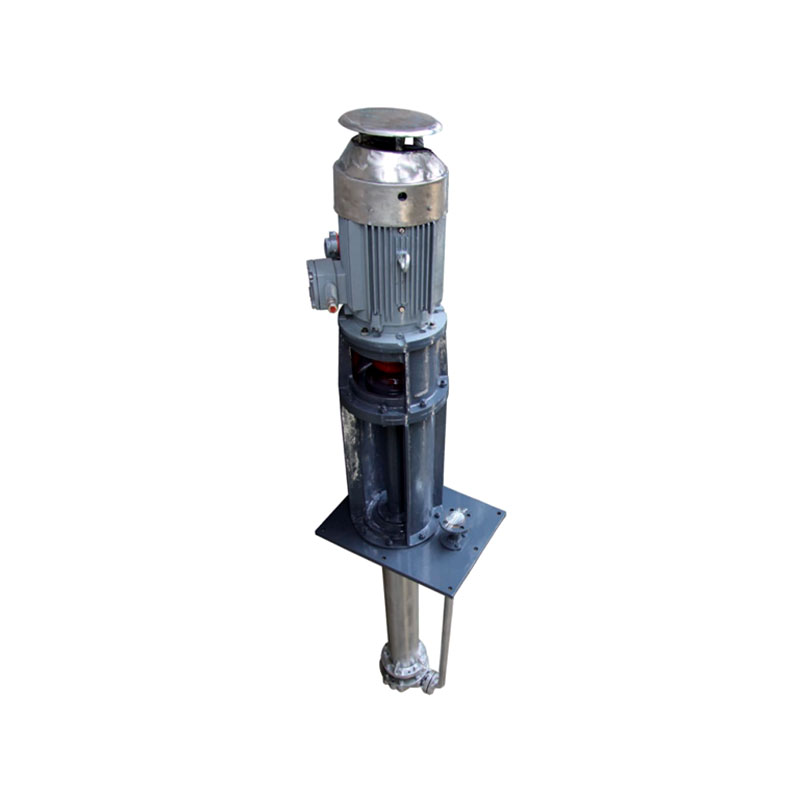
A vertical submersible pump becomes attractive when the pit is deep but narrow. The FY/HY series vertical submersible pumps keep the volute and impeller below the liquid level while the motor stays above the cover plate, so the horizontal footprint remains small. This layout is especially useful for pits built in confined corners or between equipment foundations, because installation only requires a vertical opening above the pump support plate.
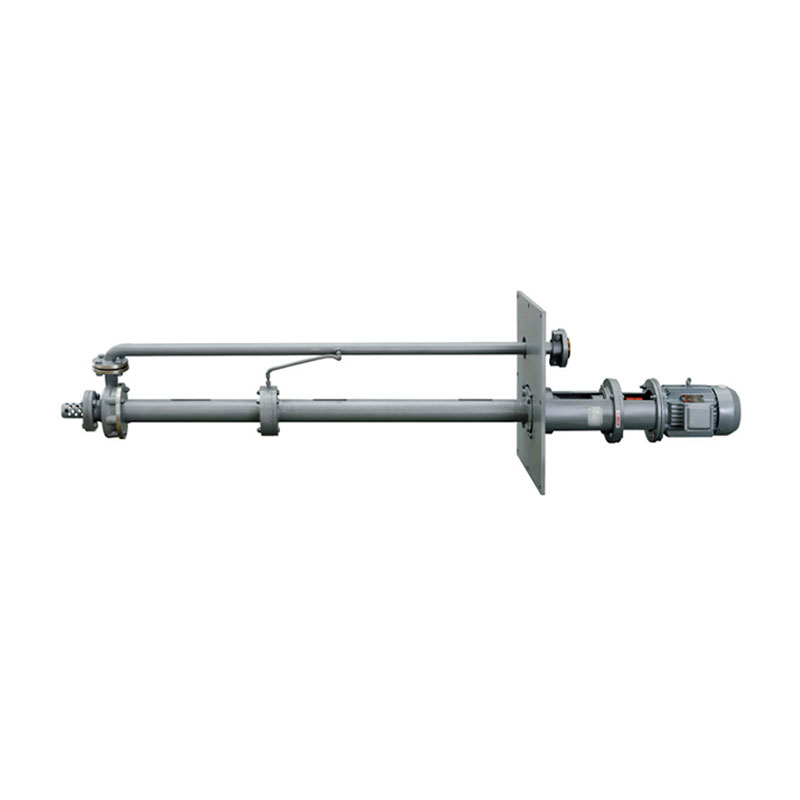 Wholesale FY (HY) Series Vertical Submersible Pumps Suppliers, Factory - Beloni Beloni (Jiangsu) Pump Manufacturing Co., Ltd is China wholesale FY (HY) Series Vertical Submersible Pumps suppliers and factory,The FY (H...View Product →
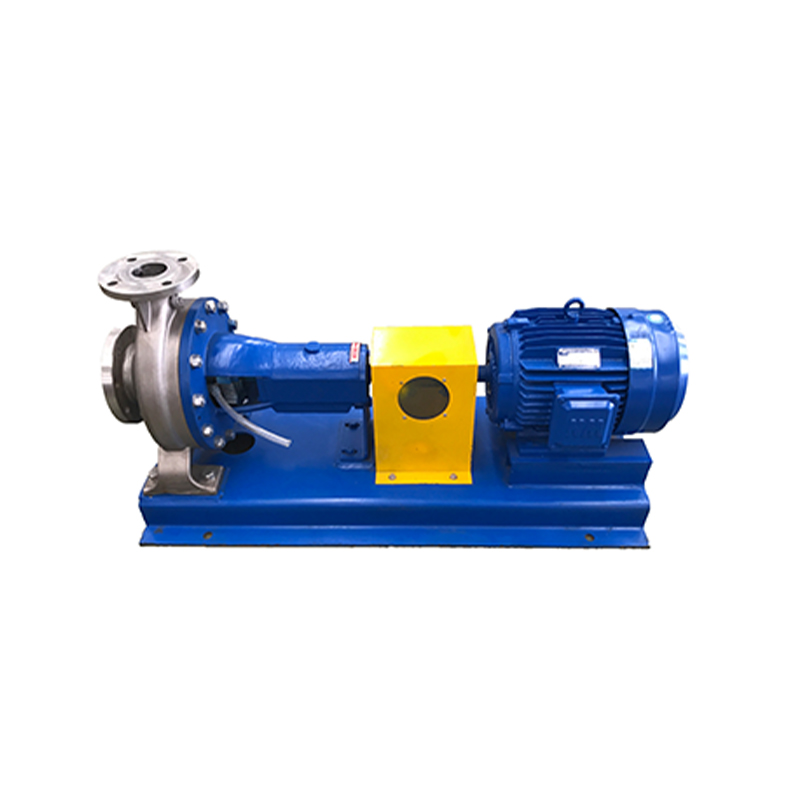
Self-priming centrifugal pumps offer another retrofit route when the pump must remain above grade and easy to access. High suction lift self-priming pumps can lift water from the pit, provided the static suction lift stays within the rated limit, typically no more than 6 to 7 meters below the pump centerline. Keep the suction line short and without sharp bends to reduce friction loss and priming time.
Wastewater in old chemical plants is often corrosive. Process water containing acids, alkalis, or organic solvents requires pumps with lined wetted parts. The FYH series fluorine-plastic submersible pumps combine a compact vertical installation form with a fluorine-plastic-lined flow path, which suits an existing concrete acid or alkali pit without requiring a new tank lining.
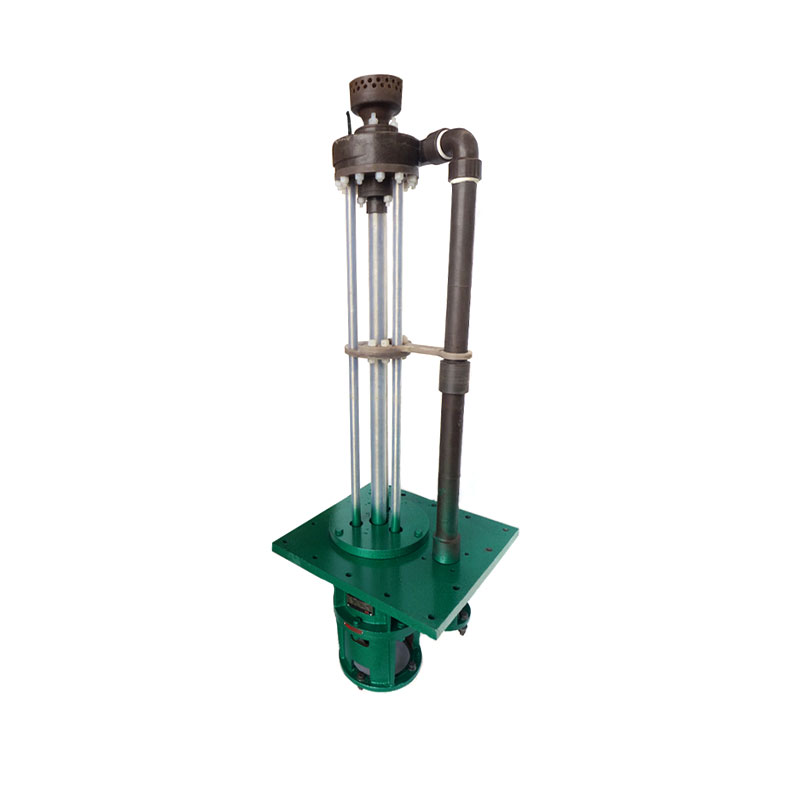 Wholesale FYH Series Fluorine Plastic Submersible Pumps Suppliers, Factory - BelBeloni (Jiangsu) Pump Manufacturing Co., Ltd is China wholesale FYH Series Fluorine Plastic Submersible Pumps suppliers and factory,The F...View Product →
Matching the Pump to the Retrofit Scenario
The following scenarios show how this selection logic works in practice.
Deep pit with difficult access and fibrous wastewater
Choose a submersible sewage pump with a non-clogging impeller, and use guide rails or a pull-out coupling so the pump can be lifted without entering the pit.
Narrow deep pit with limited floor space
Choose a vertical submersible pump with a compact support flange, so the motor remains accessible at deck level and the pump body only needs a small vertical opening.
Corrosive process wastewater
For liquid with extreme pH values, choose a fluorine-plastic-lined submersible pump and confirm that the suction screen will not become blocked by chemical reaction products.
Pump must stay above ground
Choose a ground-level self-priming pump or a vacuum-primed pump set placed next to the pit, and design the suction pipe so that both static lift and friction losses remain within the pump’s self-priming capability.
Retrofit Installation Details That Are Often Overlooked
Retrofit installation work is where many pump replacements succeed or fail. Beyond the pump curve, pay attention to these details:
- Guide-rail and coupling scheme: even if the old pit has no rails, stainless steel guide rails and an adjustable coupling can be installed so the submersible pump is lifted out and lowered in without dewatering the sump.
- Discharge connection: old flanges may have changed dimension because of scale or corrosion. Flexible couplings or a short spool piece can absorb the mismatch and also simplify removal.
- Electrical compatibility: replace the starter, overload protection, and cable size if the new motor is larger or if the supply voltage is different. For three-phase pumps, verify phase sequence and earth resistance before putting the pump into service.
- Level control: the start and stop levels set the pump’s duty cycle. If the existing control panel already uses float switches, check the switching capacity and adjust rod or cable length for the new pump.
- Motor cooling: submersible motors rely on the surrounding liquid for heat dissipation. Keep the stop level above the minimum cooling depth, otherwise the motor may overheat during a prolonged run.
For continuous duty, a pump should be selected at a working point compatible with the motor’s thermal rating rather than at the extreme right end of its curve. The same logic used in continuous duty industrial centrifugal pumps applies to wastewater retrofits: choose a pump that runs at the required flow and head with enough margin to avoid cavitation and vibration when the water level in the old pit fluctuates.
Making the Decision for an Existing Facility
The best compact wastewater pump for an old facility depends more on the existing pit dimensions, wastewater characteristics, access, and power supply than on a generic engineering comparison. By measuring the pit, confirming the flow and head, identifying a pump configuration that can be installed without major concrete work, and matching the wetted materials to the wastewater chemistry, an old pump station can be upgraded without turning the project into a full-scale rebuild.
Submersible sewage pumps, vertical submersible pumps, and ground-level self-priming pumps each have a place in such retrofits. For corrosive streams, add a fluorine-plastic-lined version of the same compact format. The right configuration is the one that fits the pit, handles the solids, and keeps the pump accessible for maintenance.
.jpg "Axially Split Horizontal Multistage Pump")


 ENG
ENG

 TOP
TOP