

 inquiry Now

 English
 русский
 عربى
عربى
Imagine a flood-control station that must shift thousands of cubic meters of water per hour over just a few meters of head. A centrifugal pump would need a huge impeller and motor. A vertical axial pump, by contrast, is built for exactly this duty: high flow, low head, and a vertical installation that fits neatly above a sump.
What Is a Vertical Axial Pump?
A vertical axial pump is a vertical-axis machine that moves liquid along the shaft axis using an axial-flow impeller, also called a propeller. Instead of throwing liquid outward with centrifugal force, the rotating blades create a lift force, much like a ship propeller working inside a pipe. Liquid enters through a suction bell, passes through the impeller and guide vanes, travels up a column pipe, and exits through a discharge elbow.
Fixed-Pitch and Variable-Pitch Designs
Fixed-pitch designs are simpler and less expensive when the pump runs at a stable operating point for most of its life. Variable-pitch designs allow the blade angle to be adjusted manually or hydraulically, giving useful flexibility in irrigation and storm-water systems where inflow changes seasonally. Semi-axial pumps, also called mixed-flow pumps, fill the gap between axial and centrifugal types when the required head is too high for a pure axial pump but still relatively low.
How Does a Vertical Axial Pump Work?
The working principle can be broken into three steps. First, the rotating impeller blades accelerate the liquid axially and give it kinetic energy. Second, the guide vanes remove the swirling component of the flow and convert part of that kinetic energy into pressure. Third, the column pipe carries the liquid upward to the discharge elbow, which directs it into the pipeline.
Because the flow path is short and direct, a vertical axial pump can handle very large volume at low pressure. Its performance curve is steep, and the best efficiency point is narrow, so the pump must be matched closely to the expected duty range. The most common operational risk is cavitation. If the available net positive suction head is too low, vapor bubbles form and collapse on the blade surfaces, producing noise, vibration, and localized erosion. Correct submergence and sump geometry are just as important as the pump itself.
Key Components and Their Functions
Understanding the main components helps you evaluate mechanical design, material quality, and maintainability. The table below summarizes the parts found in most vertical axial pumps.
| Component | Function |
|---|---|
| Suction bell | Directs liquid smoothly into the impeller and reduces inlet losses. |
| Impeller | Transfers mechanical energy to the liquid through axial lift force. |
| Guide vane | Straightens swirling flow and converts excess kinetic energy into pressure. |
| Column pipe | Carries the liquid from the impeller up to the discharge head. |
| Discharge elbow | Changes the vertical flow to a horizontal outlet direction. |
| Shaft and bearings | Transmit torque and keep the rotating assembly aligned under radial and axial loads. |
| Sealing or stuffing box | Controls leakage around the shaft in closed or pressurized systems. |
| Drive unit | Connects the pump to an electric motor, sometimes through a right-angle gearbox. |
Material selection matters more than many buyers expect. Cast iron and stainless steel are common for clean water. Sea water and brackish water require bronze, duplex stainless steel, or other corrosion-resistant alloys. Abrasive media need hardened or rubber-lined surfaces at the impeller and wear rings. Selecting the wrong material can drastically shorten service life.
Common Applications
Vertical axial pumps are chosen wherever large quantities of liquid must be moved against a low head. Typical applications include:
- Storm-water drainage and flood-control pumping stations.
- Agricultural irrigation and large-scale land drainage.
- Cooling-water circulation in power plants and industrial facilities.
- Raw-water intake and transfer in municipal water treatment.
- Marine and offshore sea-water service.
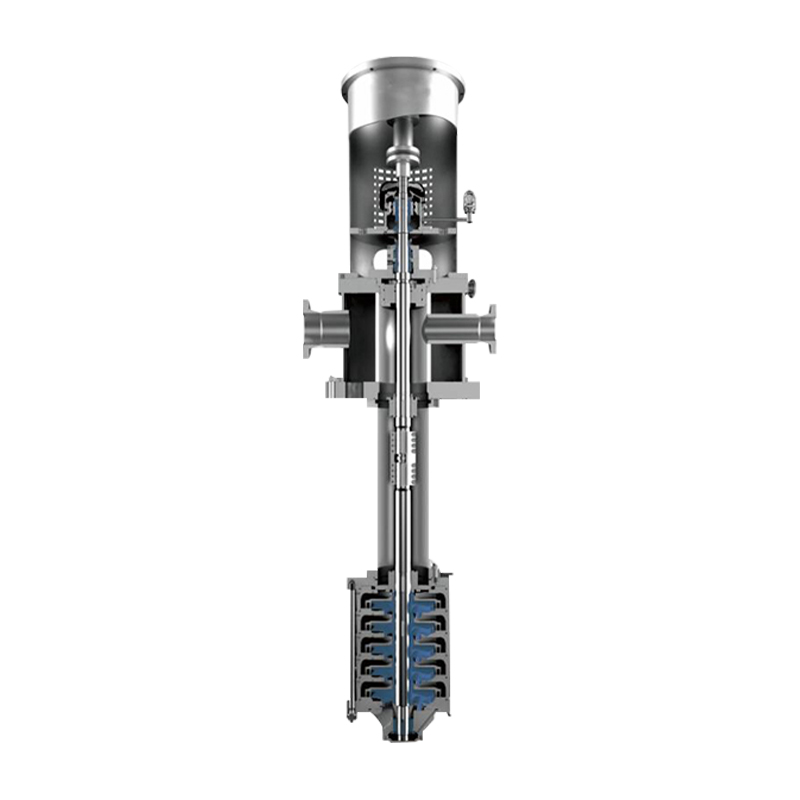
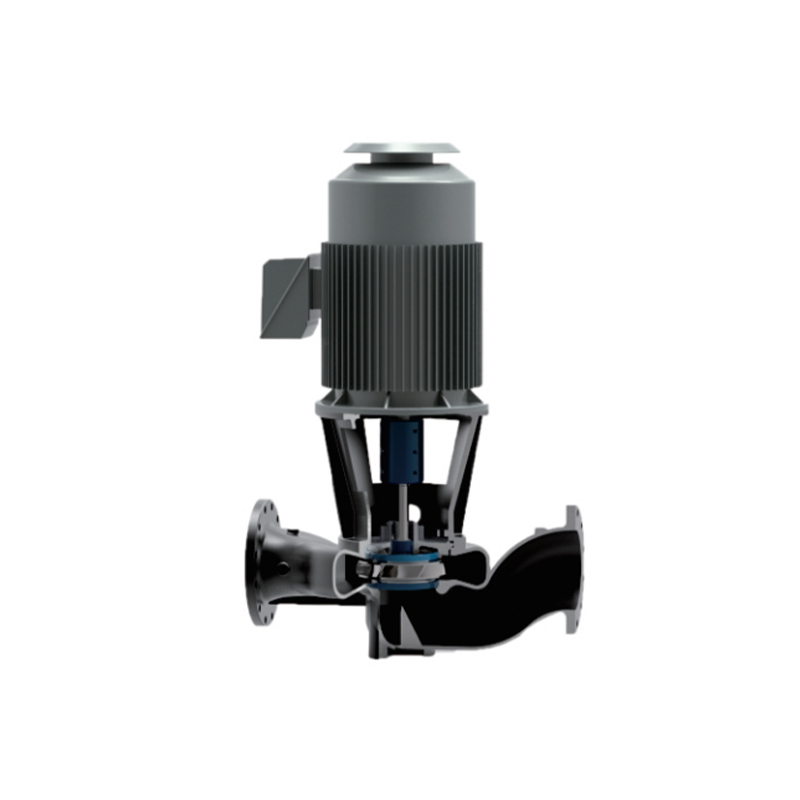
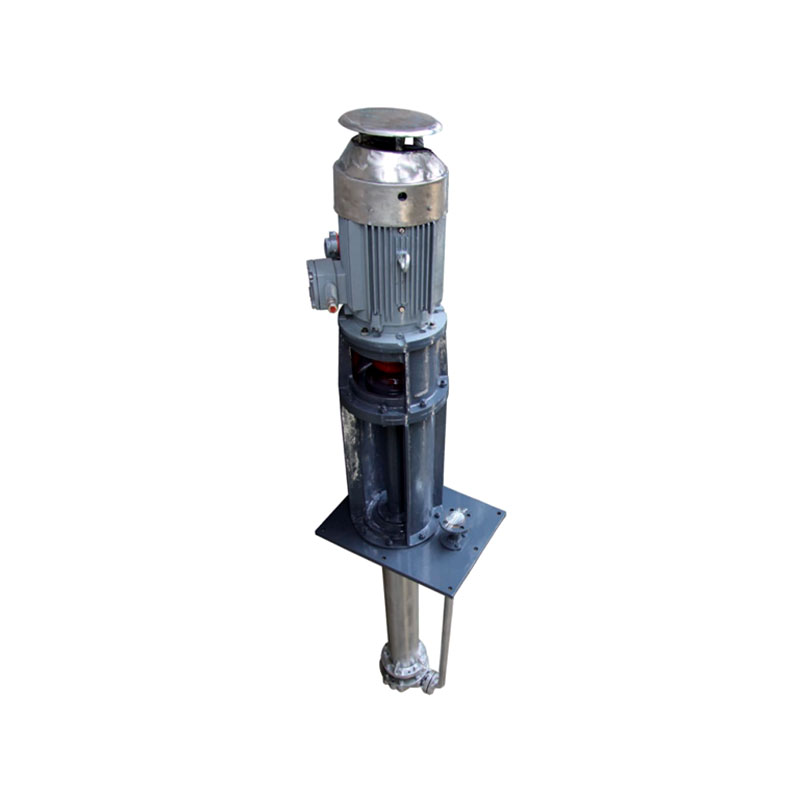
For engineers who need a dependable vertical axial pump, our FJX series axial flow pump is available in vertical configurations for high-volume, low-head transfer of clean and mildly aggressive liquids. The series is designed to meet the compact, flow-oriented layouts commonly used in municipal, agricultural, and industrial pump stations.
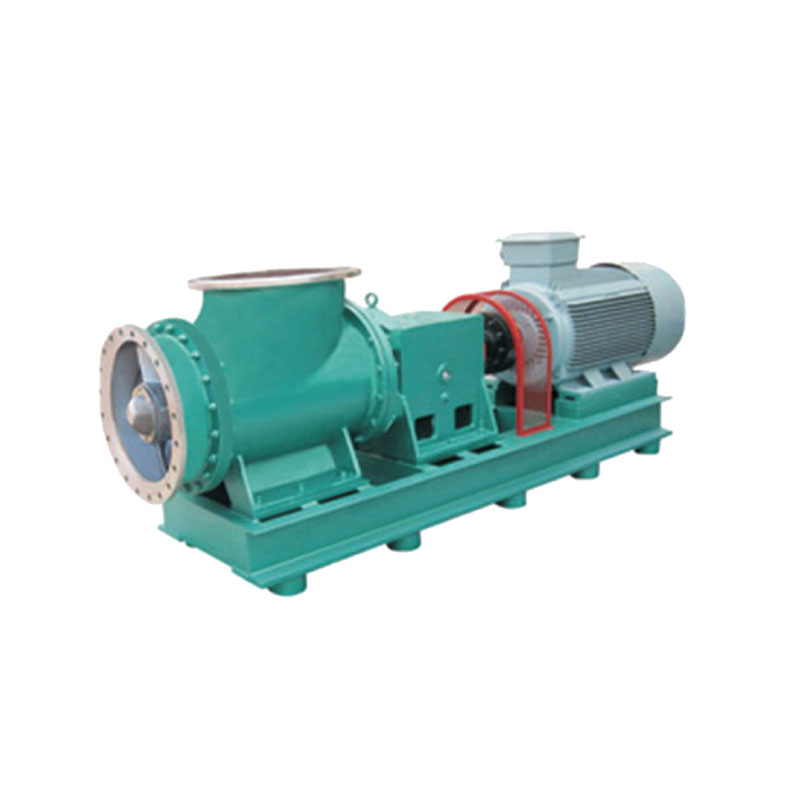 Wholesale FJX Axial Flow Pump Suppliers, Factory - Beloni (Jiangsu) Pump ManufacBeloni (Jiangsu) Pump Manufacturing Co., Ltd is China wholesale FJX Axial Flow Pump suppliers and factory,The FJX evaporation crystalliza...View Product →
Selection Criteria and Common Mistakes
Selecting a vertical axial pump requires more than matching the rated flow and head. You also need to consider the operating range, the liquid properties, the suction pit geometry, and the starting conditions.
Flow and Head Range
Define a flow range, not only a single design point. Axial pumps achieve good efficiency only in a narrow band around the best efficiency point. If your flow varies widely, consider a variable-pitch impeller, a variable-speed drive, or multiple pumps operating in parallel. Oversizing is a frequent mistake: a pump chosen for the highest forecast flow may run poorly at normal conditions, causing higher vibration and reduced bearing life.
Power and Motor Sizing
Axial pumps behave differently from centrifugal pumps. Absorbed power may rise as the flow decreases, so the motor must be sized for the power absorbed at shut-off or at reduced flow. If the motor is selected only on the duty-point power, it may overload when the pump starts against a nearly closed discharge or when system conditions force the pump toward shut-off.
Suction Conditions and Pit Design
The suction bell needs adequate submergence and clearance from the floor and walls of the sump. Poor pit geometry generates vortices that introduce air, increase noise, and cause vibration. Follow the pump manufacturer’s recommended sump dimensions and, if necessary, install an anti-vortex cone or similar device. Where another pump family might be more suitable, a comparison with continuous-duty industrial centrifugal pumps can help clarify whether a low-head axial machine or a higher-head centrifugal pump fits the application.
Liquid and Material Considerations
Check whether the liquid contains solids, is corrosive, or is prone to gas release. These factors affect the material grade, internal clearances, and blade design. Hot cooling water has different thermal expansion allowances than cold river water, and sea water demands a completely different metallurgy. Include the liquid’s temperature, density, viscosity, and suspended-solids content in your pump specification.
Procurement Questions
Ask the supplier for the pump’s minimum continuous flow, maximum allowable start frequency, and power absorbed at shut-off. Request a performance curve for the selected blade pitch and speed. Confirm that the pump can be dismantled for inspection without removing the entire discharge head. Details such as split column sections and accessible bearings may seem minor, but they can significantly reduce maintenance cost over the pump’s life.
Operation and Maintenance
Daily operation is straightforward, but a few rules protect the pump. Do not start against a fully closed discharge valve. Axial pumps draw high power near shut-off, so allow flow to develop as soon as the pump reaches operating speed. Monitor vibration velocity and bearing temperature regularly. An increase in vibration often indicates bearing wear, impeller imbalance, or a blocked suction bay.
Cavitation produces a crackling sound, high-frequency vibration, and pitting on the impeller blades. If it appears, check the sump level and the available NPSH immediately. Scheduled maintenance should include checking impeller-to-casing clearance, inspecting guide vanes for erosion, regreasing bearings, and replacing worn shaft sleeves or packing. Pumps that handle sand or silt need more frequent inspection because even small changes in clearance reduce efficiency significantly.
In short, a vertical axial pump is the right choice for high flow, low head, and vertical installation over a sump or water body. The key to long service life is defining the flow range, understanding the power curve, and giving the suction side enough attention. Provide the supplier with liquid details, head, flow envelope, and available NPSH; a pump selected on those facts will run efficiently for years.
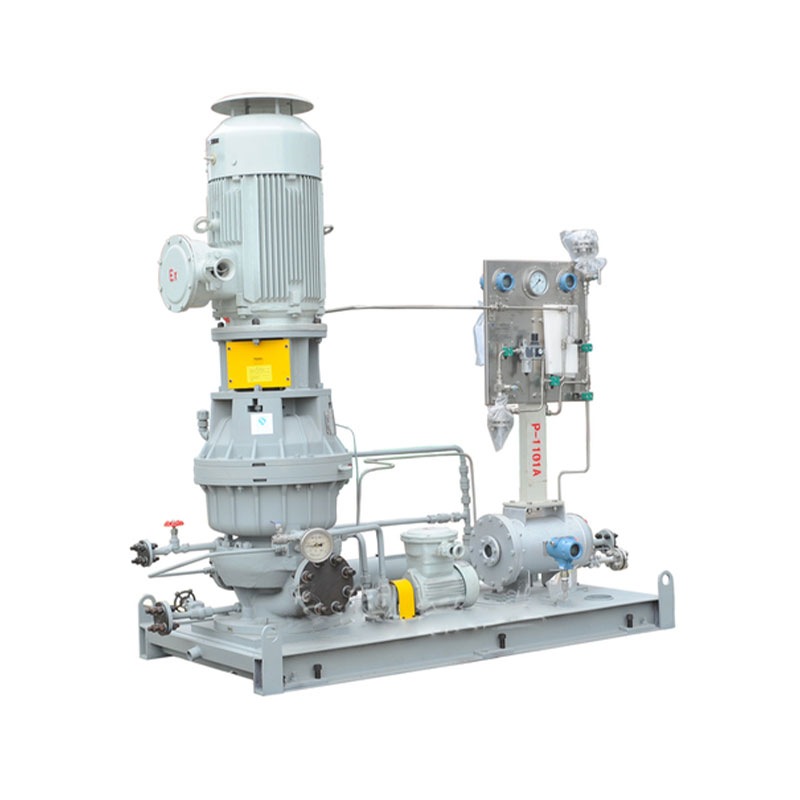
.jpg "Axially Split Horizontal Multistage Pump")



 ENG
ENG

 TOP
TOP