

 inquiry Now

 English
 русский
 عربى
عربى
In modern chemical processing, pharmaceuticals, and water treatment industries, the safety of an Industrial Chemical Pump is a core metric for measuring plant operational excellence. When handling sulfuric acid, sodium hydroxide, or flammable solvents, any minor leak can escalate into an expensive downtime incident, environmental contamination risk, or even a life-threatening occupational safety event. In the pump selection process, engineers face a critical decision: should they adopt the traditional Mechanical Seal design or choose the advanced Magnetic Drive (Mag-Drive) technology? While both can accomplish fluid transport, they differ fundamentally in sealing logic and failure modes.
Understanding the Technology: How These Pumps Ensure Containment
To evaluate safety, one must first understand how a pump prevents media leakage. The most vulnerable part of a chemical pump is typically where the rotating shaft passes through the stationary pump casing.
Mechanical Seal Pumps: The Dynamic Contact Barrier
A mechanical seal pump relies on two highly polished flat faces—one rotating with the shaft and one fixed to the casing—to prevent leaks.
- Sealing Principle: The seal faces are pressed together by spring tension and hydraulic pressure. A microscopic fluid film (usually only a few microns thick) exists between the two faces, providing both lubrication and the sealing function.
- The Necessity of Double Mechanical Seals: When handling hazardous chemicals, a single mechanical seal is considered risky. Therefore, the industry often adopts a “Double Mechanical Seal” configuration, where a buffer fluid is injected between two layers of seals to capture any leakage if the primary seal fails.
Magnetic Drive Pumps: The Sealless Revolution
An Industrial Chemical Pump with Magnetic Drive completely eliminates the rotating shaft that penetrates the pump casing.
- Sealing Principle: It uses an outer magnetic rotor to drive an inner magnetic rotor, separated by a completely closed containment shell. This creates a true physical isolation between the pump chamber and the external atmosphere.
- Zero-Leakage Advantage: Since there are no dynamic seals (meaning no rubbing seal faces), it eliminates the risk of sudden leakage caused by seal wear in both theory and practice. For lethal, expensive, or volatile chemical media, this “hermetically sealed” structure provides an extremely high safety margin.
Technical Performance Showdown: Safety and Reliability Metrics
In a real-world plant environment, safety is inseparable from reliability. The following table compares these two types of Industrial Chemical Pumps across key operational indicators to help procurement managers and maintenance engineers conduct quantitative evaluations.
Industrial Chemical Pump Comparison Table
| Safety Metric | Magnetic Drive Pump (Mag-Drive) | Mechanical Seal Pump |
|---|---|---|
| Leakage Risk | Theoretically Zero (Sealed Vessel) | Low to Moderate (Subject to wear) |
| Fugitive Emissions | Completely Eliminated | Possible minor emissions (Requires monitoring) |
| Dry Run Tolerance | Very Low (Risk of shell/bearing melt) | Moderate (Depending on seal flush plan) |
| Solid Particle Handling | Weak (Particles can scratch the shell) | Strong (Can be configured with hard faces) |
| Secondary Containment | Inherent (Provided by containment shell) | Requires expensive dual seal support systems |
| Maintenance Warning | Fewer signs (Often sudden magnetic failure) | Visible (Weeping or pressure fluctuations) |
Failure Mode Analysis: Sudden vs. Gradual Failure
Mechanical seal failure is usually a progressive process. By observing “weeping” at the seal, maintenance teams can predict replacement times. However, if a Mag-Drive pump fails—such as a containment shell breach or internal bearing fragmentation due to dry running—the consequences are often sudden. Therefore, when using magnetic pumps, it is essential to install power monitors and temperature sensors to ensure safe system operation.
Application-Specific Safety: When to Use Which?
No single pump solves every problem. Safety often depends on the physical and chemical characteristics of the fluid you are transporting.
When Magnetic Drive is the Safest Choice
If your process involves the following media, a magnetic drive industrial chemical pump is the preferred choice:
- Lethal Service Chemicals: Such as cyanides, benzene, or highly corrosive acids.
- Flammable and Explosive Solvents: Eliminating the leak point eliminates the source of ignition for fires and explosions.
- Expensive Materials: Preventing product loss results in direct financial savings.
- Strict Environmental Zones: No need for complex EPA-mandated Leak Detection and Repair (LDAR) compliance programs.
When Mechanical Seals are Operationally Safer
In certain extreme conditions, forcing the use of a magnetic pump may actually be less safe:
- Slurries and Abrasives: Abrasive particles will quickly destroy the containment shell of a magnetic pump. In these cases, a hard-faced mechanical seal with a specialized flush plan is more stable.
- Extremely High or Low Temperatures: Standard magnets demagnetize at high temperatures. While special magnetic materials are available, mechanical seal technology is often more mature for applications exceeding 250°C.
- Unstable Process Conditions: If the system frequently experiences cavitation or dry run conditions, a mechanical seal pump with protective measures offers higher fault tolerance.
Total Cost of Ownership (TCO) and ROI Analysis
In a corporate SEO strategy, discussing cost and return is key to attracting decision-making traffic. Investing in an Industrial Chemical Pump involves more than just the Capital Expenditure (CAPEX); the Operating Expenditure (OPEX) is equally vital.
Reduced Maintenance and Labor Costs
Mechanical seals are the leading cause of chemical pump failure, accounting for over 60% of pump maintenance costs. Every seal replacement involves not only expensive spare parts but also high labor costs and potential profit loss from downtime. Because magnetic pumps eliminate seal faces, their Mean Time Between Failure (MTBF) is usually significantly longer, reducing the time workers spend in hazardous process areas.
Eliminating Support Systems
Traditional double mechanical seal pumps require a complex “Seal Support System” (such as API Plan 52/53), including tanks, piping, and monitoring instruments. These systems increase installation complexity and potential leak points. Magnetic pumps do not require this auxiliary equipment, simplifying the plant layout, reducing total procurement costs, and decreasing maintenance points over the long term.
Frequently Asked Questions (FAQ)
1. Is a Mag-Drive pump more expensive than a mechanical seal pump?
Initial procurement costs are typically higher due to the cost of magnets (like Neodymium or Samarium Cobalt) and the precision-machined containment shell. However, when considering the installation costs of a double mechanical seal and its support system (Plan 53A, etc.), the total initial investment for a magnetic pump is often more competitive.
2. Can magnetic pumps handle high-temperature fluids?
Yes. Although magnetism weakens as temperature rises, using high-quality Samarium Cobalt magnets and heat-resistant materials allows Mag-Drive pumps to safely handle media exceeding 250°C.
3. What is “Decoupling,” and is it dangerous?
Decoupling occurs when the motor torque exceeds the magnetic coupling limit, causing the inner and outer rotors to slip relative to each other. While this does not cause a leak, the eddy currents generated can rapidly heat the containment shell. Modern pumps are equipped with power monitors to detect this and shut down automatically.
4. Why are large centrifugal pumps rarely magnetic drive?
At very high power (e.g., hundreds of kilowatts), the size, weight, and energy loss (due to eddy currents in the containment shell) of a magnetic coupling become inefficient. For high-flow, high-head applications, high-performance mechanical seals remain the mainstream choice.
References and Citations
- API Standard 685: Sealless Centrifugal Pumps for Petroleum, Heavy Duty Chemical, and Gas Industry Services.
- API Standard 682: Pumps—Shaft Sealing Systems for Centrifugal and Rotary Pumps.
- HI (Hydraulic Institute) Standards for Sealless Magnetic Drive Pumps (ANSI/HI 5.1-5.6).
- Environmental Protection Agency (EPA): Guide for Leak Detection and Repair (LDAR) in Chemical Plants.
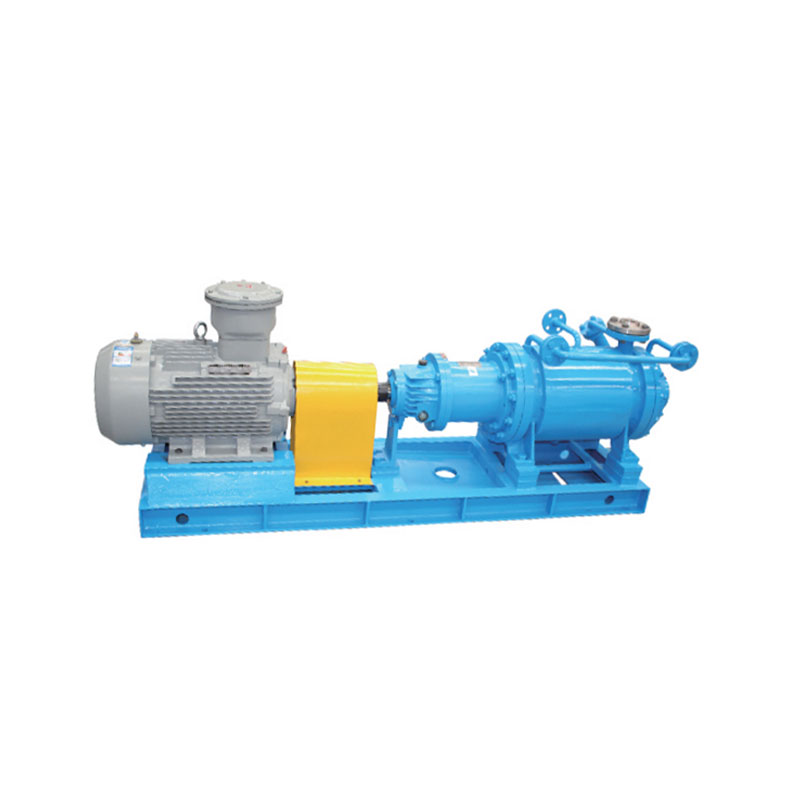
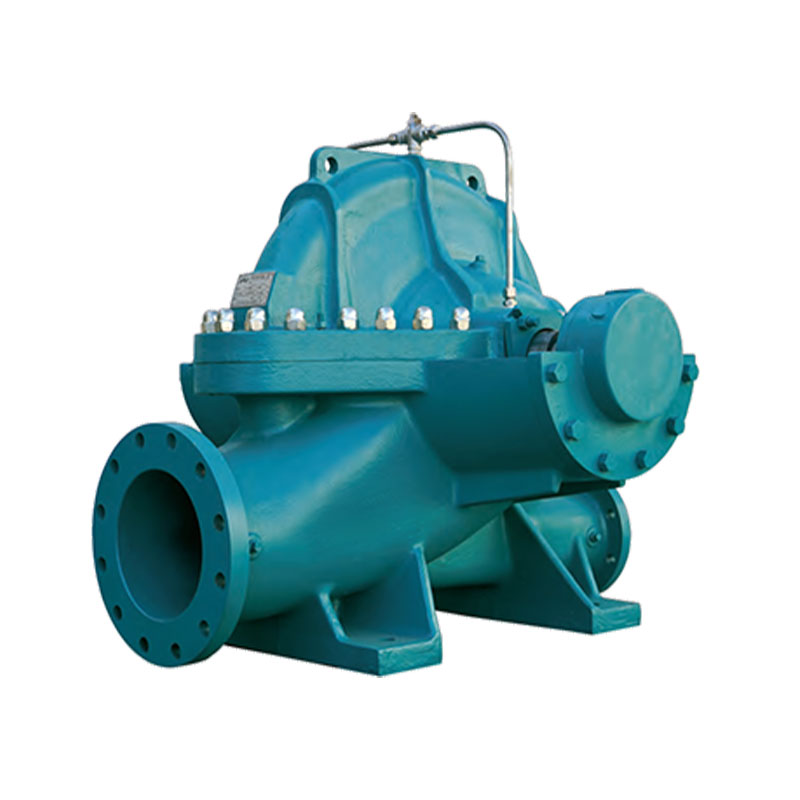
.jpg "Axially Split Horizontal Multistage Pump")


 ENG
ENG

 TOP
TOP