

 inquiry Now

 English
 русский
 عربى
عربى
If you are pumping toluene, sulfuric acid, or hot thermal oil, a small drip from a mechanical seal is not a minor nuisance. It can represent thousands of dollars in lost media annually, and it can turn a two-year maintenance interval into a two-month one. In processes that demand near-zero fugitive emissions, sealless pumps address the problem at the source by completely eliminating the dynamic seal. For chemical plants, pharmaceutical facilities, and hazardous liquid transfer systems, this structural change removes the failure mode that traditional pumps rely on managing.
What Makes a Sealless Pump Different?
Conventional centrifugal pumps depend on mechanical seals or packed glands to prevent liquid from leaking along the rotating shaft. The seal faces form a thin liquid film that must tolerate friction, heat, and wear. When the pumped fluid is highly corrosive, volatile, or contains abrasive particles, those faces can be scratched, carbonized, or chemically attacked, eventually resulting in a leak.
A sealless pump removes that rotating shaft seal from the wet end. The pump has a fully enclosed liquid end, and power is transferred either through magnetic coupling or through a shielded motor. From suction to discharge, the fluid only contacts static metal or non-metallic barriers. The practical result is a pump that leaks nothing by design and that eliminates the need for seal flush piping, cooling water loops, and seal chamber pressure monitoring.
To visualize the difference, consider a magnetic drive pump: the outer magnetic rotor is connected to the motor shaft, and the inner magnetic rotor is connected to the pump impeller. A static containment shell sits between them. As the motor turns, magnetic lines of force pass through the shell and rotate the impeller. All sealing is achieved by what is effectively a pressure vessel wall, not by rubbing faces. A canned motor pump goes further by enclosing the motor stator and rotor in shield cans, with the rotor immersed in the pumped fluid. These designs share one goal—the same sealless leak-proof magnetic drive pumps rely on this principle to keep every process fluid inside the pump.
Main Types of Sealless Pumps
Industrial sealless pumps fall into two main categories: magnetic drive pumps and canned motor pumps. Both achieve the same fundamental “no dynamic seal” outcome, but their operating and maintenance characteristics differ.
Magnetic Drive Pumps
Magnetic drive pumps are the most widely used sealless type in chemical plants. The containment shell is available in alloys such as Hastelloy or titanium, as well as non-metallic composites, depending on the aggressiveness of the fluid. Because the impeller and inner magnet are fully enclosed, the pump casing can be lined with fluoroplastic to cope with strong acids and mixed solvents. These pumps range in power from a few kilowatts to several hundred kilowatts and are engineered for continuous duty.
One critical parameter is recirculation flow. A portion of the liquid is routed from the high-pressure region, through the gap between the inner magnetic rotor and the containment shell, and back to the low-pressure side to cool and lubricate the bearings. If the fluid temperature is too high or the viscosity is too low, inadequate recirculation can overheat the magnets or cause dry bearing contact. For this reason, selection must include a clear temperature limit and a defined start-up procedure.
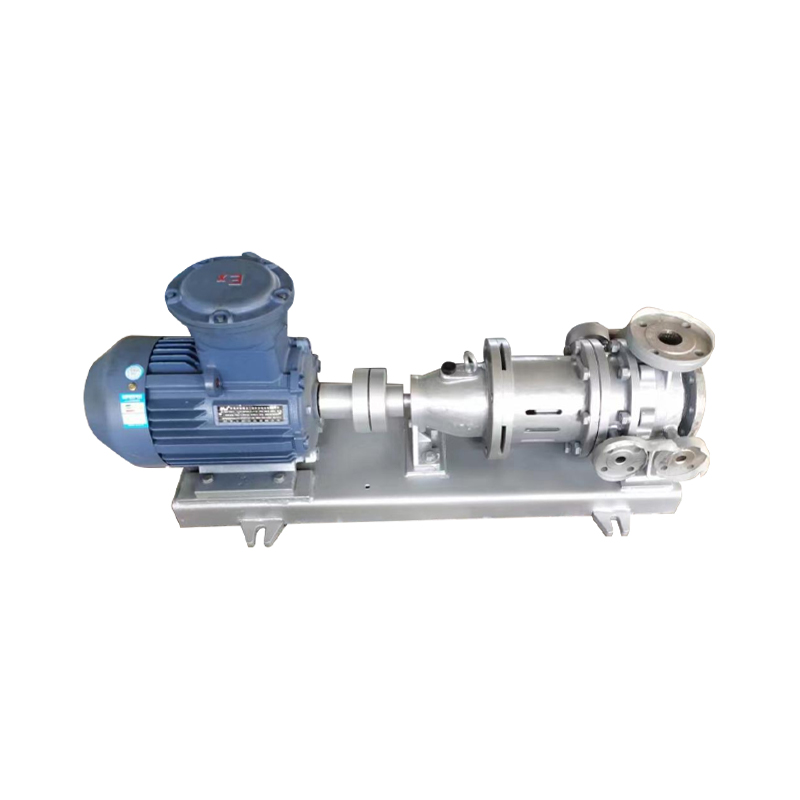 CMY Series Magnetic Drive Pump for API 685 ComplianceThis sealless magnetically coupled pump meets API 685, making it suitable for flammable, toxic, and corrosive media. Its independent circulation system helps control recirculation flow and temperature limits, while low vibration and noise fit space-constrained installations.View Product →
Canned Motor Pumps
Canned motor pumps integrate the motor and pump in one compact unit, eliminating the coupling and the outer magnet system. A thin shield can separates the stator and rotor, and the rotor is exposed to the pumped liquid, which also serves as the cooling medium. Canned motor pumps are particularly compact and quiet, making them a common choice in space-constrained installations or for applications where minimal vibration is required. Maintenance typically focuses on thrust bearing wear and shield can integrity, but overall this is often less work than maintaining a mechanical seal system.
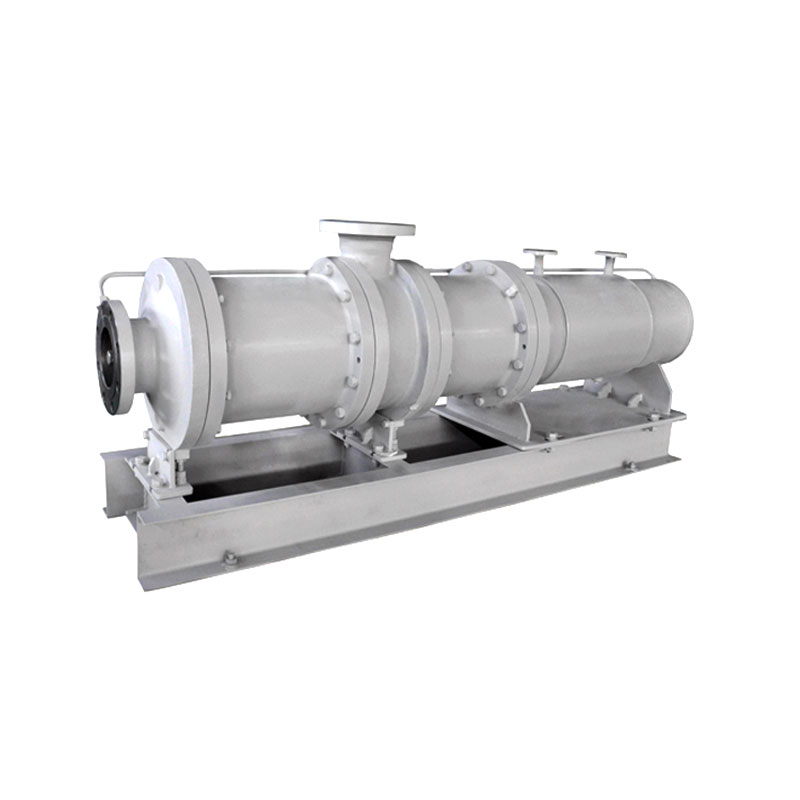 HP Type External Circulation Canned Pump for Leak-Free OperationThis compact canned motor pump uses an external circulation pipe and requires no external lubricant. Its sealless design eliminates the most common failure mode, reducing maintenance and total cost of ownership in continuous processes.View Product →
Why Choose Sealless Pumps?
The first reason is elimination of the most common failure mode. In a plant that runs continuously, the downtime caused by seal degradation is predictable but still expensive. A sealless pump removes that variable entirely. For applications where zero-leakage magnetic chemical pumps are acceptable, the total cost of ownership can be lower because there are fewer components to fail.
Lifecycle cost is the second reason. Industry data consistently shows that sealed pump maintenance budgets are dominated by seal-related repairs. Without a mechanical seal, there is no need for seal flush lines, external quench systems, or seal chamber pressure gauges. Fewer auxiliary systems mean less installation piping, fewer spare parts, and simpler maintenance.
Safety is the third reason. When handling toxic or flammable media, a sealless pump minimizes the chance of personnel contact with hazardous liquids. Modern designs also include secondary containment or leak detection interfaces for cases where the primary barrier is compromised, providing a controlled response rather than an uncontrolled spray into the pump area.
Selection Criteria for Sealless Pumps
Selecting a sealless pump is not just about matching flow and head. Several process conditions have a direct effect on reliability and must be assessed before a specification is finalized.
Chemical compatibility is the first gate. Hydrochloric acid, hydrogen fluoride, or strong oxidants may require fluoroplastic linings, alloy containment shells, or special bearing materials. If the stream contains abrasive solids, internal clearances and bearing materials must be selected to survive those particles.
Temperature range is the next critical factor. In magnetic drive pumps, the magnets can suffer irreversible demagnetization above their rated temperature. Canned motor pumps are limited by motor insulation and can materials. Operating outside the specified range requires cooling measures or exotic materials, both of which increase cost and lead time.
Viscosity matters as well. High-viscosity fluids restrict the flow through the recirculation gap, reducing bearing cooling. Low-viscosity, clean fluids are often a better match for canned motor types because the motor bearings rely on the pumped media for lubrication.
| Criterion | Magnetic Drive Pump | Canned Motor Pump |
|---|---|---|
| Primary containment | Static isolation shell | Motor can and pump casing |
| Maintenance points | Bearings, isolation shell | Thrust bearings, can wall |
| Typical media limitation | Handles slurries and solids better | Best for clean, non-abrasive fluids |
| Footprint | Larger than a canned motor often | Compact inline design possible |
| Wetted materials | Metallic, fluoroplastic, ceramic | Metallic can typically |
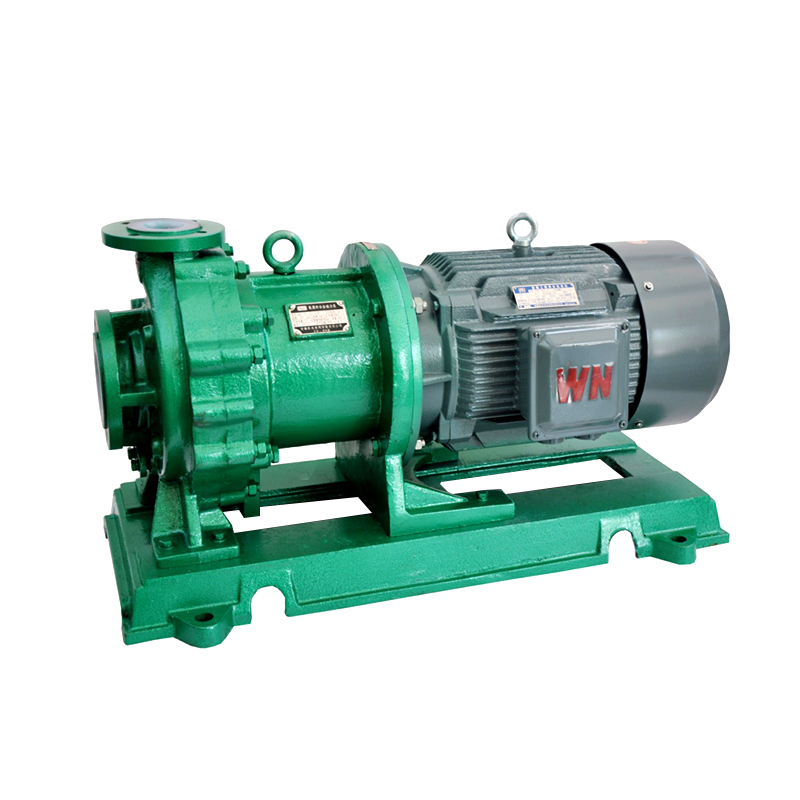 IMD Series Fluoroplastic Alloy Magnetic Pump for Corrosive MediaWith a fluoroplastic lining and all-plastic isolation sleeve, this sealless pump handles highly corrosive, flammable, and toxic fluids. The back-pull structure simplifies maintenance, and its efficiency suits processes where viscosity may affect recirculation.View Product →
Where Sealless Pumps Are Used
Sealless pumps appear across a broad range of process industries. In refineries and hydrocracking units, they handle light hydrocarbons and hot oils where a leak could ignite. In pesticide and dye production, fluoroplastic-lined sealless pumps keep aggressive acids and solvents from contacting the atmosphere. In power generation, canned motor pumps move high-purity condensate and treated water in closed loops. In mining and metallurgy, slurry and tailings lines benefit from the absence of shaft seals that wear out quickly when grit is present.
Each of these environments has its own equipment specifications. A high-temperature, high-pressure canned pump used in refinery service is a very different machine from a heavy-duty magnetic drive slurry pump. The common thread is that both are selected based on a documented condition analysis, not simply on a generic product category.
Limitations to Consider
Sealless pumps are not a universal solution. They do have limits that must be managed.
- Dry running risk: Both magnetic drive and canned motor pumps rely on the liquid to cool the bearings. Operating the pump with an empty suction can cause bearing damage within seconds. Dry-run protection or level control is standard practice.
- Containment barrier service life: The containment shell or can is typically only a fraction of a millimeter thick. Long-term exposure to abrasive or corrosive media can thin it, so periodic non-destructive testing is recommended.
- Hydraulic efficiency loss: The gap between the inner magnet and the shell in a magnetic drive pump consumes a small portion of the flow, which can reduce efficiency by several percentage points at low-flow, high-head conditions.
- Temperature sensitivity: High-temperature sealless pumps require special magnet materials and external cooling arrangements, increasing both the purchase price and the complexity of the package.
These constraints are manageable. If the operating envelope is presented transparently to the manufacturer at the selection stage, and if the start-up, run, and shutdown conditions are defined, the risk can be brought under control.
Investing in a sealless pump is a decision that converts a potential safety hazard and maintenance burden into a structural certainty: the fluid stays where it belongs. For plants with strict environmental compliance, safety inspections, or high downtime costs, the right sealless pump—matched to the actual medium, temperature, and operating profile—delivers returns well beyond its initial price. The key is not the label “sealless” itself, but the discipline of verifying every boundary condition before the unit ever reaches the installation.
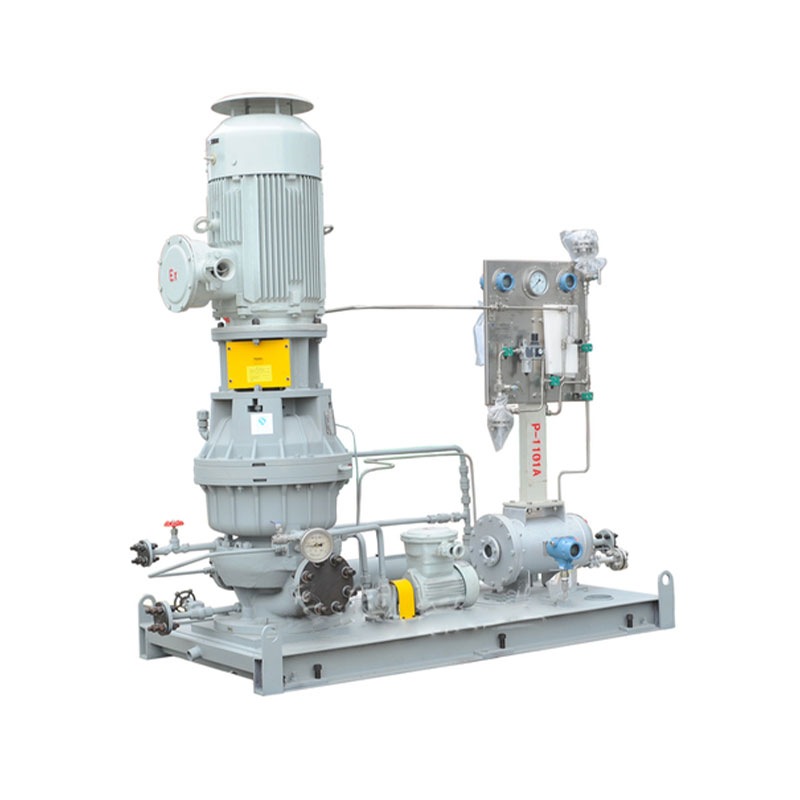
.jpg "Axially Split Horizontal Multistage Pump")



 ENG
ENG

 TOP
TOP