

 inquiry Now

 English
 русский
 عربى
عربى
A chemical plant in Nantong replaced the same process pump three times in eighteen months. Each failure was diagnosed as impeller erosion. The pump was correctly sized for flow and head, but the fluid data sheet did not record that the slurry contained 8 percent solids. The root cause was not the pump; it was the selection process. Most pump failures in industrial fluid management are selection failures, and they begin with incomplete fluid data. The conclusion is straightforward: document the fluid and the system before you open a pump catalog.
Start With the Fluid
Fluid properties drive every downstream decision. They determine the hydraulic class, the materials, the seal configuration, and the motor rating. A small error in any one creates a risk of premature failure.
- Viscosity. Centrifugal pumps lose efficiency sharply above about 1,000 cSt. Positive displacement pumps handle high viscosity without sacrificing flow stability. Viscosity also raises absorbed power.
- Specific gravity. Absorbed power is proportional to specific gravity. A 5 percent error becomes a 5 percent error in motor load.
- Vapor pressure. NPSH available must exceed NPSH required by an adequate margin. Near-boiling fluids increase cavitation risk.
- Solids content. Slurries require larger clearances, harder materials, and often a different pump class.
- Corrosivity. Determines whether you need stainless steel, fluoroplastic lining, ceramic coating, or a wear-resistant alloy.
- Temperature. Affects viscosity, vapor pressure, seal materials, and motor cooling.
| Parameter | Impact on selection |
|---|---|
| Specific gravity | Motor power and impeller torque |
| Viscosity | Pump class, efficiency, NPSH behavior |
| Vapor pressure | NPSH margin and cavitation risk |
| Solids content | Clearances, wear rate, pump type |
| Corrosivity | Material, seal, and lining selection |
| Temperature | Materials, seal system, motor rating |
These parameters are not a bureaucratic checklist. They are the difference between a pump that runs at its best efficiency point and one that fails by erosion in six months.
Map the System Duty
Flow and head define the pump size. The system curve defines where the pump will run. Selecting against a single specification point is the most common mistake in industrial pumping.
- Design flow rate. Base it on average expected flow, not on peak demand. Oversized pumps run away from the best efficiency point and fail early.
- Total head. Sum static head, friction losses, and discharge pressure head. Friction losses rise with the square of flow, so the system curve must be calculated for the actual duty point.
- NPSH margin. Available NPSH must exceed required NPSH. A margin of 0.3 to 0.5 meters is typical for cold water, but larger margins are needed for hot or near-boiling fluids.
- Operating range. The pump should perform efficiently across the expected range, not just at a single design point.
| Parameter | Defines | Common mistake |
|---|---|---|
| Flow rate | Pump size and branch selection | Sizing to peak with no duty analysis |
| Total head | Impeller diameter, speed, motor rating | Adding margin on top of friction losses |
| NPSHA vs NPSHR | Cavitation risk | Ignoring suction line losses |
| Duty cycle | Motor rating and seal cooling | Selecting for continuous duty when the pump cycles |
Choose the Hydraulic Class
Centrifugal pumps are the default for low-viscosity process fluids. Positive displacement pumps become the right choice when viscosity rises, when metering accuracy is required, or when stable flow is needed at high pressure.
Centrifugal pumps
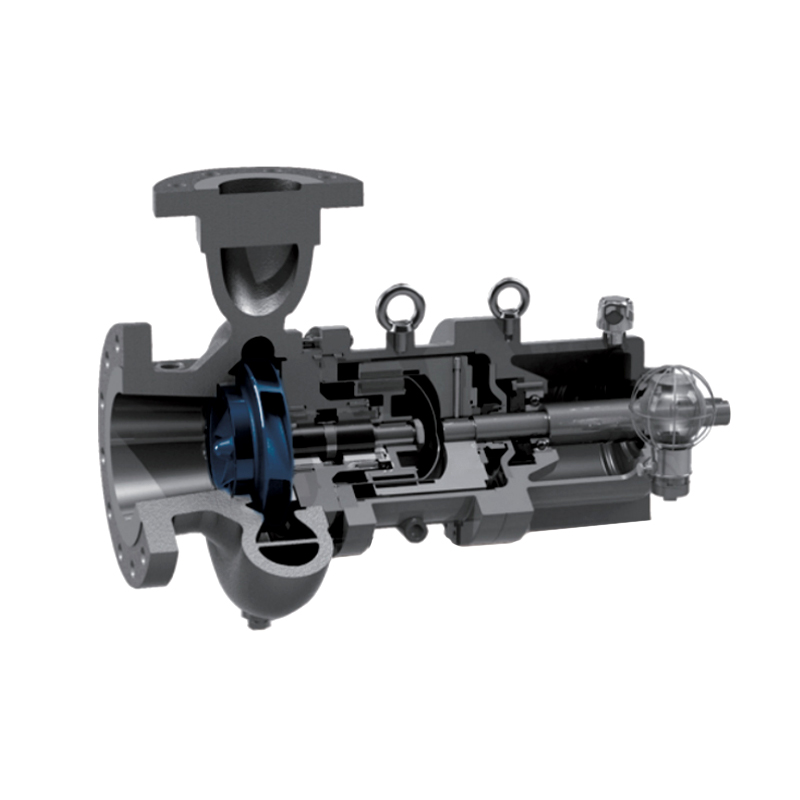
Centrifugal pumps convert impeller kinetic energy into pressure energy. They handle high flow rates, have few moving parts, and are easy to maintain. The continuous-duty industrial centrifugal pump is designed for clean, low-viscosity process service. The critical constraint is the best efficiency point: running far outside it reduces pump life and increases vibration.
Positive displacement pumps
Positive displacement pumps trap a fixed volume and force it into the discharge. They provide constant flow regardless of pressure, handle high viscosity, and support metering. Screw pumps, gear pumps, and diaphragm pumps are common choices in this class.
| Characteristic | Centrifugal | Positive displacement |
|---|---|---|
| Flow rate | High | Low to medium |
| Viscosity tolerance | Effective to about 1,000 cSt | Very high viscosity supported |
| Flow stability | Varies with system pressure | Constant flow with pressure |
| NPSH sensitivity | High | Relatively low |
| Initial cost | Lower | Higher |
| Typical applications | Chemical transfer, water, utilities | Metering, oil, viscous transfer |
Materials, Seals, and Standards
The hydraulic design determines how a pump behaves. The materials and seal configuration determine whether it survives the environment.
Material selection
For corrosive fluids, stainless steel, fluoroplastic lining, and ceramic coating are the main options. Fluoroplastic-lined pumps are an economical choice for strong acids and solvents because the liner is inert in contact with the process fluid. For abrasive slurries, wear-resistant alloys and ceramic coatings extend service life considerably.
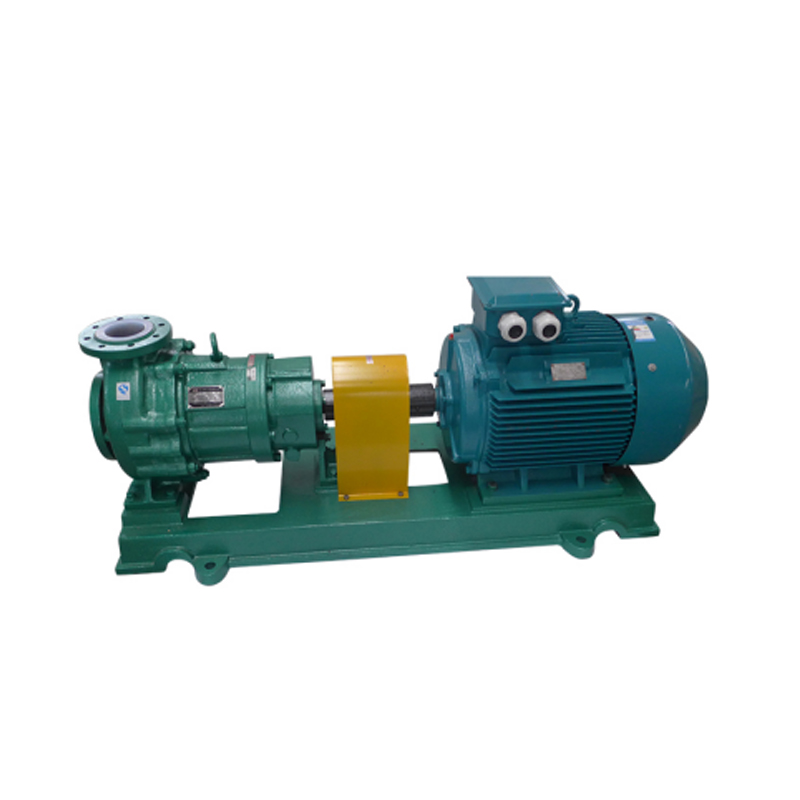 CQB Series Fluorine-Lined Magnetic Drive Pump for Zero-Leakage Chemical TransferThis pump eliminates the shaft seal using a magnetic coupling, making it ideal for toxic or aggressive fluids where leakage must be avoided. Its fluoroplastic lining resists acids and alkalis, providing safe, continuous operation in chemical processing.View Product →
Seal configuration
Mechanical seals depend on a liquid film between two faces. When the fluid is toxic, flammable, or aggressive, seal leakage is a safety risk. Magnetic drive pumps remove the seal entirely, using a magnetic coupling to transmit torque through a containment shell. This makes them suitable for process fluids where zero leakage is required.
Standards
API 610 is the dominant standard for refinery and petrochemical pumps, defining types such as OH1, OH2, and BB4 based on casing and bearing configuration. ASME standards apply to pressure vessels and must be considered when the pump operates within a pressure system. A standard on the data sheet is not just a label; it means the pump has been designed and tested to a known level of reliability.
Application-Specific Guidance
The right pump depends on the industry and its dominant challenge. Chemical processing prioritizes corrosion control. Mining prioritizes wear resistance. High-viscosity transfer prioritizes flow stability.
Chemical processing
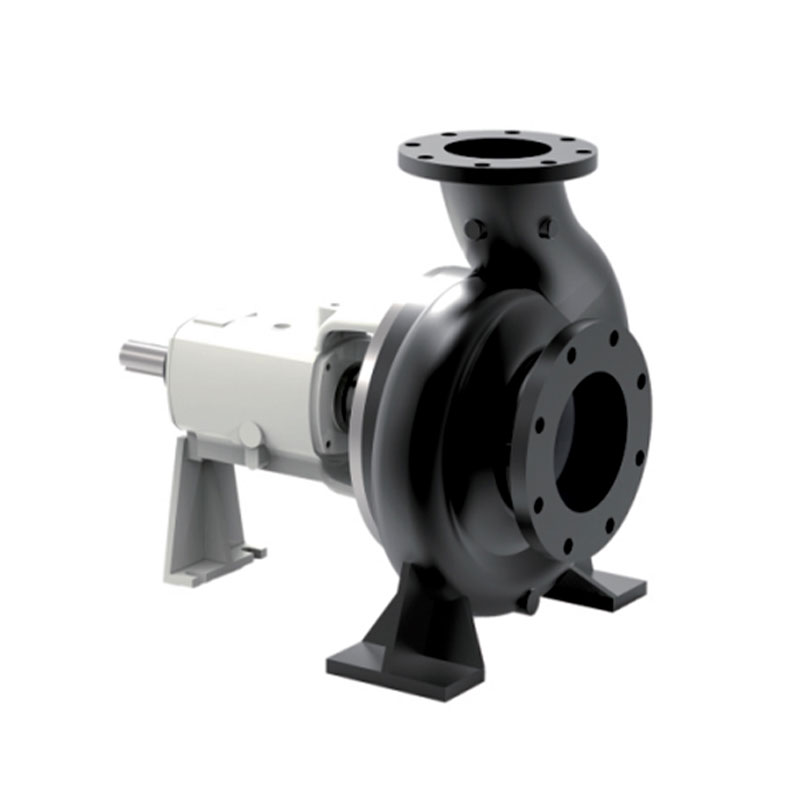
Chemical plants handle aggressive media that attack both the pump interior and the seal. For general process service, the DCZ OH1 series process chemical pump is a standard OH1 centrifugal pump with a closed impeller and back pull-out design. For acids and solvents, fluoroplastic-lined or magnetic drive pumps reduce leakage risk.
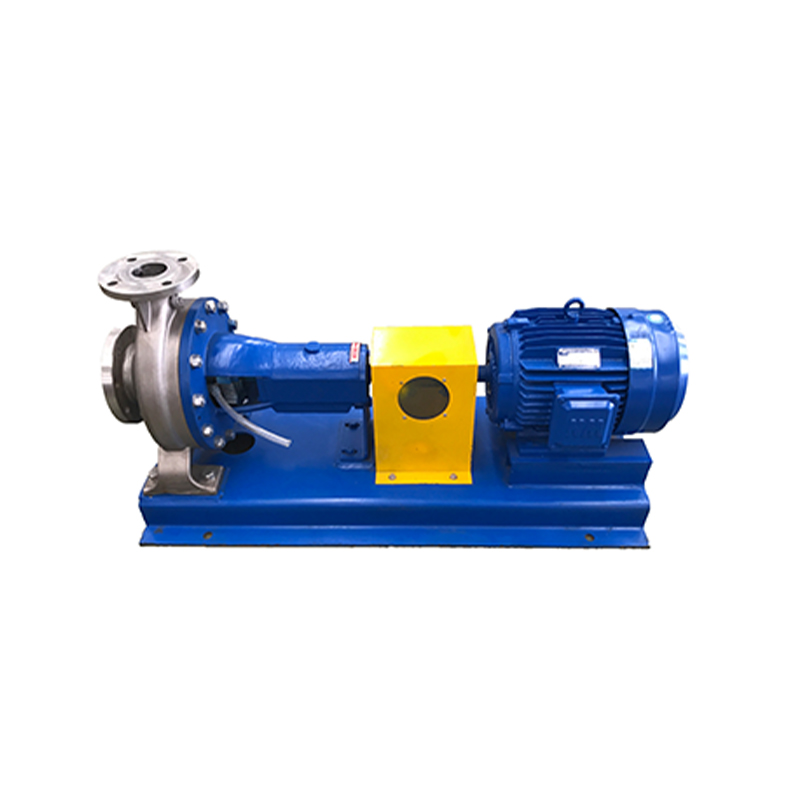 DCZ Series OH1 Process Chemical Pump with High Efficiency and VersatilityA standard chemical pump meeting ISO2858, it offers reliable operation and easy maintenance for various corrosive media. Its interchangeable design with IH pumps simplifies spare parts management and supports diverse sealing options.View Product →
Mining and mineral processing
Slurries with high solid content wear impellers quickly. Slurry pumps with thick casing walls, oversized passages, and replaceable wear liners are the practical choice. A cantilever double-shell design allows wear parts to be replaced without removing the pump from the line, keeping maintenance cost down in continuous slurry service.
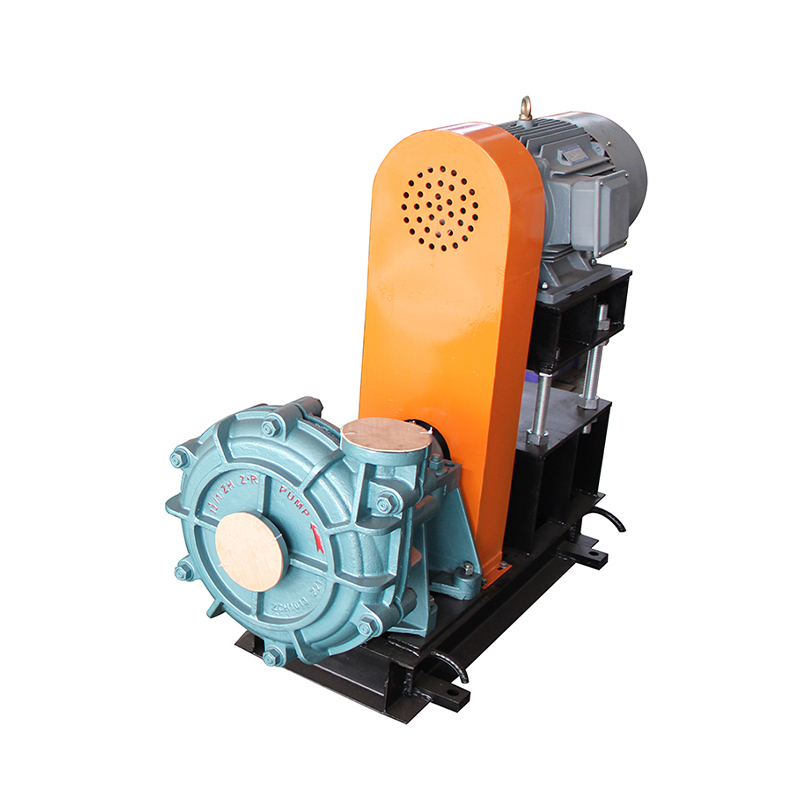 ZH Series Cantilever Double-Shell Slurry Pump for Abrasive SlurriesDesigned for highly abrasive slurries in mining and chemical industries, this pump features a double-shell structure and replaceable wear liners. Its rigid shaft and wear-resistant materials ensure long service life in demanding slurry handling.View Product →
High-viscosity transfer
Heavy oils, polymers, and high-viscosity chemicals do not perform well in centrifugal pumps. Screw pumps and gear pumps handle viscosity above 1,000 cSt and maintain stable flow at high pressure. The choice between them depends on solids content and shear sensitivity.
For a step-by-step decision method, the guide to choosing the most suitable industrial pump type walks through the criteria in more detail.
Procurement Risk and Supplier Verification
Selection does not end when the order is placed. A pump that meets the nameplate in theory can fail in practice if the supplier cannot test performance, certify materials, or support the unit over its service life.
- Request performance test data. Head, flow, efficiency, and NPSH measured on the test bench should match the pump curve.
- Confirm material certificates. Wet end materials and seal components must be traceable. In aggressive service, an incorrect alloy is a latent failure.
- Check spare parts availability. Impellers, wear rings, and seals must be available at short notice. Lead time for spares is a direct factor in maintenance cost.
- Review installation support. Misaligned couplings and wrong suction piping kill pumps regardless of the pump quality.
- Evaluate total cost of ownership. A cheap pump with high energy consumption and a short life is usually more expensive in the long run.
The best selection process ends with a checklist and a supplier who can produce data, not just a quote.
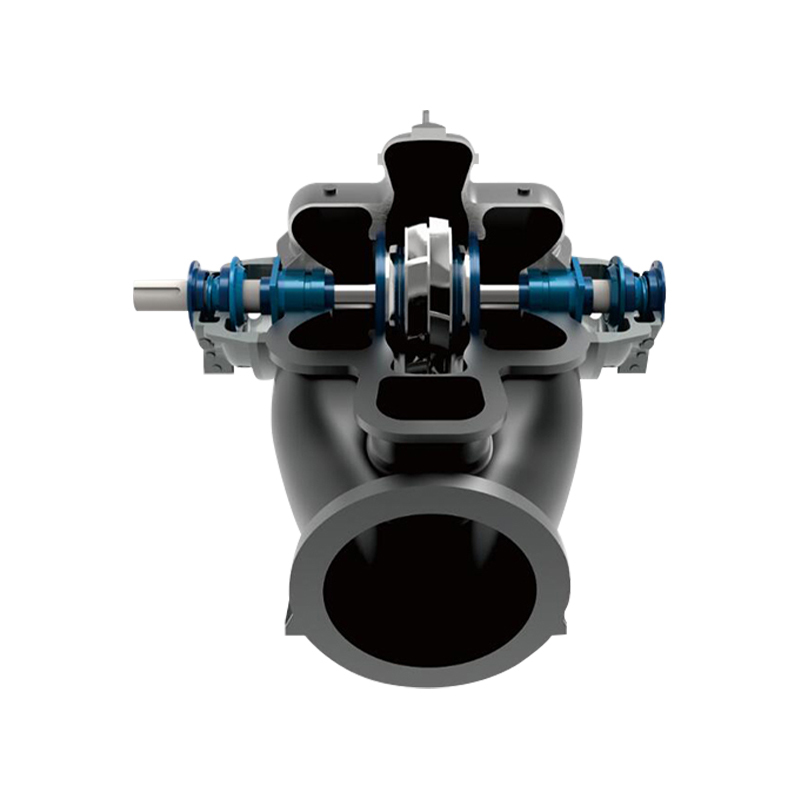
.jpg "Axially Split Horizontal Multistage Pump")



 ENG
ENG

 TOP
TOP