

 inquiry Now

 English
 русский
 عربى
عربى
A wastewater treatment plant in Jiangsu needed to move 1,500 m³/h of process water at 32 meters head. The pump room had limited floor space, and the wet well offered only 4.5 meters of net positive suction head available (NPSHA). The plant engineer initially planned for two single-suction pumps in parallel. A double suction pump changed that calculation.
Here is the conclusion before the explanation: a double suction pump is not simply a larger version of a single-suction pump. It is a hydraulic design that divides the flow into two streams entering the impeller from both sides. This lowers the required NPSH, balances axial thrust, and lets one pump do the work that would otherwise require parallel units. For process engineers, this usually translates into a simpler piping layout, lower energy demand, and fewer points of failure.
This article covers what the design actually delivers, where it fits in a continuous-duty industrial centrifugal pump system, and what to verify before you specify one.
What a Double Suction Pump Actually Does
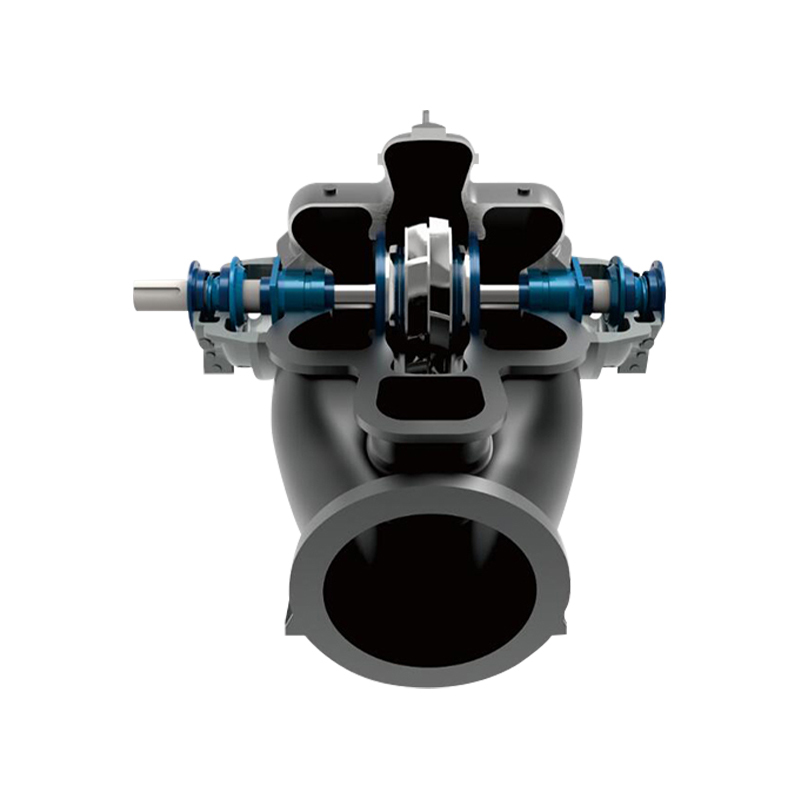
The impeller has two suction eyes instead of one. Fluid enters from both sides of the casing and converges in the impeller channel. Because the two inlet streams are symmetrical, the axial hydraulic forces on the impeller oppose each other. The net axial thrust is close to zero, which removes the need for heavy thrust bearings and reduces mechanical wear.
The flow split also changes the velocity at the pump inlet. Each side handles roughly half of the total flow, so the inlet velocity at each eye is lower than in a single-suction design at the same total flow. A lower inlet velocity means a lower NPSH requirement (NPSHr). If your system already has limited static suction head, this is often the most important parameter you have to work with.
The head stays essentially the same as a single-stage pump, but flow capacity increases. If you need 1,000 m³/h at 30 meters, a double suction pump can usually deliver it with a smaller impeller diameter than a single-suction pump of the same specific speed. That smaller diameter reduces overall footprint and often improves efficiency at the design point. In many plants, the double suction pump forms the heart of a continuous-duty industrial centrifugal pump system that runs 8,000 hours per year, so these hydraulic advantages translate directly into reduced power consumption.
What a Double Suction Pump Gives You in Practice
The measurable benefits of this design are consistent across water, HVAC, and industrial applications.
- Lower NPSH required. The reduced inlet velocity allows the pump to tolerate lower suction pressure before cavitation begins. This matters critically for wet wells, cooling towers, and suction-lift installations, where the available static head is often less than 5 meters.
- Balanced axial thrust. With no net axial load, thrust bearings last longer and shaft deflection is reduced. In maintenance terms, this means fewer bearing failures and less contamination from shaft wear. Over a five-year cycle, bearing costs are typically lower than those of a comparable single-suction pump.
- Higher flow in a single machine. One double suction pump can replace two parallel single-suction pumps. That reduces the number of mechanical seals, bearings, and suction strainers you need to maintain. You also save the cost of the T-piece manifold and the additional isolation valves that a parallel installation would require.
- Better efficiency at the design point. The symmetric inlet flow and lower eye velocity reduce hydraulic losses, which often pays back the initial cost premium within a few years of continuous duty.
Single vs. Double Suction: A Practical Comparison
Use Table 1 as a quick screening reference when you are deciding between the two configurations.
| Parameter | Single Suction | Double Suction |
|---|---|---|
| NPSH required | Higher at the same flow and speed | Lower at the same flow and speed |
| Axial thrust | Unbalanced, requiring a thrust bearing | Balanced internally, minimising bearing load |
| Flow capacity per stage | Standard for the impeller size | Approximately double for the same impeller size |
| Efficiency at high flow | Falls off as flow increases above the design point | Remains strong across a wider flow envelope |
| Maintenance access | Depends on casing design | Horizontal split case allows top-half removal for impeller inspection |
If the operating point sits above 1,000 m³/h or near the lower end of the available NPSH, double suction usually wins on both lifecycle cost and operational stability.
Main Configurations You Will Encounter
Horizontal Split Case
The casing is split in a plane through the shaft axis. The top half lifts off, exposing the impeller and bearing assemblies. This gives technicians full access to the rotating element without disturbing the suction or discharge piping. It is the most common configuration for large double suction pumps and the easiest to maintain in the field. The GS BB1 series is a typical high-efficiency single-stage double-suction split-case design used for continuous water and process service.
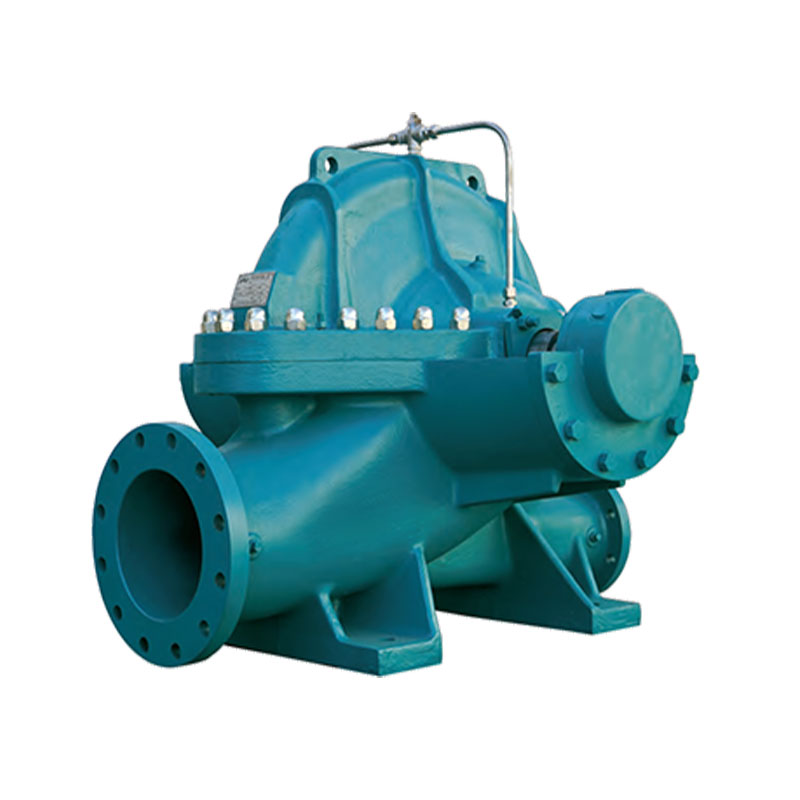 GS (BB1) Series High-Efficiency Single-Stage Double-Suction Split-Case PumpThis horizontal split-case pump offers easy maintenance with a top-half casing that lifts off, ideal for large double-suction applications where piping stays undisturbed. Its designed features aim to reduce noise and vibration while enhancing efficiency for continuous water service.View Product →
Vertical Split Case
The casing splits along a plane perpendicular to the shaft. The rotating element is withdrawn from the end, which saves floor space and suits installations with limited room or low headroom. Because the motor is often mounted above, a vertical split case pump can fit into a tighter footprint than a horizontal unit, although the alignment procedure is more demanding.
Double Suction Inline
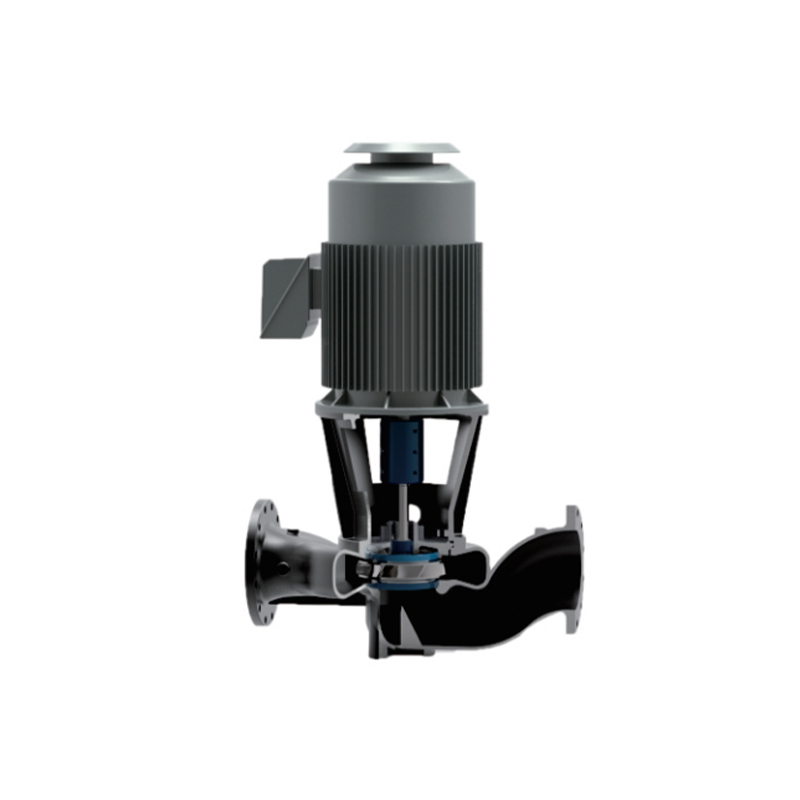
These pumps are less common but appear in HVAC vertical systems where the motor sits directly above the pump. The compact arrangement simplifies piping, although maintenance access for seals and bearings can be more restricted. For retrofit work in existing pump rooms, the inline configuration sometimes eliminates the need for new piping foundations.
Where Double Suction Pumps Earn Their Keep
Water and wastewater treatment is the classic application. Intake pumps, transfer pumps, and return-sludge pumps all benefit from the low NPSH requirement. The SBS series axial split standard double-suction centrifugal pump is often selected for these duties.
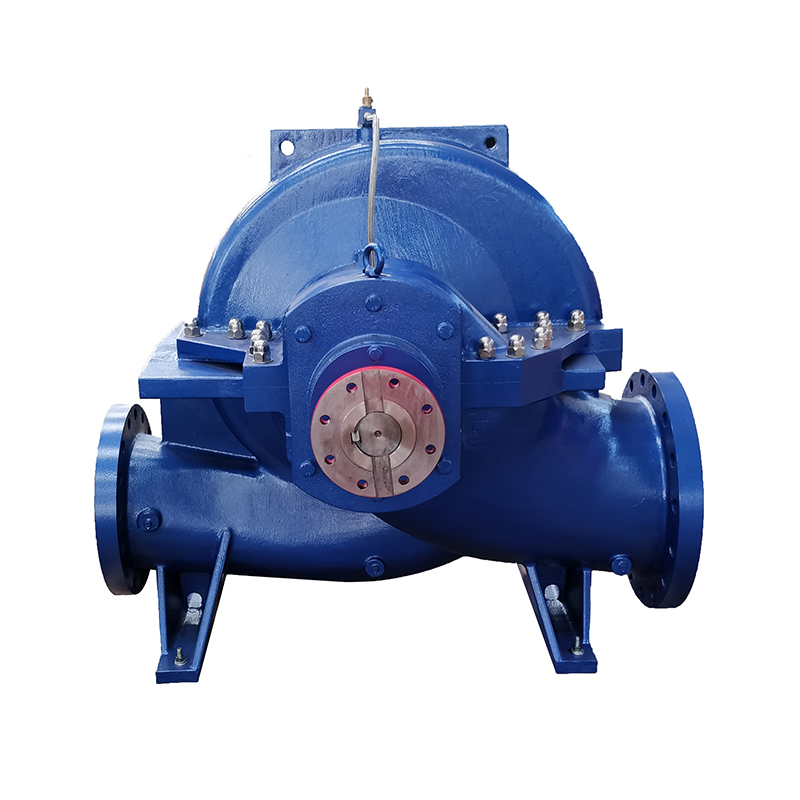 SBS Series Axial Split Standard Double-Suction Centrifugal PumpSuitable for water treatment and HVAC systems, this pump supports both vertical and horizontal installation, offering flexibility. It is an energy-efficient replacement for older models, delivering reliable performance in high-flow, moderate-head applications.View Product →
HVAC systems in large commercial buildings also rely on double suction pumps for chilled water and condenser water loops. The flows are high, the head is moderate, and the equipment must run quietly and continuously.
Power plants use them for circulating water on cooling towers. Mining operations use them for process water and dewatering. Chemical and petrochemical plants choose them when the fluid is clean enough for a split-case design and the flow is too high for a standard single-stage pump.
Selection Points That Decide Success or Failure
The first check is NPSH. Compare the NPSH available (NPSHA) in your system against the NPSH required (NPSHr) at the operating point. A safety margin of at least 1.5 meters is commonly recommended, and double suction pumps usually need less margin because of their lower NPSHr.
Second, confirm the operating range. A double suction pump performs best between 70 and 120 per cent of its design flow. Running near shutoff causes recirculation, noise, and vibration. If your system fluctuates widely, ask whether a parallel arrangement with a smaller pump would provide more stable control.
Third, review fluid properties. Temperature, viscosity, solids content, and corrosiveness all affect material selection. Cast iron or ductile iron is standard for clean water, while duplex stainless steel or coated casings are used for brackish water and chemical service.
Fourth, consider speed and efficiency. A 1,450 rpm pump is generally quieter and wears slower than a 2,900 rpm pump of equivalent duty, but it needs a larger impeller. When the flow is high and the head is moderate, the lower-speed option often has better NPSHr and a flatter efficiency curve, which helps with energy recovery over a long service life.
Fifth, think about maintenance strategy. The split-case design is built for accessibility, but the split plane introduces a gasketed joint that needs careful re-assembly. Some operators prefer a vertical arrangement when floor space is at a premium. Whatever the configuration, a maintenance plan with spare wear rings and mechanical seals is essential.
Finally, check standards. Applications in oil, gas, and petrochemical service often require API 610. This affects bearings, sealing, materials, and testing requirements, and it directly influences procurement cost.
These are the same decision points covered in our guide on how to choose the most suitable industrial pump type. If you are working through a new pump selection or a replacement, the process is essentially a comparison of NPSHr, operating stability, and total cost of ownership.
The Bottom Line
If your process moves high volumes of liquid at moderate head, a double suction pump deserves a place on your shortlist. It reduces cavitation risk, simplifies maintenance, and often cuts lifecycle cost compared with parallel single-suction units. The key is to compare NPSHr against your NPSHA and confirm the operating point sits well inside the stable range. With the right application, the split-case design delivers years of trouble-free service.
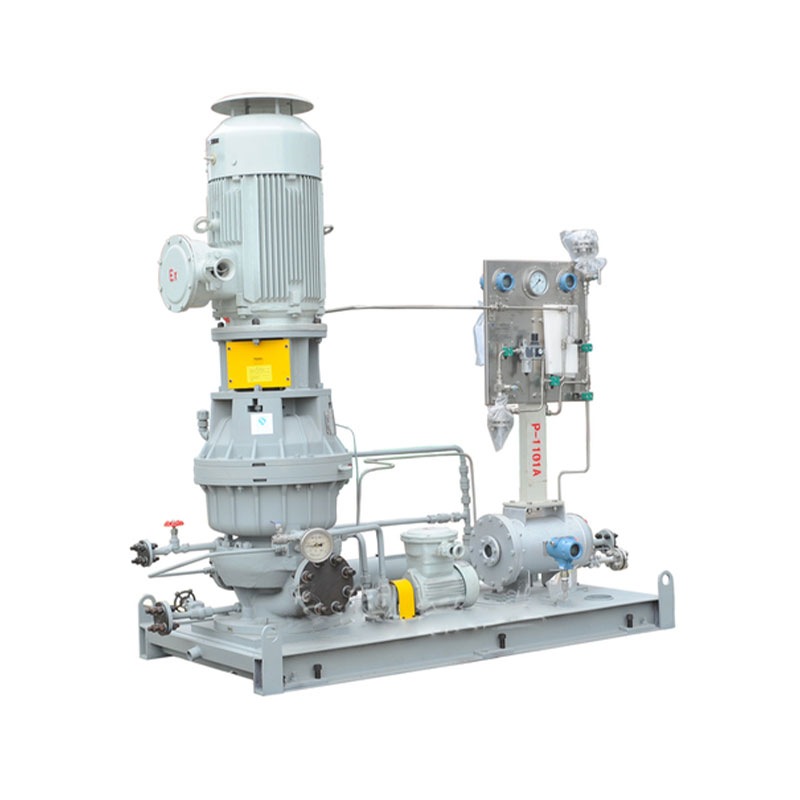
.jpg "Axially Split Horizontal Multistage Pump")



 ENG
ENG

 TOP
TOP