

 inquiry Now

 English
 русский
 عربى
عربى
In the specialized field of fluid handling, the Industrial Metering Diaphragm Pump is the backbone of precision dosing. Whether you are treating municipal water or injecting catalysts into a high-pressure chemical reactor, the accuracy of your system depends on the pump’s ability to deliver a specific volume of fluid consistently. When selecting a pump, the most significant technical fork in the road is the method of actuation. Understanding the difference between Mechanically Actuated and Hydraulically Actuated diaphragm pumps is essential for ensuring system longevity, safety, and operational excellence.
Mechanically Actuated Diaphragm Pumps: Simplicity and Cost-Efficiency in Low-Pressure Dosing
Mechanically actuated diaphragm pumps are the workhorses of the water treatment and environmental sectors. In this design, the diaphragm is directly coupled to a reciprocating plunger or crank mechanism. As the motor rotates, the mechanical linkage physically pulls the diaphragm back during the suction stroke and pushes it forward during the discharge stroke. This direct interaction makes the pump easy to understand, easy to troubleshoot, and relatively inexpensive to manufacture compared to its hydraulic counterparts.
Direct Mechanical Linkage and the “Tension” Factor
The defining feature of the mechanical pump is that the diaphragm itself must withstand all the mechanical stress of the cycle. Because the drive rod is bolted or bonded directly to the center of the diaphragm, the material experiences significant stretching and localized stress at the attachment point. This “mechanical tugging” means that the diaphragm is a wear item with a predictable lifespan. Manufacturers often use high-quality PTFE (Teflon) bonded to an EPDM backing to balance chemical resistance with the flexibility required for this mechanical movement. Because there is no intermediate fluid, the design is compact, making it ideal for skid-mounted systems where space is at a premium.
Practical Performance and Operational Limits
Mechanically actuated pumps are typically limited to lower pressure ranges—usually under 150 to 200 PSI (10–14 Bar). As discharge pressure increases, the force required to move the diaphragm can cause the material to balloon or deform, which compromises metering accuracy. Despite this, they offer excellent “suction lift” capabilities, allowing them to pull chemicals from tanks located below the pump level. For applications like injecting chlorine into swimming pools, adding anti-scalants to cooling towers, or dosing flocculants in wastewater plants, the mechanical diaphragm pump provides a highly reliable, low-maintenance solution that general technicians can service without specialized hydraulic training.
Hydraulically Actuated Diaphragm Pumps: High-Pressure Precision for Critical Industrial Processes
For high-pressure industrial processes, particularly in the oil and gas, petrochemical, and power generation sectors, the Hydraulically Actuated Diaphragm Pump is the undisputed industry standard. This design introduces an intermediate “buffer” of hydraulic oil between the reciprocating plunger and the diaphragm. Instead of the plunger pulling on the diaphragm, it moves through a pressurized oil chamber, which in turn causes the diaphragm to flex. This fluid-linkage approach removes the mechanical stress from the diaphragm and distributes the force evenly across its entire surface area.
The Pressure-Balanced Advantage
In a hydraulic diaphragm pump, the diaphragm is in a “pressure-balanced” state. This means the pressure on the hydraulic oil side exactly matches the pressure on the process fluid side. Because the diaphragm is effectively “floating” between two liquids, it is not subjected to the localized stretching found in mechanical designs. This allows hydraulic pumps to reach immense pressures—often exceeding 3,000 PSI (200 Bar)—while maintaining a diaphragm life that can span tens of thousands of hours. It is the only choice for “critical service” where a diaphragm rupture could lead to dangerous chemical leaks or a total process shutdown.
Internal Safety Systems and Built-in Reliability
Hydraulic metering pumps are engineered for continuous, 24/7 operation and come equipped with sophisticated internal support systems. These include an internal air release valve to purge gases from the hydraulic oil, ensuring the drive stays “stiff” and responsive, and a refill valve that automatically replenishes hydraulic oil if the volume drops. One of the greatest advantages is the integrated hydraulic relief valve. If the discharge piping becomes blocked, this internal valve opens, allowing the hydraulic oil to bypass rather than forcing the diaphragm to burst. This built-in fail-safe protects the pump, the motor, and the surrounding infrastructure from over-pressure damage.
Technical Comparison: Mechanical vs. Hydraulic Actuation Matrix
Choosing the correct actuation method requires a balance between initial investment and long-term performance requirements. The table below outlines the core technical divergences.
| Feature | Mechanically Actuated | Hydraulically Actuated |
|---|---|---|
| Max Pressure Range | Low to Moderate (Up to 200 PSI) | High to Extreme (Up to 3,000+ PSI) |
| Metering Accuracy | ± 2% of rated flow | ± 1% or better (Steady state) |
| Diaphragm Stress | High (Localized at attachment) | Zero (Pressure-balanced) |
| Diaphragm Life | 2,000 - 4,000 Hours | 10,000 - 20,000+ Hours |
| Suction Lift | Excellent | Moderate (Depends on oil viscosity) |
| Initial Cost | Economical / Low Capex | Premium / High Capex |
| Internal Relief Valve | No (External valve required) | Yes (Built-in safety) |
| Primary Industry | Water treatment, simple dosing | Petrochemical, Oil & Gas, Boilers |
FAQ: Frequently Asked Questions
Why would I choose a mechanical pump over a hydraulic one if the hydraulic version lasts longer?
The decision is usually dictated by the nature of the chemical and the budget. Mechanical pumps are significantly cheaper and much easier to maintain for non-specialists. If you are dosing a non-hazardous chemical at low pressure (e.g., 40 PSI), the mechanical pump is the most cost-effective tool for the job. Buying a hydraulic pump for such a task would be over-engineering.
How do I know if my diaphragm has failed in a hydraulic system?
Most modern industrial hydraulic pumps utilize “Double Diaphragm” technology. There is a primary and a secondary diaphragm with a small vacuum or liquid-filled space between them. If one diaphragm fails, a pressure switch or visual gauge detects the change in the intermediate space and triggers an alarm, allowing you to schedule maintenance before a leak occurs.
Can these pumps handle abrasive slurries or fluids with solids?
Yes, but hydraulic pumps are generally superior for this. In a mechanical pump, the stretching of the diaphragm can cause abrasive particles to get “pinched” or embedded in the material. In a hydraulic pump, the gentle, uniform movement of the pressure-balanced diaphragm is less likely to damage the material when handling small particulates or slurries.
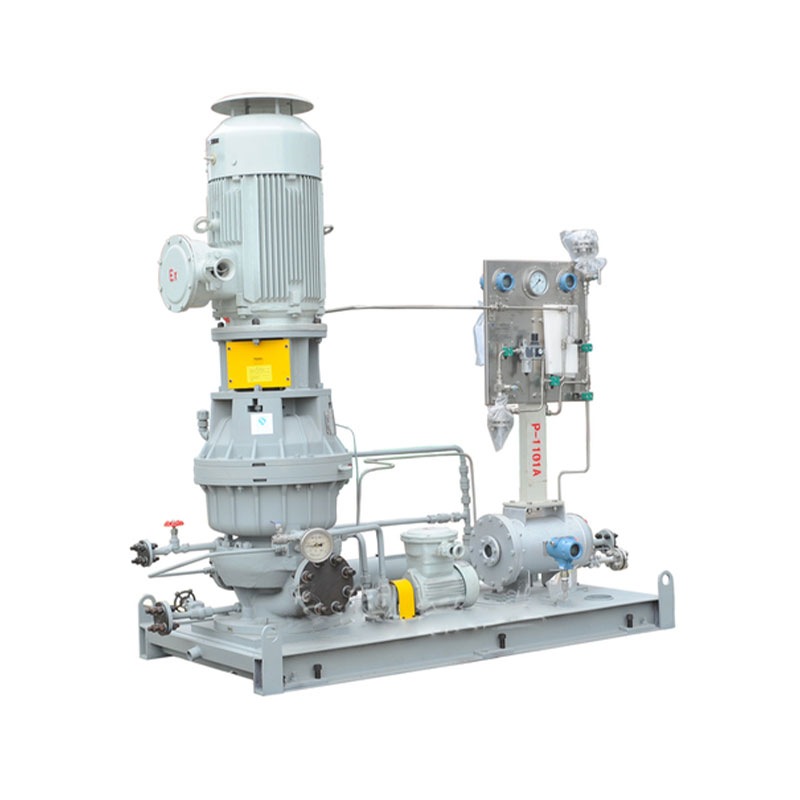
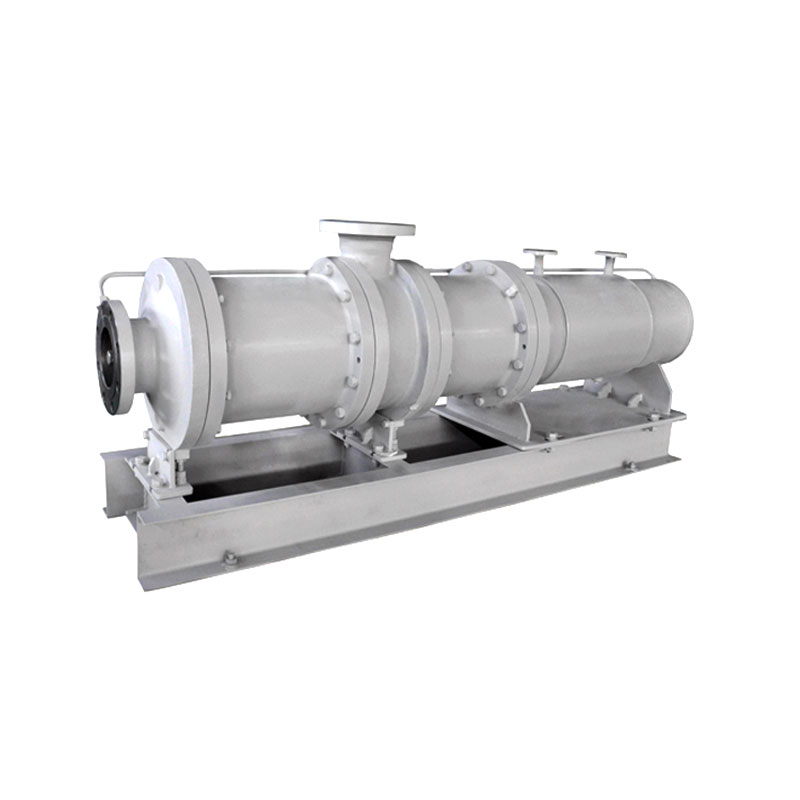
.jpg "Axially Split Horizontal Multistage Pump")


 ENG
ENG

 TOP
TOP