

 inquiry Now

 English
 русский
 عربى
عربى
A chemical plant's process sump collects floor wash-down, leaking seal water, and a steady drip of dilute sulfuric acid from a nearby valve station. The liquid level swings between half a meter and three meters, the composition changes with every batch, and the pump floor sits four meters above the liquid surface. The pump assigned to this pit must re-prime itself without an operator, survive shifting pH, and keep running when nobody is watching. A vertical sump pump is built for exactly this duty: the hydraulic end stays submerged at the bottom of the sump, while the motor remains above the pit, clear of the liquid and its vapors.
This article explains how vertical sump pumps are designed, which materials protect them in corrosive and abrasive service, and what to verify before purchase.
How a Vertical Sump Pump Works
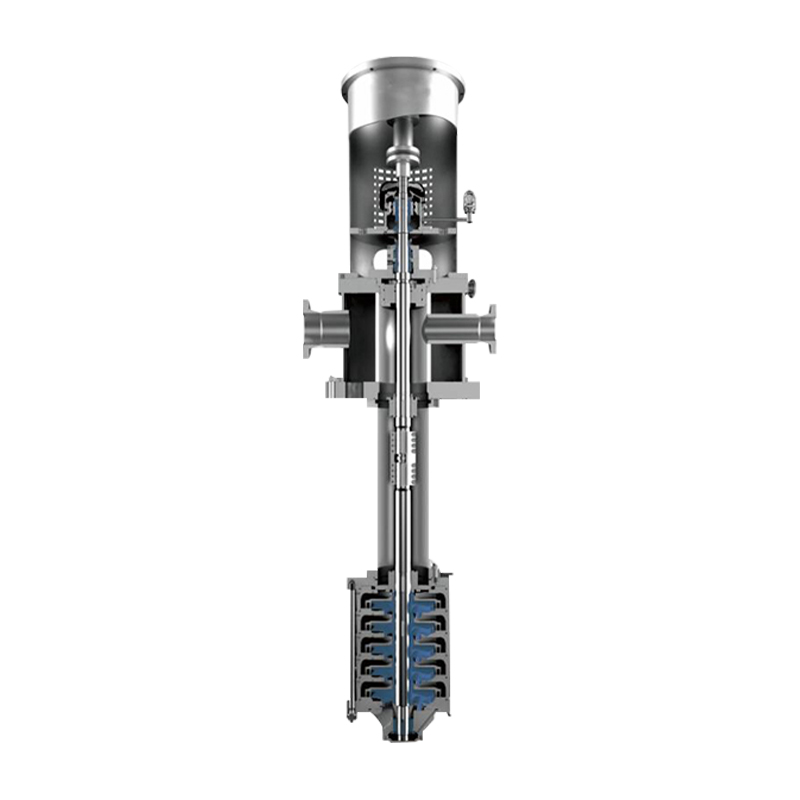
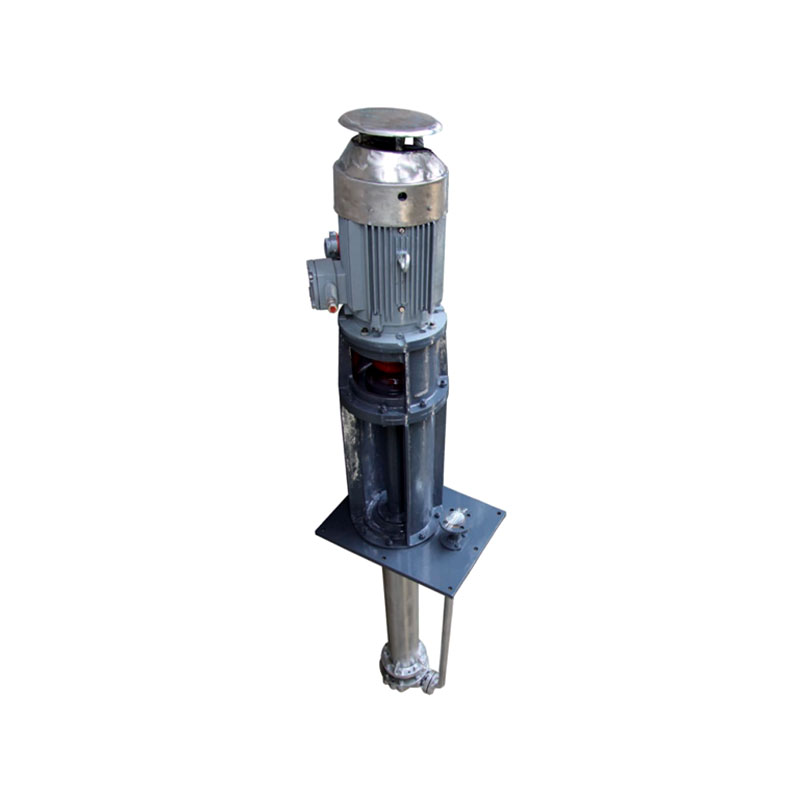
A vertical sump pump is a vertical shaft machine consisting of a motor, a mounting plate, a discharge column, an intermediate shaft, and a casing that hangs below grade. The motor turns the shaft, the shaft drives an impeller at the lower end, and liquid enters through a strainer before the impeller sends it up the column to a discharge nozzle near the top.
Because the impeller stays submerged, the pump operates with flooded suction. There is no suction lift to overcome, no foot valve to keep primed, and no re-priming problem after the liquid level drops and recovers. Available NPSH is set largely by the static liquid head above the impeller eye, which makes the vertical arrangement useful for hot liquids and for pits located far below grade.
The shaft is supported at intervals by sleeve bearings. Standard designs use product-lubricated carbon or silicon carbide bearings running in the pumped liquid. When the liquid contains grit or debris, water-flushed intermediate bearings, or a cantilever shaft with no submerged bearings at all, keep the pump running without bearing washout.
Construction and Materials for Corrosive and Abrasive Service
Wetted parts spend their entire service life either submerged or in the vapor zone above the sump, and both environments can corrode. Specify the casing, impeller, shaft, strainer, and column against the full fluid profile: pH range, chloride content, temperature, vapor pressure, and solids load.
Casing, Impeller, and Column
Cast iron and ductile iron handle clean water at neutral pH. Stainless grades 304 and 316 are the common baseline for chemical effluents with moderate chlorides. Strong acids, high chloride levels, and aggressive alkalis call for CD4MCu, Alloy 20, or fluoroplastic-lined construction. When abrasion dominates, high-chromium hard metal impellers and casings outlast stainless steel by a wide margin.
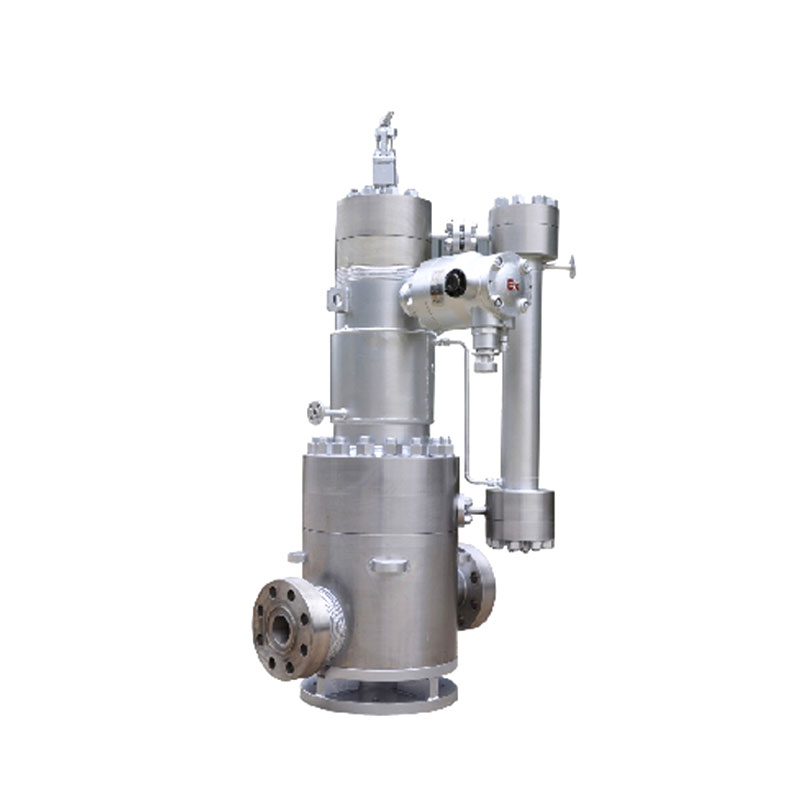
For corrosive chemical duty, configurations such as the FY/HY series vertical submerged pumps offer material and hydraulic options matched to waste acids, caustic solutions, and mixed chemical effluents.
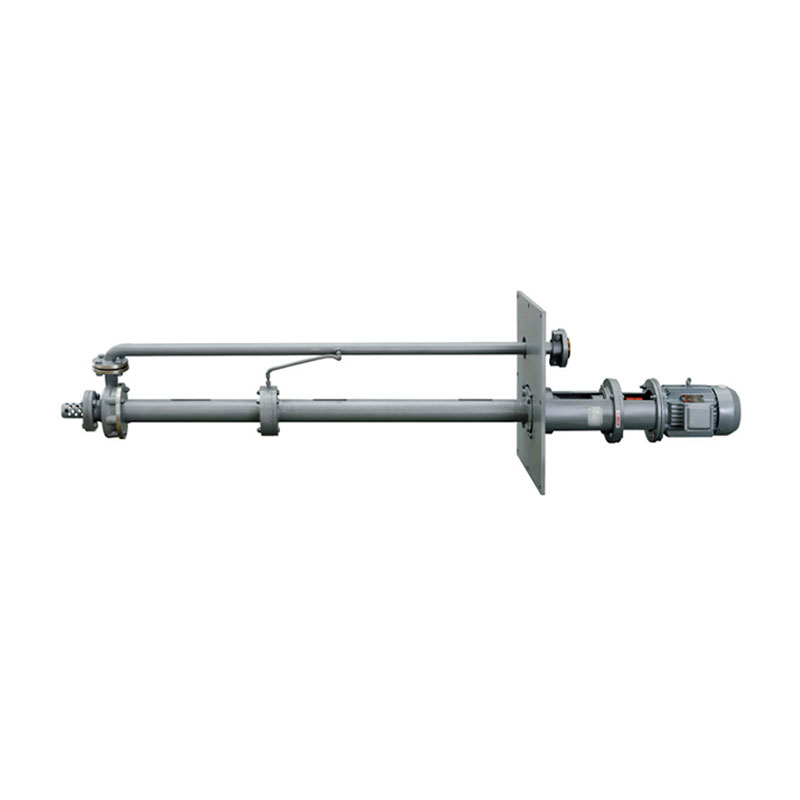 Wholesale FY (HY) Series Vertical Submersible Pumps Suppliers, Factory - Beloni Beloni (Jiangsu) Pump Manufacturing Co., Ltd is China wholesale FY (HY) Series Vertical Submersible Pumps suppliers and factory,The FY (H...View Product →
Shaft and Intermediate Bearings
The shaft carries bending, torsion, and vibration loads. Martensitic stainless steel such as 2Cr13, or precipitation-hardening 17-4PH, covers most corrosive services; severe media need higher-nickel alloys. Product-lubricated bearings in dirty fluid should use silicon carbide faces, and when solids are present, a clean-water flush or a cantilever design is the more reliable option.
| Component | Typical material options | Typical service |
|---|---|---|
| Casing and column | Cast iron, ductile iron | Clean water, neutral pH, low solids |
| Casing and column | 304 / 316 stainless steel | Organic acids, moderate chlorides, general chemical service |
| Casing and column | Alloy 20, CD4MCu, fluoroplastic lining | Sulfuric acid, strong alkalis, aggressive effluents |
| Impeller and wear parts | High-chromium hard metal | Abrasive slurry, ash handling, ore transfer |
| Shaft | 2Cr13, 17-4PH, high-nickel alloy | Corrosive fluids, elevated temperature, long unsupported spans |
| Intermediate bearings | Carbon, silicon carbide, bronze | Product-lubricated in clean fluids; flushed variants for solids |
Common Applications for Vertical Sump Pumps
The same below-grade pumping problem appears across process industries, and a vertical pump handles it with the fewest support systems. Typical installations include:
- Chemical process sumps, containment dikes, and neutralization pits with batch-to-batch pH swings;
- Flue gas desulfurization tanks that move limestone slurry and reaction products;
- Mining slurry pits, mill return water, and thickener underflow transfer;
- Municipal and industrial wastewater lift stations;
- Liquid sulfur pits, where the product must be kept above its melting point;
- Pulp, paper, and textile effluent basins carrying fibers and chemical residues.
Where corrosion and high vapor pressure appear together — hot acids, chlorinated organics, or solvent-laden waste — a vertical cantilever submersible chemical pumps design keeps every bearing above the liquid while the casing and impeller hang into the pit.
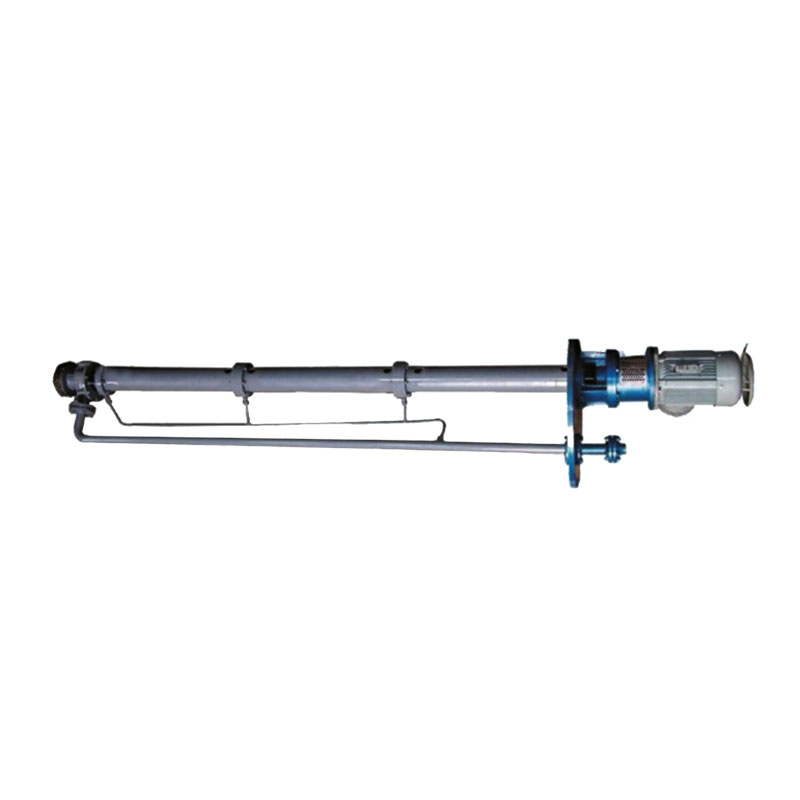 Wholesale Vertical Cantilever Submersible Chemical Pumps Suppliers, Factory - BeBeloni (Jiangsu) Pump Manufacturing Co., Ltd is China wholesale Vertical Cantilever Submersible Chemical Pumps suppliers and factory,Prod...View Product →
Mining sumps that collect hard settling solids need slurry-rated machines such as the LJYA cantilever vertical submerged slurry pumps, with thick-section high-chromium impellers and wide internal clearances. For the broader range of heavy-duty slurry equipment, see mining and mineral processing industrial pumps.
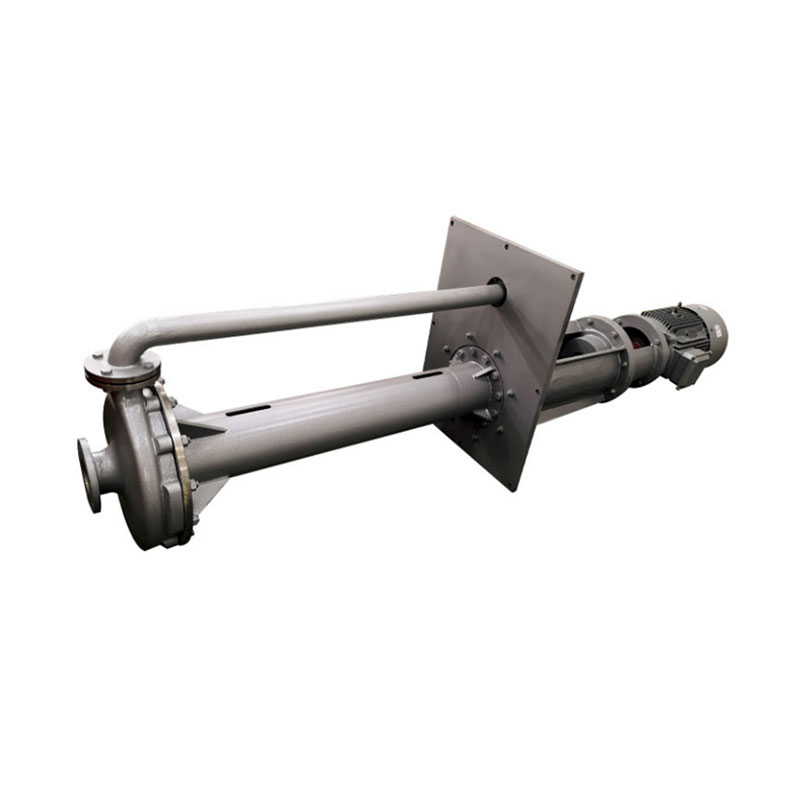 Wholesale LJYA Cantilever Vertical Submersible Slurry Pumps Suppliers, Factory -Beloni (Jiangsu) Pump Manufacturing Co., Ltd is China wholesale LJYA Cantilever Vertical Submersible Slurry Pumps suppliers and factory,L...View Product →
Key Selection Considerations
Immersion Depth and Column Length
The column length is fixed by the deepest liquid level the pump must reach. Standard machines cover about 1.5 to 6 meters of immersion; deeper pits require a heavier shaft, additional intermediate bearings, or a larger-diameter cantilever shaft to control deflection. Specify the actual pit depth and the range of liquid levels, not just "a long pump."
NPSH and Minimum Submergence
Even with flooded suction, a vortex can pull air into the impeller if the submergence is too shallow. Allow roughly 0.3 to 0.5 meters of liquid above the strainer as a practical starting point at normal flow, and add an antivortex baffle in narrow or deep sumps. When the pit is shallow relative to the required flow, a low-NPSH impeller with a larger suction eye is worth considering.
Solids Handling and Internal Clearances
Particle size, concentration, and shape decide the strainer opening, impeller type, and casting thickness. Closed impellers give the best efficiency on clean fluids; open or semi-open designs pass more debris; hard metal casings are specified when solids are abrasive. The strainer must stop oversize material without creating an excessive pressure drop.
Dry-Run and Low-Flow Operation
Sump pumps run intermittently, so short dry operation is difficult to avoid. Cantilever designs tolerate brief dry-run periods because no submerged bearing can fail. Where the pump is throttled for long periods, a minimum-flow bypass protects the casing from overheating and keeps product-lubricated bearings wetted.
Vertical Sump Pump vs. Submersible vs. Horizontal
The architecture of a vertical sump pump differs from the alternatives in maintenance access, driver protection, and depth capability.
| Feature | Vertical sump pump | Submersible pump | Horizontal centrifugal pump |
|---|---|---|---|
| Driver location | Above the sump on a mounting plate | Inside the pumped liquid | At floor level beside the pit |
| Priming | Flooded suction, no priming required | Flooded suction, no priming required | Requires priming or a self-priming arrangement |
| Seal arrangement | No mechanical seal in most column designs | Housing, cable, and junction sealing | Mechanical seal or packing |
| Maintenance access | Lift the column assembly out of the pit | Lift the pump out of the liquid | Fully accessible at floor level |
| Typical depth capability | 1.5 to 6 m standard; more with special shafts and bearings | Limited by motor cooling and cable rating | Limited by practical suction lift of 6 to 7 m water |
| Solids tolerance | Good to excellent with hard metal parts and cantilever shaft | Good with non-clog impellers | Reduced by suction pipe and strainer restrictions |
Operation and Maintenance
Reliability comes from controlling the failure modes specific to vertical shaft machines. Maintenance attention should focus on:
- Strainer fouling, the most common cause of sudden capacity loss;
- Vibration on the column and mounting plate, which reveals worn bearings or a bent shaft;
- Flush water continuity where flushed bearings are installed;
- Coupling alignment after any motor removal;
- Liquid level control, so the motor and coupling stay clear of the sump opening.
Most unplanned stops trace back to dry running that overheats thin castings, vortexing that aerates the flow, or particles that erode the casing. A level interlock, a vortex breaker, and a correctly sized strainer remove most of the risk. For more on reliability in continuous process duty, see how industrial submerged pumps improve operational efficiency.
Choosing a Vertical Sump Pump
Start with the pit, not the pump. Measure the deepest liquid level, the operating range, the chemistry, and the solids load, then choose the column length, bearing strategy, and material class from those numbers. A vertical sump pump is the right choice when the liquid sits below the pump floor, when suction lift is impractical, or when the driver must stay out of the vapor zone. Its flooded-suction advantage also makes it the first option for low-NPSH and hot media.
A machine with the impeller matched to the fluid and bearings suited to its cleanliness will run for years between overhauls. The same selection logic applied to continuous-duty industrial centrifugal pumps — hydraulics first, materials second, mechanical reliability third — determines which vertical configuration delivers the lowest lifetime cost.
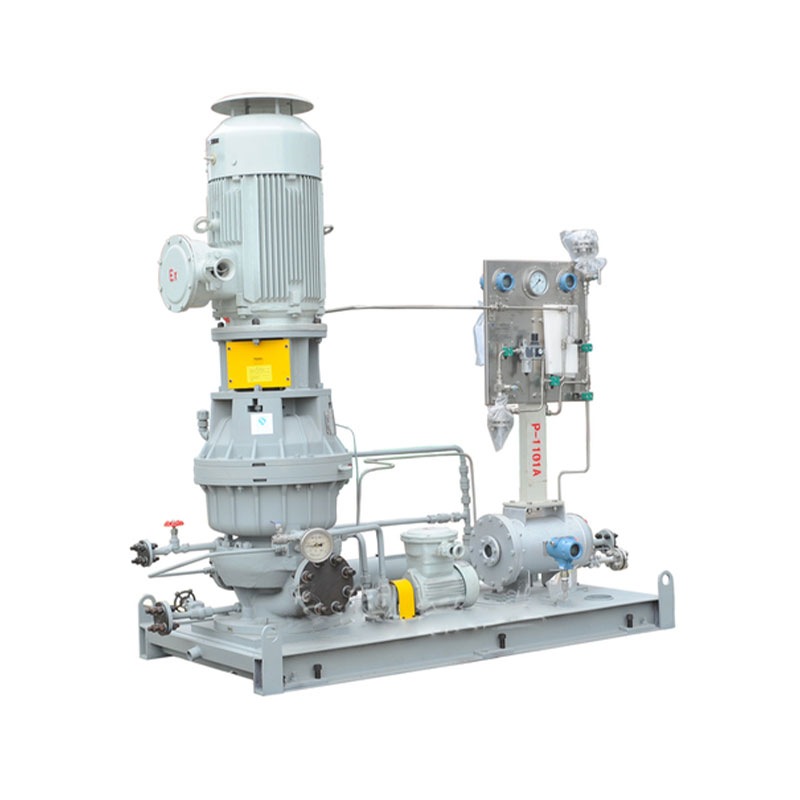
.jpg "Axially Split Horizontal Multistage Pump")


 ENG
ENG

 TOP
TOP