

 inquiry Now

 English
 русский
 عربى
عربى
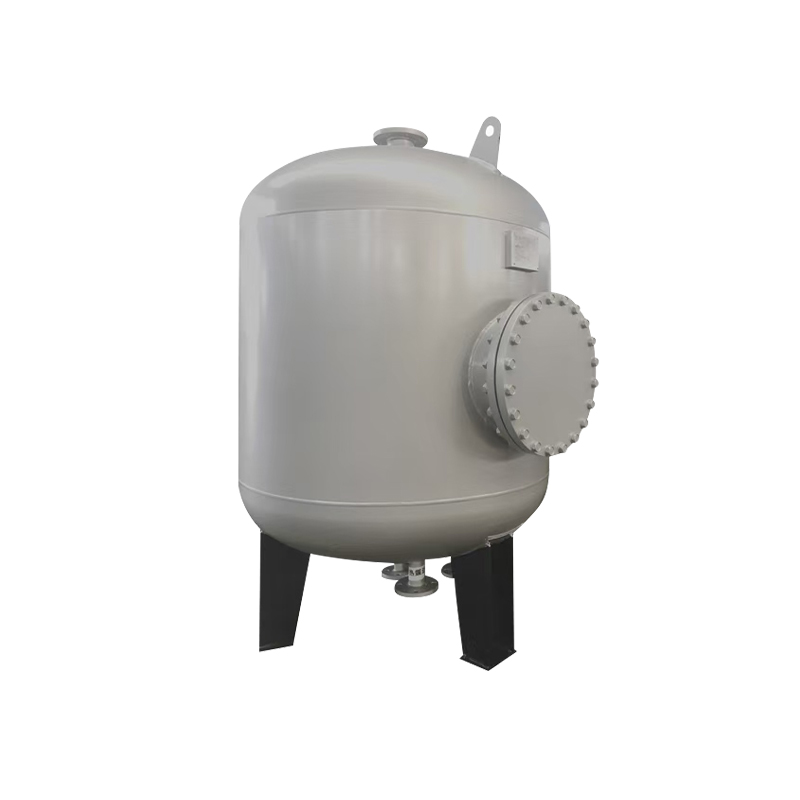
Specification
| Performance Criterion | High-Pressure Vessel Value Range |
|---|---|
| Design Pressure Capability | From 5.0 MPa up to 35 MPa custom high-pressure engineering specs |
| Volumetric Volumetric Storage | 1.0 cubic meter up to 60 cubic meters maximum volume bounds |
| Shell Plate Thickness Profile | Thick-walled gauge options from 20 mm up to 80 mm solid plate |
| Primary Plate Metallurgy | SA516 Gr70 Forged Carbon Alloys SA387 Chromium-Molybdenum or SS316L |
| Fabrication Code Standards | ASME Section VIII Div 1 or Div 2 EN13445 high-pressure matrix |
| Weld Radiographic Requirement | 100 percent full RT-1 radiographic x-ray inspection standard |
| Nozzle Connection Style | Heavy forged self-reinforcing long weld neck hubs ANSI Class 600/1500 |
| Hydrostatic Proof Multiplier | Standard 1.3x to 1.5x design pressure structural check limits |
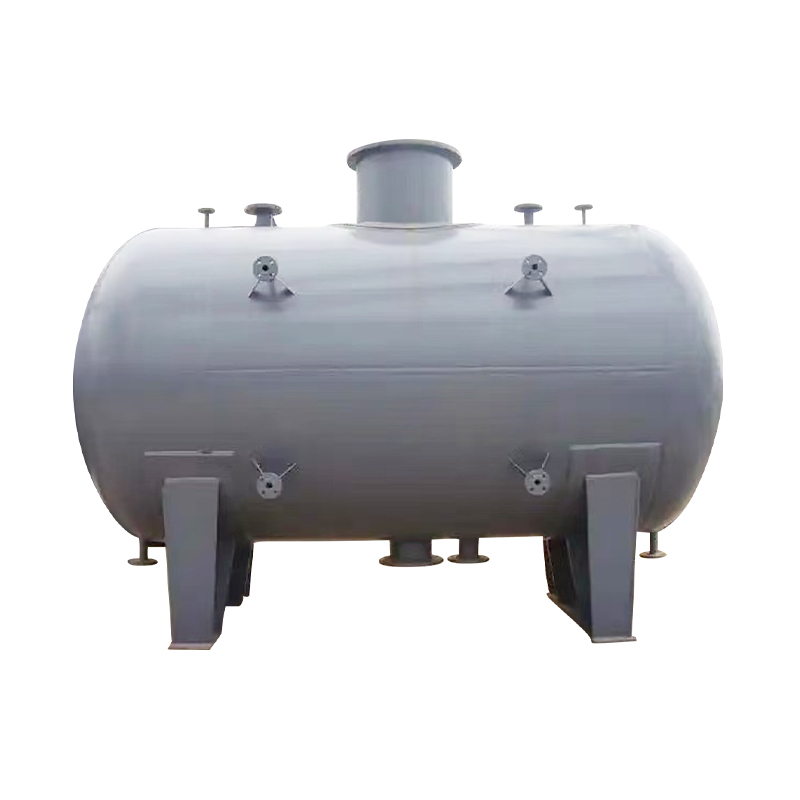
The rugged pump housing material used in these high-pressure shells features high-impact charpy V-notch toughness properties at low operating temperatures, preventing brittle fracture vulnerabilities when storing compressed liquefied gases that drop temperatures during rapid volume expansion sequences. Longitudinal and circumferential joints are executed using advanced multi-pass narrow-groove automated welding machines to maintain perfect structural uniformity.
Our factory manufacturing guidelines ensure that all high-pressure nozzles are machined from solid forged blocks rather than welded pipe segments, eliminating weld lines in high-stress concentration zones. Every storage vessel is fitted with specialized heavy-duty safety valve connections and dual pressure relief nozzle pathways, allowing for direct integration with automated emergency blowdown and venting manifolds to prevent over-pressurization errors.
Application
High pressure fluid storage units are standard across primary raw energy infrastructure, large-scale gas refining plants, and advanced chemical synthesis complexes. Industrial air separation plants implement these thick-walled vessels to store compressed nitrogen, argon, and high-purity oxygen gases safely under intense pressure volumes prior to distribution loops.
In the commercial petrochemical manufacturing sector, these high-strength storage vessels are mandatory within liquefied petroleum gas (LPG) storage fields, compressed natural gas (CNG) buffering stations, and hydrogen gas processing loops. The absolute positive containment provided by our thick-walled alloy steel prevents volatile gas escape, helping industrial facilities meet global safety safety codes and protect surrounding assets from explosive fire risks.
Additionally, large power generation hubs, aerospace testing facilities, and high-pressure chemical reactor plants utilize these storage vessels to hold high-pressure hydraulic accumulator fluids, nitrogen purge stocks, and supercritical chemical process elements. The exceptional mechanical strength ensures that storage operations maintain complete safety parameters, optimizing long-term facility asset performance across all plant operations.
Advantage
Choosing our high pressure fluid storage vessels provides immediate engineering security and process optimization to heavy containment networks. The primary advantage is the exceptional fracture toughness and burst resistance achieved via our advanced narrow-groove multi-pass welding and post-weld thermal treatment protocols. By removing internal residual rolling stresses and refining crystal grain matrix formations, our vessels possess unparalleled resistance against cyclic fatigue and stress-crrosion cracking, eliminating unexpected structural failure risks.
Our advanced manufacturing plant incorporates solid forged self-reinforcing nozzles as a standard engineering feature for all high-pressure applications. This design eliminates the weak points associated with traditional fillet-welded pipe reinforcement pads, distributing localized piping stresses with high efficiency and completely preventing cracking errors at main connection interfaces under extreme pressure surges.
Furthermore, the strict adherence to ASME Section VIII Division 2 alternative design rules allows for optimized shell material selection, providing higher pressure safety factors while reducing unneeded dead-weight. This structural weight optimization lowers site foundation construction requirements, minimizes initial crane installation capital costs, and simplifies long-term facility footprint integration, helping procurement managers lower total cost of ownership and maximize factory productivity.


 ENG
ENG

 TOP
TOP